



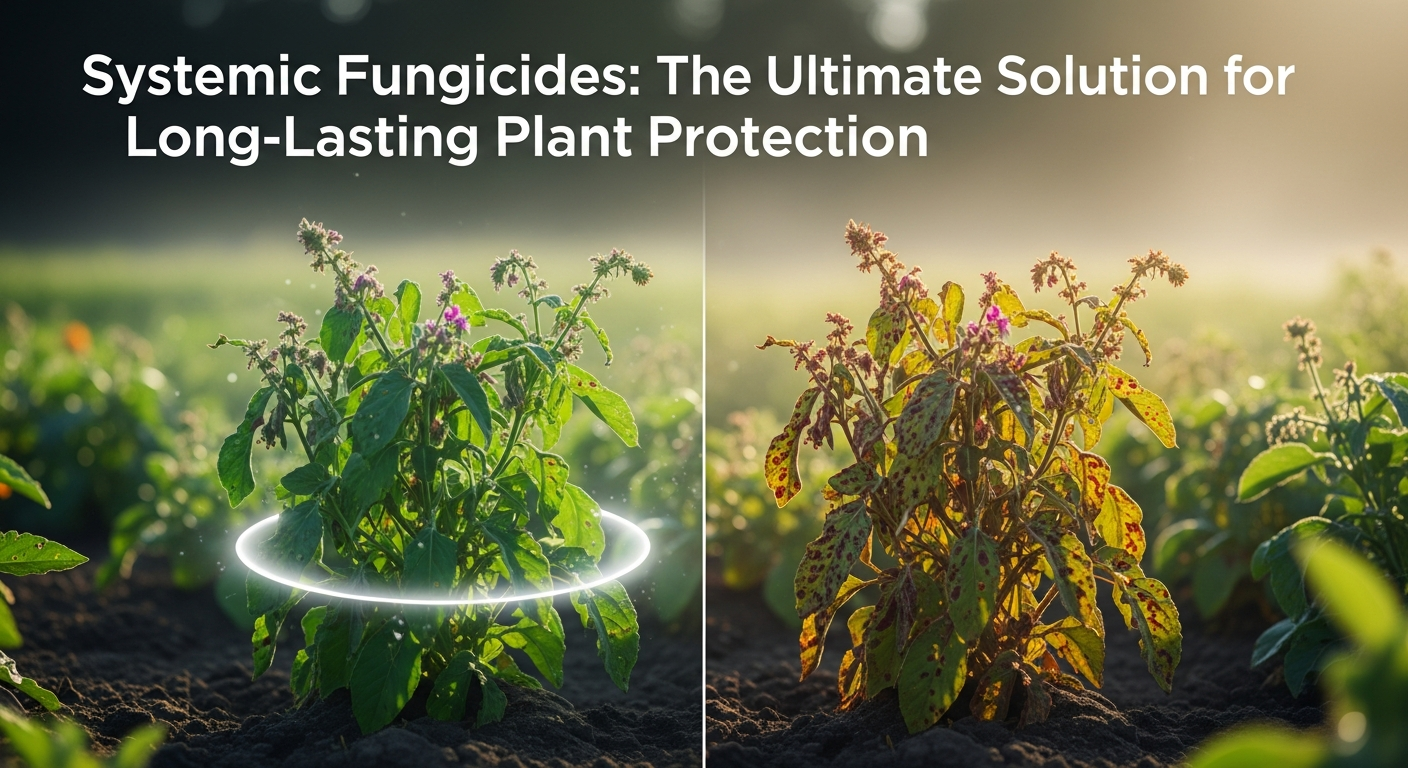
Systemic fungicides represent the latest in plant protection technology because they are able to travel through the plant and provide long-lasting protection to the entire plant system from root to leaf against diseases caused by fungi as opposed to protecting the surface only; being effective by being absorbed into the vascular system of the plant and being transported and providing internal systemic protection.
The internal targeting of fungal infections provided by systemic fungicides will also help to limit the introduction of additional disease to a crop by limiting the spread of actively infected plants, protecting characterized areas of new growth, and improving the overall health of the crop.
Systemic fungicides such as triazoles, strobilurins, and benzimidazoles are formulated to disrupt the growth of a fungus at the cellular level. In addition to providing preventive action prior to the occurrence of a fungal disease, they also provide a curative action upon the actual occurrence of a fungal disease; thereby providing extended protection of a plant from the effects of diseases caused by fungi, even in settings with high levels of disease pressure.
Whether through improved yields or overall healthier foliage, the consistent and long-term management of diseases through the use of systemic fungicides makes them a reliable and trusted source of sustainable and effective plant protection.
Understanding Systemic Fungicides: What Sets Them Apart?
Similar to how certain nutrients help the body internally to bolster overall health, systemic fungicides will provide long-term protection/internally within the plant tissue. Unlike a conventional surface applied treatment, systemic fungicides have been taken up /absorbed into the plant tissue and moved through both existing and new growths via the vascular system.
Due to the ability to move internally while also being specifically able to target the disease, systemic fungicides have become very important in both agriculture and horticulture, as they provide very effective ways of controlling the diseases caused by fungi when infection levels are moderate to high.
Systemic Fungicide Definition and Mode of Action
Systemic fungicides are either chemical or biological plant protection products that penetrate into the plant and travel through internal plant tissue to aid in the management of disease (caused by a fungus).
Some modes of action might include:
- Absorption into the plant via leaves, stems or roots
- Moved within the plant via either xylem or phloem
- Disrupts the fungal cell.
- Prevents spore germination and fungal growth.
Common systemic fungicides include triazoles, strobilurins and benzimidazoles, and provide both preventive and curative forms of disease control.
Difference Between Systemic and Contact Fungicides
Understanding the difference helps in selecting the right treatment.

Why Systemic Fungicides Offer Internal Protection
The unique advantage of systemic fungicides is providing protection to plants from an internal position.
The key benefits of systemic fungicides are:
- Protecting new growth/new leaves/new shoot
- Controlling internal or hidden infections
- Suppressing the disease for a longer period of time
- Reducing the number of applications necessary by providing a wider area of protection
When using surface-applied fungicides, you can have uniform coverage to the leaf surfaces; however, with systemic fungicides, the active ingredient is transported throughout the entire plant so that all pieces of the plant will be protected.
The Science Behind Systemic Fungicide Action
Just like how we use our blood to keep ourselves healthy through the transportation of essential nutrients in the human body, systemic fungicides work with a plant's internal transportation system to give it long-lasting, deep-seated protection from disease. Unlike their surface-acting counterparts, systemic fungicides are absorbed into a plant's tissues and effectively distributed throughout its entire vascular system, providing complete disease suppression from the root to the leaf.
By understanding how they work, growers can use systemic fungicides more effectively and get the maximum benefit from the protection they offer.
Fungicide Absorption Through Leaves and Roots
The first step in how systemic fungicides work is through absorption.
How does absorption occur?
- Foliar Application: The fungicide penetrates through the cuticle and stomata of the lea
- The fungicide enters quickly into the vascular tissue of the plant
- Protection begins almost immediately after the fungicides are taken up
- Soil Application: The fungicide is absorbed by the roots of the plant and is moved upward through the plant
Several systemic fungicides, including triazole and strobilurin fungicides, have been specifically designed to be highly efficient when they are absorbed by the plant, allowing them to work quickly to prevent disease.
Translocation in Plants: Xylem and Phloem Movement
Systemic fungicides are taken up by and disseminated around the plant via the vascular system (xylem and phloem) after they are absorbed by the roots.
The primary benefits of systemically translocating fungicides through the plant include:
- Protection of new growth
- Access to sites of hidden infection
- Uniform distribution of the product throughout the plant
- Longer duration of control than contact fungicides
This internal translocation of fungicide(s) distinguishes systemically acting fungicides from regular treatments.

Protective and Curative Properties of Systemic Treatments
One of the main benefits of fungicides that act systemically is their ability to provide both protection and curative activity.

Some examples of systemic fungicides are benzimidazoles and triazoles, which work to disrupt fungal metabolism and reproduction at the cellular level.
Key Benefits of Using Systemic Fungicides in Agriculture and Gardening
Just as balanced nutrition helps with steady growth of crops and garden plants, systemic (internal) fungicides also provide steady and permanent protection from disease for all the plants we grow. In contrast to surface (external) fungicides, systemic fungicides move throughout the plant to provide complete protection from the disease inside the plant itself. This is what makes systemic fungicides so valuable to both commercial agronomists as well as gardeners.
Due to their ability to work deeply within the plant, systemic fungicides help to reduce spreading of diseases from one plant to another, therefore reducing the number of times we have to spray an area, and improve the overall performance of the plant.
Long-Lasting Protection Against Fungal Diseases
Long Lasting Protection from Fungi Diseases
One of the major benefits of systemic fungicides is the long duration of time that they will protect against infection.
The following list outlines the key benefits of using systemic fungicides:
- Internal protection throughout the entire plant
- Preventative and early curative activity
- Protection of new plant growth
- Reduction in the number of applications needed to maintain control of disease.
Examples of commonly used systemic fungicides are triazoles and strobilurins, which provide long-lasting control of diseases such as rust, blight, mildew, and leaf spot.
Resistance to Rain Wash-Off and Weather Conditions
Because they penetrate the plant tissue, systemic fungicides are less susceptible to the effects of weather than contact fungicides.
Advantages Based on Weather Conditions:
- Little to no loss due to rain.
- Better effectiveness under humid conditions.
- Reduced wastage when spraying.
- More consistent disease control in the rainy seasons.
Systemic fungicides are still effective after inclement weather compared to contact fungicides.
Improved Crop Yield and Plant Health
Healthy plants have a greater yield than do unhealthy ones, and systemic fungicides aid in keeping crops healthy.

By treating fungal diseases at the early stages of infection, systemic fungicides allow for greater energetic efficiency by the crops because they no longer have to divert energy to fight off the disease.
Major Types and Popular Examples of Systemic Fungicides
Similar to how multiple nutrients have different health applications for you, there are systemics developed to combat specific fungal diseases and meet various crop-specific needs. Systemic fungicides will not only help provide preventative and curative control of the disease by entering your plant tissue but also by understanding what the major types of systemic fungicides are and common examples of systemic fungicides can help you select the best treatment option for your crop.
Triazoles, Strobilurins, and Benzimidazoles
Triazoles, Strobilurins and Benzimidazoles are among the three largest groups of systemic fungicides that are used in agriculture.

The above three classes represent the foundation of many of the more advanced fungicides that are utilized globally.
Common Systemic Fungicides Examples (Azoxystrobin, Propiconazole, Carbendazim)
Below are widely recognized systemic fungicides examples used in crop protection:

Choosing the Right Systemic Fungicide for Your Needs
The different systemic classifications of fungicides all disrupt fungal growth within plant cells in different fashions and prevent the spread of disease.
When selecting the right systemic fungicide for your needs there are many factors to consider:
- Type of crop and growth stage of the crop.
- .Fungal Disease that is currently affecting your crop.
- Weather and humidity conditions.
- Resistance management practices.
- Rotation with other fungicides.
Generally, proper rotation between different classes of systemic fungicides will decrease the chance of Fungal Infection resistance and continue to provide effective disease control.
FAQs
Q1.What are systemic fungicides?
Systemic fungicides are plant protection products that are absorbed into plant tissues and provide internal, long-lasting control against fungal diseases.
Q2.How are systemic fungicides different from contact fungicides?
Unlike contact fungicides that stay on the surface, systemic fungicides move inside the plant and protect both existing and new growth.
Q3.What are some common systemic fungicides examples?
Common systemic fungicides examples include Azoxystrobin, Propiconazole, and Carbendazim.
Q4.How long do systemic fungicides last?
Most systemic fungicides provide protection for 10–21 days, depending on the product, crop, and environmental conditions.
Q5.Can systemic fungicides cure existing infections?
Yes, many systemic fungicides have curative properties and can control early-stage fungal infections, but severe infections may require repeated treatment.
Conclusion: Why Investing in Systemic Fungicides is a Smart Move for Healthy Plants All Season Long
By using systemic fungicides, you are making a long-term investment in the health of your plants and the success of your crops. Systemic fungicides act from the inside out as opposed to surface application products that work on the outside of the plant. By treating the inside of the plant with a systemic fungicide it's possible to provide longer-term disease control as well as protect new growth from disease. By having an internal form of defense, the need for re-application of fungicides is reduced and you can count on reliable performance during periods of long stretches without rain.
Examples of systemic fungicides that have demonstrated their effectiveness for many years are Azoxystrobin, Propiconozole, and Carbendazim. All three offer growers specific solutions that provide both preventative and curative disease management. These same products also provide greater plant vigour, improved yield quality and decreased crop losses throughout the growing season.
By incorporating the use of systemic fungicides into an effective, well-planned crop protection program, farmers as well as home gardeners can experience healthier plants, greater resistance to disease pressure, and long-term sustainable productivity from their crops. Investing wisely in systemic fungicides today will provide for stronger, more resilient crops in the years to come.
