



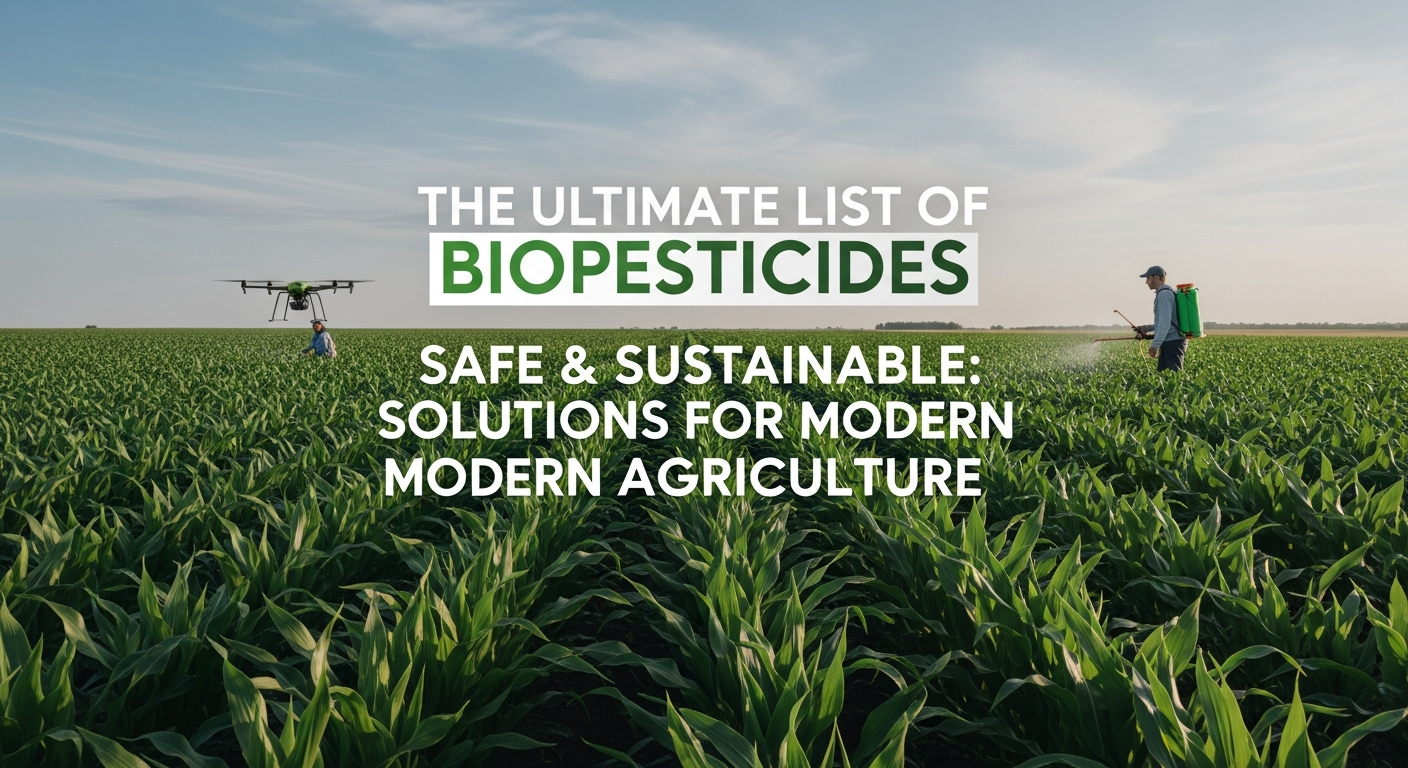
Biopesticides are environmentally friendly pest controlling agents made from plants, microorganisms, and other organic material, which help protect crops while being environmentally safe. This complete list of biopesticide products includes safe alternatives that can gradually replace conventional chemically produced pesticide products in agriculture today.
Some of the many types of biopesticides currently used include microbial products such as bacteria and fungi; plant extracts such as oils from plants; pheromone traps; and plant growth regulators.Biopesticides are biodegradable, species (target) specific, and contain little to no residue after applying to crops, making them an excellent choice for sustainable or organic agriculture.
Each biopesticide on this list contains a formulation derived from one or more of the following products: bacteria; fungi; essential oils from plants; and/or naturally occurring compounds. When utilizing biopesticides in the farm to grow your produce, your farms will benefit from improved soil health, protection for beneficial insects, and long-term productivity of your crops.
As agriculture continues to move toward environmentally responsible farming systems, implementing biopesticide products from this biopesticide list will enable food production that is safer for humans and contribute to the creation of a greener planet .
Introduction: Why Biopesticides Are the Future of Sustainable Farming
With the increasing challenges of feeding more people while minimizing environmental impacts from agriculture, biopesticides represent one of the best solutions available for farmers to sustainably protect their crops. Unlike traditional chemical pesticides, biopesticides come from organic sources (natural organisms, as well as plant-based materials), providing farmers with safer and more environmentally responsible alternatives.
Farmers now have many more options than ever before when it comes to finding long-term environmentally responsible pest management strategies, thanks to the growing list of commercially available biopesticides.
Growing Need for Eco-Friendly Pest Control
Due to both the environment and government regulations, agriculture has been transitioning towards more ecological, sustainable forms of pest control.
There are many drivers contributing to the increased demand for biopesticides in agriculture, including:
- Degradation of soil due to overuse of synthetic chemical pesticides
- Increased resistance to synthetic pesticides
- Contaminated water from synthetic pesticides
- Consumer preference for chemical-free produce
With the increased number of biopesticides available, farmers now have many more ways to effectively control pests with respect to both protecting their crops and reducing the environmental impact of their agricultural practices. By being in harmony with nature instead of in conflict with it, biopesticides are critical to the agricultural practices of the future.
Benefits of Biopesticides in Modern Agriculture
Biopesticides have numerous benefits that are consistent with sustainable agricultural goals.

Biopesticides are such an important tool for today's farmers because, with the inclusion of all types of biopesticides, from microbial solutions to botanical extracts, farmers are able to customize their uses for each crop and its respective pest pressure. This flexibility supports the growth of biopesticides in modern agriculture.
Role of Biopesticides in Organic and Sustainable Farming
Because organic farming systems utilize primarily natural methods to protect their crops, the availability of a wide range of biopesticides gives organic producers around the world added support and peace of mind that they have the biopesticide product(s) necessary for the production of their crops according to organic certification standards.
Criteria that make biopesticides a necessary part of sustainable agricultural systems:
- Products approved by organic certification standards
- Products that work with Integrated Pest Management (IPM)
- In support of biodiversity
- In support of sustainable agriculture that produces food and protects the future
Through use of a variety of biopesticide options from a trusted source, farmers can move away from using traditional pesticide products and protect their crop from insects while still being able to produce high-quality, abundant crops. As sustainable agriculture continues to grow globally, biopesticides will be an ever-increasing source of eco-friendly farming practices.
What Are Biopesticides? Understanding Their Types and Importance
Biopesticides are natural pest control products that are derived from micro-organisms, plants and certain naturally occurring substances. Biopesticides take a more sustainable and strategic approach to pest control than conventional chemical pesticides.
The number of biopesticides available is increasing indicating their importance in modern agriculture, especially with new organic methods and environmentally friendly farming systems. Understanding the types of biopesticides and their importance allows farmers to select safer, effective crop protection systems.
Definition of Biopesticide in Agriculture
Biopesticides are a form of biological or naturally derived agent used in agriculture to control a variety of crop damaging organisms such as insects, weeds, fungi, etc.
Key characteristics of biopesticides:
- Biopesticide is a biological or naturally derived agent
- Biopesticides have target specificity in relation to their action
- Biopesticides are biodegradable and safe for the environment
- Biopesticides leave little or no chemical residue upon application
The complete list of biopesticides includes micro-organisms, botanical extracts, pheromones, or plant-incorporated protectants. These products not only help protect crops from damage; they also help maintain soil biodiversity.
Main Categories of Biopesticides Explained
The primary source and mode of action for biopesticides leads to three primary classes of biopesticides.

A comprehensive list of biopesticide products usually groups them under one of the above categories to assist in the selection and use of the product.
How Biopesticides Differ from Chemical Pesticides
The differences between biopesticides and chemical pesticides can generally be attributed to three primary attributes: origin, environmental impact and mode of action.
The following lists provide some examples of the key differences between biopesticides and chemical pesticides.
- Biopesticides are natural; whereas chemical pesticides are synthetic
- Biopesticides are specific; whereas chemical pesticides are typically toxic to a vast range of organisms
- Biopesticides decompose quickly; whereas chemical pesticides may take a significant amount of time to accumulate in the soil and in the waterways.
- Biopesticides are less likely to increase the development of pest resistance. 'biopesticides are more likely to slow or prevent the development of pest resistance.'

Comprehensive List of Biopesticides Used Worldwide
Since the world is shifting toward more sustainable agriculture methods, there has been more of an emphasis placed on using biopesticides rather than chemical pesticides; therefore, as pesticide regulatory agencies keep pace with this trend, their lists grow longer as new compounds come forward and are tested for safety and efficacy.
Although microbial types of biopesticides, such as those comprised solely of bacteria (e.g., Bacillus thuringiensis), fungi (e.g., Trichoderma), or viruses (e.g., NPV), remain on the list; many of the newer biopesticides may contain combinations of naturally occurring plants or their derivatives (plant oils, for example).
Microbial Agents in the Global Biopesticides List
Microbial biopesticides are microorganisms (e.g., bacteria, fungi and viruses) that are found in nature, making them one of the more prevalent items contained within the global biopesticides list.

Botanical and Plant-Based Entries in the Biopesticides List
Biopesticides, derived from botanical sources, are the most significant portion of the global biopesticide classifications. Botanical biopesticides can be utilized to deter feeding, repel, or inhibit growth of target pests.
Examples of the more common plant-based biopesticides are:
- Neem oil extracts.
- Garlic and pepper-based sprays.
- Essential oil formulations.
- Plant alkaloid solutions.
The biopesticides derived from plants are biodegradable and are used widely in organic agricultural production systems.

Biochemical and Innovative Products in the Biopesticides List
The biochemical biopesticides and innovative products on the list of biopesticides represent the cutting edge of biopesticide technology. These biopesticide products do not have a direct toxic effect but instead alter the behavior or development of pests.
Examples of the innovative products in this category are:
- Pheromone-based mating disruption products.
- Insect growth regulators (IGRs).
- Stimulants of natural plant defense mechanisms.
- Bio-based products provide increased shelf-stability.

Biochemical and Other Innovative Biopesticide Options
The list of biopesticides of today is as extended as it has been at any time in the past. The previously only traditional types of microbial and botanical products have been supplemented with new innovative technologies to create a more comprehensive list of biopesticides, using smarter and more precise ways to manage pests.
Modern biopesticides use more advanced methods to disrupt insect behavior, including but not limited to pheromone traps and lures, which utilize synthetic pheromone pheromonal compounds to disrupt the natural communication process of insects.
Pheromone Traps and Lures
Pheromone Traps/Lures - The basic function of a pheromone trap or lure is to:
- Disrupt the mating cycle of reproductive moths (or other moth-type insects).
- Confuse the male moth insect.
- Monitor mend insect populations.
- Limit the number of new pest populations by See subsequent sections/footnotes below for a warning on product effectiveness).
As one component of a complete biopesticide list, the use of pheromone traps/lures is often found to be most effective when used in-region to monitor and control pest populations in fruit orchards and vegetable crops.

Insect Growth Regulators (IGRs)
An innovative method to enhance modern biopesticides, Insect Growth Regulators interfere with the growth and development of insects instead of killing insects directly.
How They Work
- Inhibit the ability of insects to molt
- Prevent insects from maturing
- Disrupt the hormonal balance of insects
- Reduce egg hatchability
The capabilities of these advanced biopesticides can help to manage pests at an early life stage, making them effective prevention tools in integrated pest management.

RNAi and Next-Generation Biopesticide Technologies
RNA interference (RNAi) represents one of the most advanced emerging technologies in the ever-growing selection of available biopesticides. A key aspect of these products is that they target specific genes within a pest to disrupt its ability to survive and reproduce.
Key Characteristics of RNAi Biopesticides
- Highly-targeted to specific insect pests
- Minimal negative impact on non-target organisms (e.g., fish, birds)
- Lower levels of resistance potential
- Environmentally-friendly breakdown in the environment
Next-generation biopesticide solutions, such as those based on RNAi technology, are reshaping crop protection by aligning biotechnological advancements with sustainable principles.

FAQs
Q1.What is a list of biopesticides?
A list of biopesticides is a categorized compilation of natural pest control products, including microbial, botanical, biochemical, and innovative biological solutions used in agriculture.
Q2.What are the most common biopesticides used worldwide?
Common biopesticides include bacterial and fungal bio-agents, neem-based products, pheromone traps, and insect growth regulators.
Q3.Are biopesticides safer than chemical pesticides?
Yes, biopesticides are generally safer because they are derived from natural sources, are target-specific, and leave minimal residue on crops.
Q4.Can biopesticides be used in organic farming?
Yes, many biopesticides are approved for organic farming as they meet natural origin and safety standards.
Q5.Do biopesticides work for all crops?
Biopesticides are effective across a wide range of crops when selected and applied correctly based on specific pest and crop requirements.
Conclusion: Embrace the Shift Integrate a Biopesticides List into Your Farming Strategy Today
The future of the agricultural sector now relies on more responsible, more effective, and more sustainable methods of pest control. Creating a systematic approach with the help of a quality biopesticide list will enable your farm to manage pest populations without being reliant on synthetics. A smartly designed list of biopesticide products provides the grower with different targeted options (microbial agents, botanical extracts, pheromone traps, and advanced technologies) based on their target pest species/grower's crop.
The use of biopesticides alone will improve the overall efficiency of pest management, as well as provide a means for protecting soil health, preserving beneficial insect populations, and limiting pesticide residue levels from harvested produce. Long-term resistance management to pests and growing consumer demand for environmentally safe and residue-free food products are also supported using sustainable biopesticides.
Now is the time for growers to take advantage of this transition to sustainable agriculture. Incorporating a diversified biopesticide list into your pest management strategy will increase your farm's resilience; enhance sustainability; and actively work toward a sustainable agricultural landscape .
