



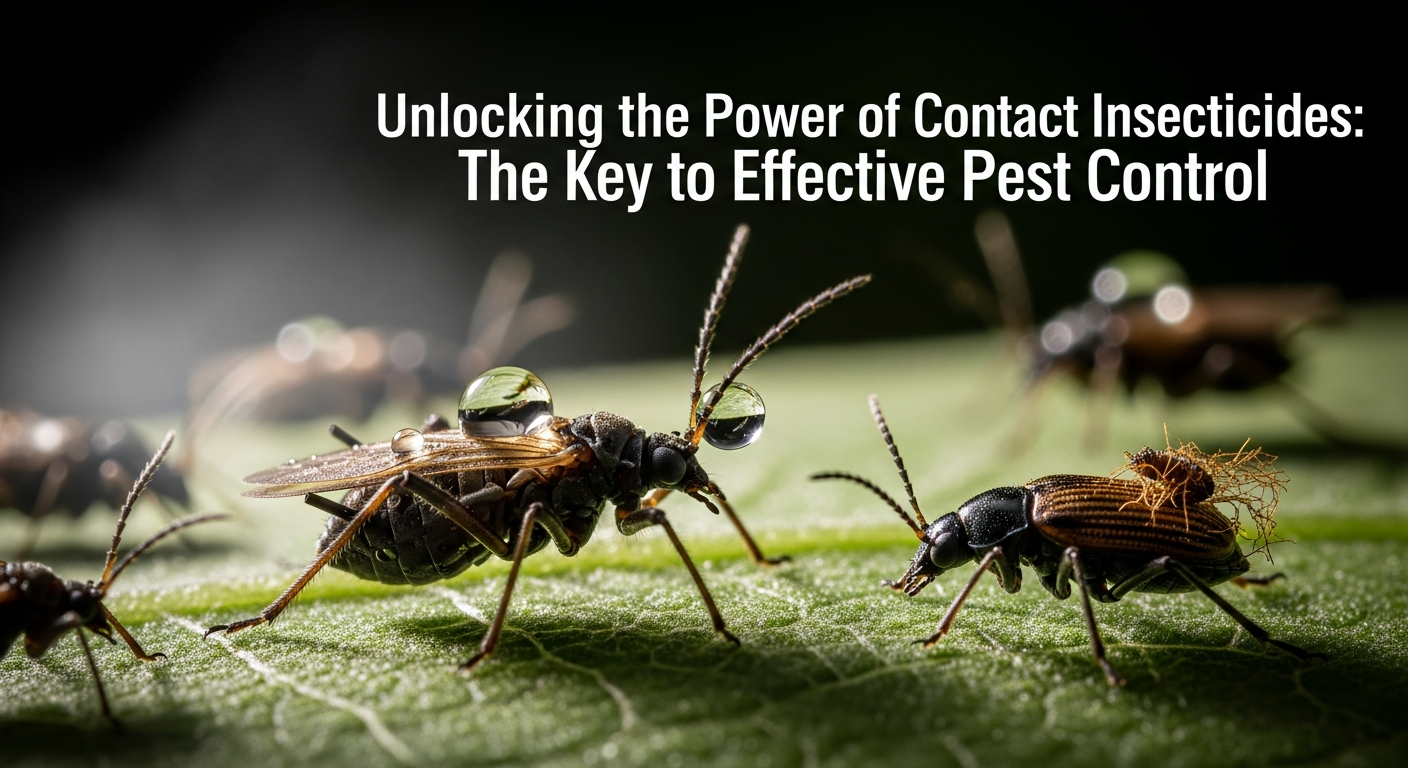
Applying insecticidal solutions that have been specifically formulated as "contact" insecticides provide immediate relief from pests affected by the use of insecticides on them. They kill the insects that crawl on this treated area, as well as all of the other insects that crawl on other surfaces adjacent to the treated area. This means that the pest control of insects using contact insecticides will provide a very effective and fast way of knocking down a pest population that may be on a particular crop such as rice, corn, beans, etc.
These types of insecticides affect the insect's nervous system and/or the outside layer of the insect. Therefore, when using contact insecticides, substantial results can be achieved during current pest infestation periods (especially where a high number of insects have infested the crop) because contact insecticides have an immediate effect on that particular insect.
There are many different types of contact insecticides available for use in agriculture and horticulture, and many of these contact insecticides will provide excellent results in controlling a particular insect (for example, caterpillars, beetles, and aphids) when used properly and within label recommendations.
With proper use of contact insecticides at manufacturer-recommended rates, contact insecticides represent a very effective, direct, and immediate method of addressing pest infestations and should be included as a part of any current integrated pest control program.
Understanding Contact Insecticides: What Are They and How Do They Work?
When it comes to controlling pest populations, many people rely on the use of contact insecticides. These insecticides kill insects when they come into contact with surfaces treated by the insecticides. Unlike systemic insecticides that are absorbed into plants through their roots and transported throughout the plant, contact insecticides stay on the surface (e.g., leaves, stems, soil) and produce immediate results when there is an active infestation.
Contact insecticides are effective for controlling pests when rapid action is needed to avoid a decline in crop quality or crop yield due to pest infestations.
Contact Insecticides Definition
A contact insecticide is defined as an insecticide that kills insects by chemical or botanical means upon their first physical contact with the insecticide spray or with a surface upon which the insecticide is sprayed. It is not necessary for the insect to ingest the chemical for it to be effective; direct exposure is sufficient.
An example of characteristics of contact insecticides:
- Fast-acting pest control
- Insecticides remain on the plant surface.
- Good for use on exposed, crawling or feeding insects.
- Widely used in agriculture, horticulture, and gardening.
A common list of contact insecticides includes Pyrethroids, organophosphates, carbamates, as well as some plant-derived oils.
Mode of Action and Immediate Knockdown Effect
The fast knockdown impact of the contact insecticides is their main advantage. The contact insecticides act through operating on the pest's nervous system or the outer protective layer of the pest, causing rapid paralysis and/or death.
How they work
- By disrupting the transmission of nerve signals
- By affecting sodium channels in the nerve cells
- By causing muscle spasms and paralysis
- By providing rapid pest mortality

Surface Application in Pest Control
Contact insecticides are typically applied through foliar sprays, misting treatments and as a surface coating. Since they are left on the surface of the plant, it is critical that the plants are covered well with the insecticide to be as effective as possible.
Best application practices
- Spray early in the infestation
- Ensure good coverage of the leaves (top and bottom surfaces)
- Do not spray on windy days
- If a heavy rain event has occurred, reapply the insecticide.
As contact insecticides will not translocate or move within the plant as systemic insecticides do, it is necessary that the contact insecticide directly contacts the pest to be effective.
The Benefits of Using Contact Insecticides for Home and Garden Protection
Contact insecticides are a quick and easy way for homeowners and gardeners to manage pest attacks on their home gardens, ornamental plantings and small farms. Because contact insecticides act quickly via direct contact, they are very useful when there are visible insects that are actively eating the plants and causing damage.
Whether you are using Garden Insecticides For Emergency Stamping Out Of Disaster, these types of products are preferred because they are easy to use, very fast acting, targeted and provide dependable results.
Fast-Acting Pest Control
One of the major benefits of using contact insecticides is that they have an extremely fast acting "knockdown" effect. Contact insecticides start working as soon as an insect touches a treated surface.
Below is a list of key advantages to using contact insecticides:
- Immediately paralyze the pest.
- You can see a visible decrease in the pest's activity within a matter of minutes, or less.
- They are well suited for emergency insect infestations.
- They are effective on all of the damaging pest species (including caterpillars, beetles, aphids and ants).
Contact insecticide manufacturers often list common, fast acting products - including pyrethroids, carbamates and some botanical oils.
Immediate Results for Active Infestations
When pests are already in your garden, there must be an immediate action taken. Direct contact insecticides offer fast and effective insect control without waiting for insects to feed on the host (the infested plant).
Best suited for:
- Chewing insects (e.g., beetles, caterpillars)
- Crawling pests (e.g., ants, aphids) on your plants
- Indoor pest infestations
- Vegetable crops in your home garden.

Targeted Application and Reduced Spread
Use of direct contact insecticides allows for chemically targeted applications, creating an actual area of application so that there is no unnecessary movement of chemicals off the treated area into other areas nearby. Because all contact insecticides stay on the plant surface, once they are applied, users can apply them directly where the insects are active.
Benefits:
- Reduced chemical waste from runoff
- Minimal effect on other plants around the treated plant
- More control over areas that have received treatment
- Appropriate for Balcony / Terrace Gardens
In comparison to many systemic insecticides, direct insecticides regarding speed to control are more predictable for effective pest management on a surface level when pest control is essential.
Common Types and Applications of Contact Insecticides
Contact insecticides are insecticides that work instantly when insects or pests touch areas or surfaces where they have been sprayed with contact insecticides. Farmer’s and gardener’s, and indoor pest people use contact insecticides in farming, gardening, greenhouse, or indoor use. The quick action of contact insecticides and versatility in manufacture of formulas, make them one of the best methods for managing active or visible infestations.
Understanding the types of different contact insecticides and their practical uses allow users to easily select the best insecticide to achieve successful pest management.
Liquid Sprays, Dusts, and Aerosols

Natural vs Synthetic Contact Insecticides
Broadly speaking, contact insecticides fall within the two groups of natural (botanical) and synthetic, which both have their own advantages.
Natural Contact Insecticides:
- Come from natural vegetable oils (for example: neem oil, pyrethrin)
- Shorter lasting in the environment
- Useable in organic gardening (minus any EU/usa additives)
Synthetic Contact Insecticides:
- Manufactured by chemical means to cause faster and/or greater reaction
- Longer shelf-life than natural
- Stronger for treating severe infestations
While many prefer to use natural insecticides for an eco-friendlier method of pest control, many will use synthetic types due to their immediate and reliable removal of a pest infestation.
Contact Insecticides List for Practical Use
A list of contact insecticides or common contact insecticides, to help you practical use of contact insecticides in your farm or home:
- Pyrethroid (capsaicin, deltamethrin
- Carbamate
- Organophosphat
- Plant oils or soaps
Commonly used to control caterpillars, beetles, aphids, ants, and other surface insects.
Comparing Contact Insecticides vs. Systemic Insecticides
The decision to use either a contact or systemic insecticide will be based on the specific pest being targeted as well as the type of crop and how serious the infestation is. Though both are valuable methods of controlling pests, they operate differently and have different lengths of effectiveness.
Farmers and gardeners need to understand how these products differ to determine the best and most efficient approach to use for sustainable pest management.
Key Differences in Action and Duration
Insects are killed by contact insecticides by impacting them directly at the location of contact with the treated surface, while systemic insecticides are absorbed into the plant and kill insects as they consume the plant through internal effects from systemic absorption.

When to Choose Contact Insecticides
Contact insecticides are often the preferred method if the need for pest management is urgent. The best situations in which to use them include:
- The pest is actively feeding and visibly
- There is an immediate need for knockdown.
- Quick results are needed for home gardens.
Effective use of contact insecticides depends on proper spray coverage because contact insecticides only have effect directly on the pest via direct contact (not systemic).
Combining Different Insecticides for Better Results
Integrated pest management programs commonly utilize two types of insecticides to achieve an overall pest control program: contact and systemic insecticides.
Contact and systemic insecticides are combined for many reasons including:
- Immediate knockdown with a contact insecticide.
- Long-term control with a systemic insecticide.
- Reduced risk of developing resistance in pest populations.
- The ability to control more types of pests.
Adding both contact and systemic insecticides to your agricultural pest control program is an example of using integrated pest management (IPM) because both types can provide quick-acting control and long-lasting protection against pests.
Future of Contact Insecticides: Innovations and Sustainable Solutions
contact insecticides are rapidly changing to adapt to agricultural and home gardening shifts towards safer and more sustainable pest management techniques. Historically, most contact insecticides were focused on achieving quick and effective insect mortality. Modern, innovative formulations are now attempting to create effective pest control products while lessening their impact on the environment.
By responsible development of environmentally-responsible insecticides, companies create products that quickly and effectively kill pests but are low in ecological impact.Existing contact insecticides continue to be improved as manufacturers react to increased awareness of environmental stewardship and consumer expectations.
Eco-Friendly Contact Insecticide Alternatives
There is considerable interest in developing eco-friendly alternatives within the category of contact insecticides.
Emerging eco-friendly alternatives include:
- Botanical oil - neem, eucalyptus, etc.
- Insectacidal soaps - derived from natural fatty acids
- Plant-derived pyrethrins
- Biodegradable land surface sprays
The common characteristic of all of these products is they act mostly providing immediate surface pest control while rapidly decomposing in the environment. Natural and low-toxicity alternatives can be found in the continually evolving list of contact insecticides for organic and sustainable agriculture.
Advances in Pesticide Technology
The use of pesticides has grown significantly since 2000, due in part to advancements within the technology itself and how it is applied. Recent developments include:
- Controlled-release microencapsulation
- Enhanced spray coverage through fine droplet technologies
- Specific active ingredients that target specific pests
- Drift-reduction products to prevent the unintended spread of pesticides to non-target organisms

Integration with Sustainable Pest Management
In addition to contact insecticides, product development/technology will be directed towards developing and integrating contact insecticides into sustainable pest management programs:
- Pest population monitoring prior to applying insecticides
- Biological control applications with insecticides
- Rotating insecticides to reduce pest resistance development
- Using insecticide applications only to control pests at the economic threshold
When growers apply contact insecticides as part of an Integrated Pest Management (IPM) program, they will continue to provide effective pest control while minimizing future potential environmental contamination.
FAQs
Q1.What are contact insecticides?
Contact insecticides are insecticides that kill pests immediately when they come into direct contact with the treated surface.
Q2.How fast do contact insecticides work?
Most contact insecticides act within minutes, causing rapid paralysis and knockdown of exposed insects.
Q3.What is included in a contact insecticides list?
A typical contact insecticides list includes pyrethroids, carbamates, organophosphates, and botanical oils like pyrethrin and neem-based sprays.
Q4.Are contact insecticides safe for home use?
Yes, contact insecticides are safe for home use when applied according to label instructions and safety guidelines.
Q5.Can contact insecticides be used with other insecticides?
Yes, they can be combined with other insecticides, such as systemic products, for broader and longer-lasting pest control.
Conclusion: Take Control with Contact Insecticides Your First Step Toward a Pest-Free Environment
Contact insecticides are still among the quickest, easiest, and most efficient means of controlling pests almost immediately. Due to their fast-acting nature, these products can effectively manage unexpected pest infestations in homes, gardens, and agricultural fields. By rapidly producing knockdown on direct contact, they can halt further plant damage and quickly establish a healthy growing environment again.
By choosing properly from a list of contact insecticides, users are able to target specific pest problems effectively, while at the same time, reducing unnecessary usage of chemicals. Correctly applying them at the correct time will not only provide effective surface protection but will also provide excellent surface protection during active pest outbreaks when quick action is imperative.
Additionally, contact insecticides can provide optimal performance when used in conjunction with other insecticides as a part of an integrated pest management program. Taking control of your pest problem in an effective manner will ensure safer applications; increased plant health, and establishing a more sustainable route for keeping your environment free of pests for the long run.
