
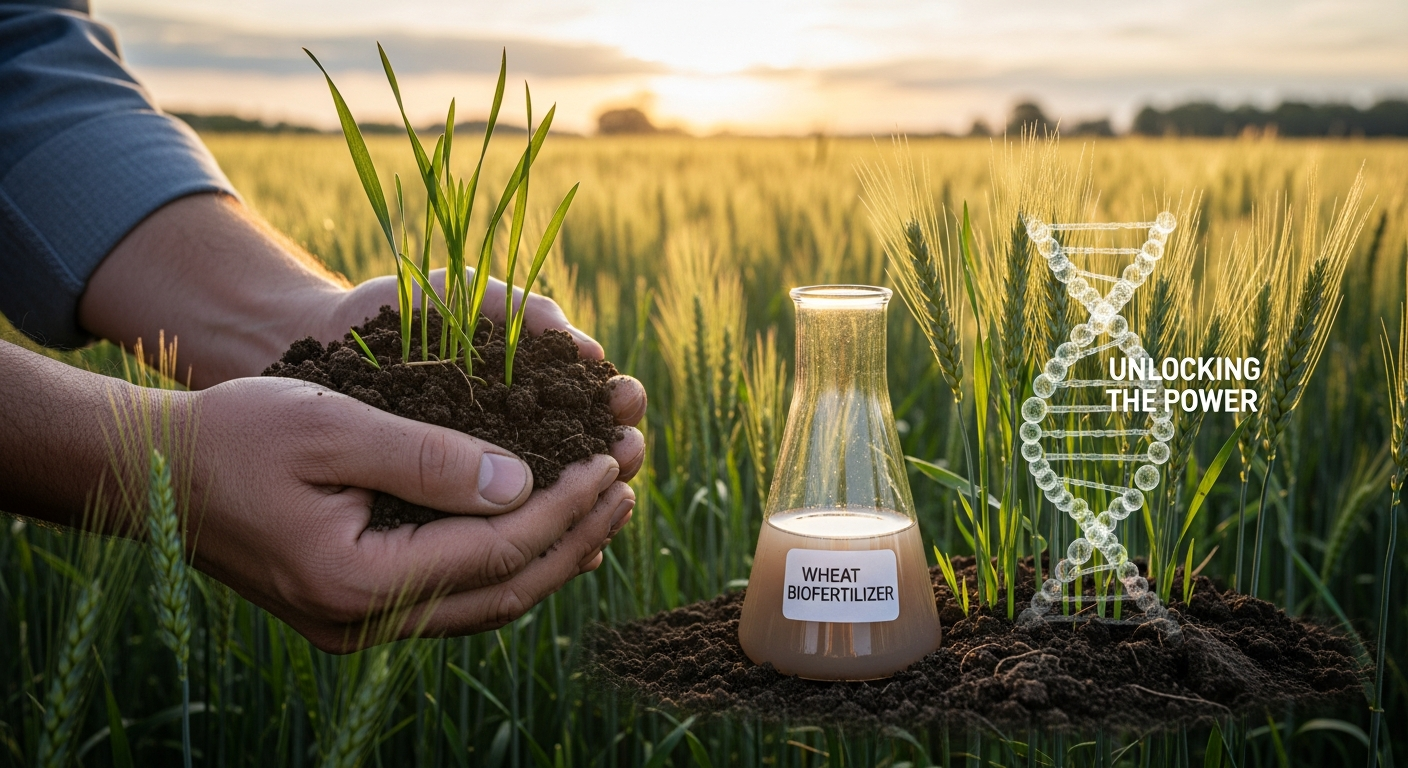
Wheat biofertilizers are eco-friendly inputs into agricultural production that have been used for generations by farmers to improve soil health and increase productivity. They are based on biological processes, and therefore work synergistically with soil-microorganisms to organically nourish wheat crops sustainably while providing long-term benefits to the soil.
Wheat biofertilizers contain many types of beneficial microorganisms that help to "unlock" soil's stored nutrient (nitrogen and phosphorus), allowing seasonal release of readily available forms to wheat for all stages of growth - from early seedling development through grain fill.
Wheat biofertilizers are safer for your soil than chemical inputs as they enhance the natural structure of the soil and balance its microbial population. Biofertilizers will provide increased levels of nutrient absorption; develop strong and healthy roots; and enhance the plant's ability to tolerate adverse environmental conditions, which will contribute to a better quality product.
Wheat biofertilization allows farmers to produce more wheat with improved tiller development, increased grain quality, and a higher yield while ensuring that they take care of the soil and the environment, which is what a farmer should be doing.
Understanding Wheat Biofertilizer: What Is It and Why Does It Matter?
Biofertilizers are composed of microorganisms and are used to promote the development of abundant and healthy crops of wheat. The microorganisms improve nutrient availability within the soil, and enhance soil fertility.
You would use biofertilizers similar to how millets are used to provide nutrition for a baby. Therefore, the use of biofertilizers is essential for sustainable, modern agriculture.
Wheat Biofertilizer Definition
Wheat biofertilizer is a type of product that is made up of millions of microorganisms such as nitrogen-fixing bacteria (that convert atmospheric gas to usable form), solubilizing phosphorus microorganisms (that help make phosphorus available) and Rhizobium that promote plant growth. Biofertilizers naturally combine with the processes that occur in the earth to provide the wheat with all of its essential nutrients.
Wheat biofertilizers can provide a number of benefits. They include:
- Improved availability of nitrogen and phosphorus.
- Improved root growth and nutrient uptake.
- Restoration of the balance of soil microorganisms.
- Safe for use in repeated or long-term applications.
Biofertilisers do not force plants to grow, they enhance the soil's ability to nurture wheat. Biofertilisers do not contain synthetic fertilisers.
The Role of Biofertilizers in Organic Farming
Biofertilizers are extremely important when it comes to organic agriculture and sustainable farming systems because they serve as substitutes for synthetic fertilizers and may also reduce the total amount of synthetics being used. Additionally, biofertilizers improve soil structure, promote beneficial microbial activity, and support the maintenance of ecological balance in wheat fields.
The use of biofertilizers in organic wheat production accomplishes a few key things:
- Increases the rate at which nutrients cycle naturally
- Improves soil health and fertility
- Decreases the amount of chemical residue left in the soil and on harvested crops
- Promotes eco-friendly agricultural practices
For these reasons, using biofertilizers as a source of nitrogen and phosphorus for wheat growers growing organically or using a lower-input agricultural production system is a critical component in the transition to these types of systems from conventional agricultural practices.
Benefits of Using Biofertilizers for Wheat
Wheat crop yields can be dramatically increased through the use of bio-fertilizers that not only increase crop yields in the short-term but also create long-term sustainable practices for crop productivity while maintaining soil health.
Benefits Of Using Bio-fertilizers For Wheat Are:
- Stronger Root & Shoot Development
- Improved Tillering & Grain Formation
- Better Nutrient Use Efficiency
- Increased Environmental Stress Tolerance

The Science Behind Wheat Biofertilizers: How Do They Work?
Understanding the science of wheat biofertilizers is important in order to understand how they help grow wheat crops from seed to harvest. Like all other crops, wheat crops are supported by various biological processes that relate to the growth of those crops.
Wheat biofertilizers act as support systems for the different biological processes that occur during the life cycle of a wheat crop. Wheat biofertilizers contain beneficial microorganisms that help break down and release nutrients from the soil, promote healthy root development and enhance overall plant health in an environmentally friendly and sustainable manner.
Nitrogen Fixation in Wheat
Nitrogen is extremely important in the development of leaves, tillers, and grains in wheat. The use of Nitrogen-fixing bacteria (found in Bio-fert) can create a source of Nitrogen available to wheat from the atmospheric reserve through the conversion to a Nitrogen form in the soil.
Nitrogen Fixation and Wheat.
- Provides gradual availability of Nitrogen during the life of a crop
- Increases leaf greenness and rate of photosynthesis
- Encourages vigorous tillering and plant development
- Reduces reliance on Chemical Sources of Nitrogen Fertilizer.
The Microorganisms in the root zone of wheat produce adequate amounts of Nitrogen consistently to supply the necessary nutrients during important stages of Wheat's growth.
Phosphorus Solubilization
Phosphorus is vital for root formation, energy movement, and initial establishment with crops but most of the phosphorus in soil is not accessible to plants. Phosphate solubilizing microbes found in bio-fertilizer release organic acids that convert phosphorus that has been "fixed" and immobilized into plant available forms.
Phosphorous Solubilization Has Several Important Benefits
- Encourages deep, vigorous root systems
- Promotes early establishment of crops
- Improves flowering and grain fill
- Increases effectiveness of nutrient use
By ensuring access to phosphorus at critical growth stages, this will help support wheat growth when they need this nutrient the most.
Microbial Activity and Soil Health
Wheat biofertilizers offer additional benefits for improving soil health; beyond nitrogen and phosphorus. Microbial activity contributes to increased organic matter decomposition, soil structure, and a balanced rhizosphere through active microorganisms.

Key Benefits of Using Wheat Biofertilizers Over Chemical Fertilizers
Like natural millet, wheat bio-fertilizer provides gentle and sustained nourishment. Compared to chemical fertilizers, wheat bio-fertilizer provides a more healthful option for sustainable agriculture because it produces long-term benefits to the plant and the farmer through the interaction of the microorganisms found in the soil.
Increased Wheat Yield Naturally
Biofertilizer for Wheat Works By Creating Availability To The Process Of Natural Soil For Nutrient Availability And Activation Of Natural Soil Processes Instead Of Accelerating The Growth Of Plants. As A Result, The Mcs' Straw, Root, And Tillering Will Develop More Strongly Than If You Had Used An Accelerated Growth Product.

A Good Supply Of Nutrients Will Result In A Healthier Plant Over Time And Also Provide Consistent Improvement In Yield From Year To Year.
Reduced Chemical Input in Wheat Cultivation
Using chemical fertilizers too often can affect soil quality and cause higher production costs. Farmers can switch to using biofertilizers instead of conventional fertilizers for their wheat crops, allowing them to produce higher-quality crops and maintain soil health while reducing their reliance on chemicals.
Pros of Reduced Chemical Inputs :
- Reducing the cost of inputs over time
- Improving your soil's microbial balance
- Decreasing your chance of developing an acid or nutrient imbalance in your soils
- Increasing your safety for continued wheat production
As farmers combine our wheat biofertilizers into the nutrient management program for their wheat crops, they will be achieving the same level of productivity while reducing their use of chemical fertilizers.
Environmental Impact of Biofertilizers
When compared to chemical fertilizers, biofertilizers are a more eco-friendly option that helps maintain ecological balance in areas where wheat is grown.
Benefits of Wheat Biofertilizer:
- Increase the number of organisms in the soil (soil biodiversity)
- Decrease the amount of pollution to water and soil
- Decrease the amount of greenhouse gases produced
- Support sustainable and organic agriculture.

How to Apply Wheat Biofertilizers for Maximum Effectiveness
The correct application of wheat biofertilizer is critical for achieving optimal results. Much like the millets that are altered to make them acceptable for feeding infants, so too must the correct application of wheat biofertilizer be achieved for the number of viable beneficial microorganisms that survive and multiply will help promote the growth of wheat from germination through harvesting.
Wheat Seed Treatment with Biofertilizer
Seed treatment is probably one of the best ways to introduce beneficial microbes at the earliest growth stages of a crop. By treating wheat seed with a wheat-based biofertiliser, germination, root development and early plant growth can be improved.

This is a very cost effective method and is highly recommended for securing that crops will be established consistently.
Application Timing and Methods for Wheat Fields
For the application of biofertilizers to be effective, both the timing of the application and the method of application are important to achieve maximum effectiveness. The best way to ensure that the microbial population reaches the maximum amount of nutrient exchange is through soil and root zone applications.
Common Methods of Application:
- Mixing biofertilizer with compost or farmyard manure before application or as a soil application during land preparation.
- Soil application when planting or at early stages of growth (root zone application).
Best application timings:
- At planting the seed.
- At early vegetative growth.
- Before the tillering stage.

Best Practices for Biofertilizer Use in Wheat Farming
In order for wheat producers to benefit most from using bio-fertilizers on their farm fields, producers should make the best choice of practices available to ensure your bio-fertilizers will remain usable over time while increasing your bio-fertilizer effects through the protection of their microbial activity.

By Using these practices producers can take full advantage of bio-fertilizers - resulting in increased crop yield, better fertility of soils, and continued higher ending yields due to the long term benefits of bio-fertilizers from crop reaches from year to season.
FAQs
Q1. What is wheat biofertilizer?
Wheat biofertilizer is a natural product containing beneficial microorganisms that improve soil fertility and nutrient availability for wheat crops.
Q2. How does biofertilizer for wheat increase crop yield?
A biofertilizer for wheat enhances nutrient uptake, promotes strong root growth, and supports better tillering and grain development.
Q3. Can biofertilizers replace chemical fertilizers in wheat farming?
Biofertilizers can partially replace chemical fertilizers and significantly reduce their use when combined with balanced nutrient management.
Q4. When should wheat biofertilizer be applied?
Wheat biofertilizer is best applied during seed treatment, at sowing, or in early vegetative growth stages.
Q5. Are biofertilizers safe for wheat farming?
Yes, biofertilizers are safe, eco-friendly, and suitable for long-term and sustainable wheat cultivation.
Conclusion: Make the Switch to Wheat Biofertilizer and Transform Your Harvest Today!
Switching to wheat biofertilizers is a great alternative for farmers who want to increase their yield without any negative effects on their soil health. With beneficial bacteria and other microorganisms in biofertilizers, there is improved accessibility for nutrients, increased root growth from plants () and subsequently improved quantity of the crops throughout the entire growing season for wheat crops. It also increases the long-term fertility of the soil — biologically maximising yield potential whilst optimising long-term soil fertility.
Using biofertilizers on wheat will reduce the dependency on synthetic fertilisers meaning a decrease in production costs and less damage to the environment. A soil with a higher number of active microorganisms will retain moisture more effectively, use nutrients more efficiently and produce stronger plants that are less vulnerable to climate changes and disease.
Therefore, crops grown using biofertilizers will yield better quality grain and greater uniformity from year to year.
In today's world where sustainable farming practices must be implemented, biofertilizers provide farmers with an economically feasible and environmentally friendly means for growing wheat. By choosing wheat biofertilizers today, you will establish healthier crops, improve soil quality, and help ensure long-term profitability to your farm; thereby facilitating successful wheat harvests today and for many years to come!