
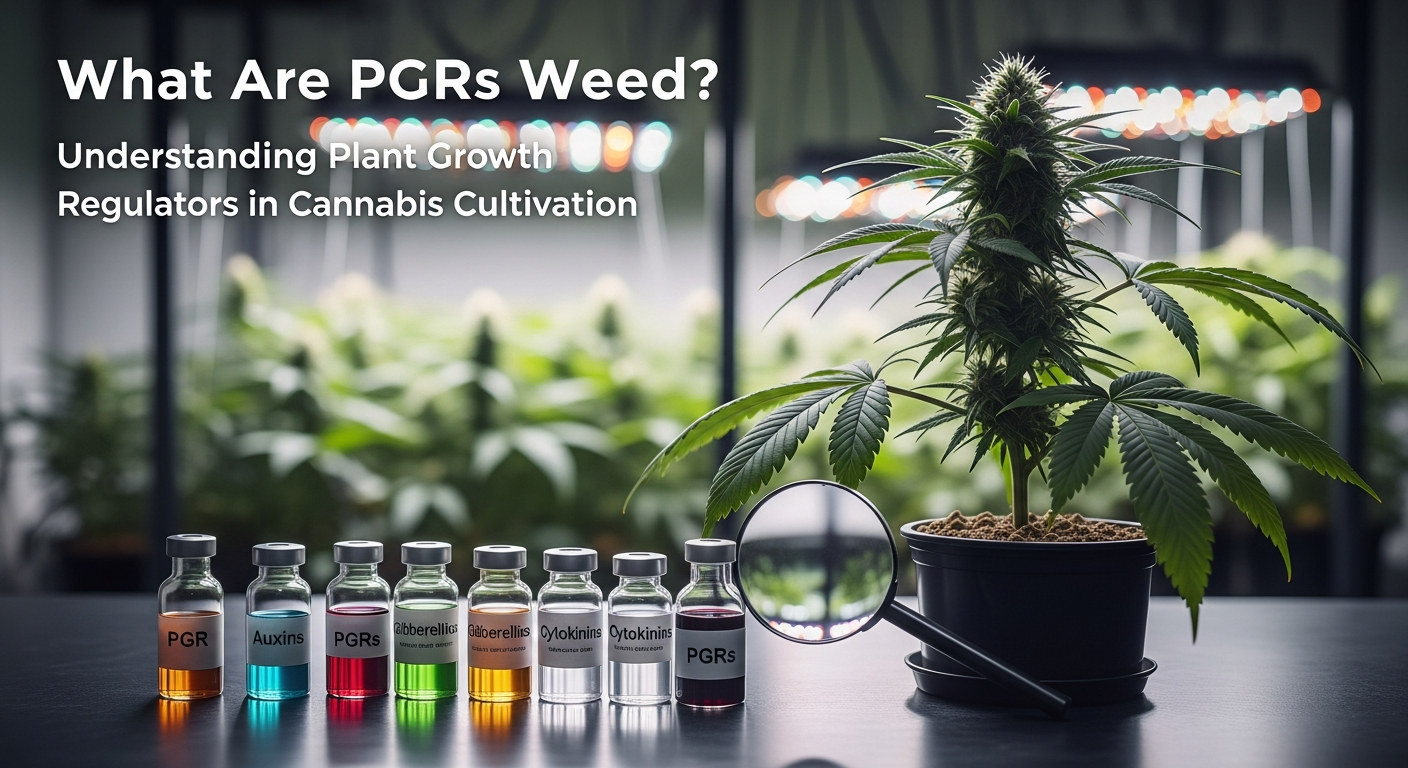
Cannabis producers use plant growth regulators PGRs to achieve their desired plant structure regarding height, bud structure, and overall plant size.
In addition to affecting key functions of plants (e.g., stem thickness, branching, and flower formation), PGRs enable growers to effectively manage their crops in relation to specific commercial uses. Growers need to be aware of the effects of PGRs on plant health as well as on the quality of soil and the harvested crop, due to the potency of PGRs.
There are many types of PGRs, including natural products such as seaweed extract and humic acid, and various synthetic compounds that vary widely in their effects on cannabis. An understanding of these differences is essential for growing cannabis in a safe, clean, and productive manner.
Introduction: Why You Need to Know About PGRs in Weed
Cannabis cultivation methods are diverse, but there are many ways to grow cannabis nowadays. Plant Growth Regulators (PGRs) are some of the most significant developments among contemporary growing techniques. They determine how cannabis grows and develops and have a major impact on a grower's final product. As demand for cannabis continues to increase, growers must understand how to use PGRs to provide their customers with healthier cannabis products while also providing themselves with cleaner growing materials.
PGRs are also very different in their impact on plant health. Different PGRs include natural and non-natural chemical compounds that have the potential to affect cannabis quality negatively if they are used incorrectly. On the other hand, if used correctly, they can provide great benefit to growers
The Role of PGRs in Modern Cannabis Agriculture
Cannabis growers use PGRs to help growers manage the shape, size, and density of their cannabis plants. PGRs have a significant effect on how cannabis plants grow in all aspects, from damaged root structure to mature bud.
Advantages of using PGRs:
- Maintains even spacing between plants
- Provides a stronger stem for heavy buds
- Helps to manage a cannabis canopy more efficiently in an indoor environment
- Provides an increase in total efficiency for growing plants within an environment where there are space constraints.
Why Growers Use PGRs in High-Demand Cultivation
The use of plant growth regulators (PGRs) will increase with the increase in cannabis being produced worldwide; therefore, cultivators will need to develop ways to increase crop yields and develop consistent quality in their crops. By using PGRs, cultivators can develop compact, firm and uniform plants, which are desirable attributes when selling cannabis products within the marketplace.

Understanding Safety Concerns and Quality Impact
Both naturally occurring PGRs are safe and beneficial for plants, while the application of some synthetic PGRs can cause plant deformation and create undesirable residue if applied incorrectly. It is essential that both the grower and end consumer understand the difference between natural and synthetic PGRs and their potential risks.
Primary Concerns:
- Density of the bud may be unusually high or sponge-like in texture
- The flavour and aroma may diminish or degrade from the application of synthetic PGRs
- Chemical build-up present in the soil from the use of synthetic PGRs will affect soil health
- Restricted or banned synthetic PGRs have the potential to create risks for cultivators when growing their crops.
What Are PGRs? The Basics Explained
Plant Growth Regulators (PGRs), substances that can affect the way a cannabis plant grows and develops, as well as how it interacts with its environment. PGRs can help provide support for the plant’s stem and improve the plant’s structure and influence how the plant develops buds, making them an invaluable tool in the commercial production of cannabis.
Plant Growth Regulators Defined
PGRs are chemicals that regulate and affect the plant's natural growth processes.
They regulate a plant's size, branching structure, flowering, and formation of roots in much the same way that nutrients promote the growth of children at different life stages.
Benefits of Using Plant Growth Regulators:
- Regulation of excess elongation of the stem.
- Increased ability of the plant to be stronger and more compact.
- Improvements in plant shape and overall appearance.
PGRs can either be natural sources or synthetic sources, therefore the grower should understand which source to use when determining plant safety and overall crop quality.
Natural vs Synthetic PGRs Used in Cannabis Farming
PGRs also vary in their intensity and effects.
1. Natural Plant Growth Regulators.
Natural PGRs come from seaweed extracts, humic acid, compost tea, and other types of biological sources. They support plant growth by providing more gentle support and allowing the plant to grow naturally.
2. Synthetic Plant Growth Regulators.
Synthetic PGRs are synthesized chemical substances that provide extremely high levels of control over bud density, height, and canopy shape. While they have high efficacy, they also must be used with caution due to the possibility of residual effects and the need for careful handling of synthetic substances due to safety issues.

How PGRs Influence Root, Stem, and Bud Development
PGRs play a role not only in the development of the plant during each stage of its life cycle
- On the root system: PGRs may promote increased Root Branching and strengthen overall root systems, enabling plants to uptake higher levels of nutrients and water.
- On the stem: PGRs can provide additional thickness, decrease overall height (possibly), and increase stability of tall/heavy plants, so that they do not break.
- On the Buds: PGRs can influence buds forming in different ways, for example: Buds have a differing degree of Density, Shape, Size as well as the Final Quality of the Harvest.
Specific Benefits from Using PGR's: ↑nutrient uptake; ↑ structural support; ↑ uniformity in results on bud formation; ↑ resistance to stress, etc.
The use of PGR's for Growers must be something they are cautious with in that if they balance performance with Plant and Consumer safety.
How Growers Use PGRs in Cannabis Cultivation
Plant Growth Regulators (PGRs) are utilized by growers to shape the growth of cannabis plants, making them stronger, more manageable, and better suited for maximum yields. PGRs regulate the height of the plant; help develop stronger stems; and promote fuller bud development. For growers, they are an important tool to produce the same size crop from all grows by keeping similar varieties under PGRs during various growing cycles.
Application Methods: Soil, Foliar & Nutrient Solutions
Soil-based PGR application is the most common way to apply these products, as it provides the ability for gradual uptake through the root zone.
Why Growers Prefer the Soil Application Method:
- Produces stronger roots
- Provides for steady absorption
- Increases nutrient uptake
- Can be used by all growers, regardless of type of cultivation system.
Foliar spraying is an application method used by growers who require rapid results. By applying the PGR to the leaf surface, the intake of the product is immediate.
Foliar Application Benefits:
- Displays visible results quickly
- Aids in enhancing the vegetative stage
- Aids in controlling and limiting stretching during preflower.
Nutrient Solution application is the ideal application method for hydroponically and indoor produced cannabis plants, as plants will absorb the PGR through the water.
The Benefits of Nutrient Solutions in Hydroponic Applications:
- Provides for precise environmental & growth control
- Provides predictable behavior of plant growth in relation to nutrient solution application
- Provides a more efficient method of nutrient uti

Using PGR Fertilizer to Control Plant Height & Bud Density
When a grower wants more consistent and predictable plant structure PGR Fertilizers will be used. Large-scale growing operations require uniformity, therefore most growers prefer PGR Fertilizers for this reason.
Benefits of using PGR fertilizers for height control:
- It keeps plants from growing excessively tall.
- Reduces overall training of plants.
- Keeps plants in the proper spacing for the grow room.
Bud Density Enhancement:
There are also some types of PGR Fertilizers that help keep buds compact through the flowering process by regulating cell division in the developing flower.
Reasons that growers use PGR Fertilisers:
- Simplifies canopy management.
- Increases harvest efficiency.
- Enhances light penetration for all plants
Commercial Techniques for Maximizing Yield
Commercial cannabis growers have developed systematic PGR Fertiliser programs that allow them to produce high volumes of cannabis without adversely affecting plant health.
Some methods used by cannabis growers to increase yield include:
1. Stage-Specific PGR Scheduling
Growers use PGR Fertilisers during vegetative and flowering stages of growth, and use different types of Regulators.
2. Controlled Lighting with PGR Support
Growers will ensure that the use of PGRs coincides with the light cycle being used to support growth.
3. Canopy Uniformity Planning
PGRs that limit plant height can help establish a similar bud size to ensure easier harvesting.
4. Root Enhancement Programs
When growers apply root-focused PGRs early in the life cycle of the plant, they typically provide better nutrient uptake.

The Potential Risks and Downsides of Synthetic PGR Use
PGRs (plant growth regulators) Synthetic PGRs allow growers to force a more rapid growth rate and larger crop yields, but at the same time, they can adversely affect the quality of the plant, reduce soil quality and long-term farming sustainability. Plants treated with synthetic growth regulators are much like people who take anabolic steroids in that the synthetic growth regulators may artificially boost the rate of growth and the size of the resulting plants but the excess growth will change the plant's natural structure and result in permanent effects on crop quality and safety, leaving behind chemical residues on the crop. Understanding these risks enables farmers to make better, more responsible decisions in their cultivation of crops.
Impact on Plant Quality, Aroma, and Structure
Synthetic PGRs can change the size, shape and density of a crop plant and the crop's internal structure or development.
While they may produce attractive plants from a visual standpoint, the internal quality of the plant will typically suffer due to manipulation of the plant's natural hormone balance.
Key Points:
- Creates unusually dense or swollen plants structures
- Decreases the plant's natural aroma, taste and nutritional value.
- Increases the likelihood of brittle stems or weak internal tissues.
Long-Term Soil Degradation From Chemical PGRs
The continual application of synthetic PGRs has a negative impact on soil structure, the benefits of beneficial microorganisms and the balance of nutrients held in the soil.
Key Points:
- Decreases the amount of beneficial microorganisms in the soil.
- Creates nutrient imbalances among the various layers of soil.
- Causes compaction and lack of aeration within the soil structure.
- Creates added dependence on chemical inputs by the grower.

Why Some PGRs Are Restricted or Banned in Agriculture
Some synthetic PGRs have been banned due to their potential toxicity or harm to the environment along with the concern of residue risk after harvesting the crop.
Key Points:
- Certain synthetic PGRs will leave toxic residues on crops.
- Can contaminate the surrounding ground and water.
- Linked to human and livestock health risks.
They have been banned globally based primarily on the safety reasons related to their use.
How to Identify and Avoid Poor-Quality PGR-Treated Cannabis Crops
Cannabis that has been grown with the use of synthetic PGR's usually looks good on the outside when in fact it is usually of inferior quality compared to cannabis that has been grown naturally. Cannabis grown with synthetic PGR will be far denser than cannabis that has been grown using natural methods and also have much less aroma and weakened structural strength. Knowing what signs to look for allows the grower and buyer to make an informed decision. Understanding the differences between natural and chemically assisted growth is necessary to maintain clean cultivation practices and to prevent the use of unsafe or harmful practices.
Physical Signs of Heavy Synthetic PGR Use in Plants
- Many plants that are treated with high levels of synthetic plant growth regulators (PGR), or any other type of unnatural chemical will produce dense buds. They will also produce flowers that are not soft, i.e., spongy. Instead, flowers treated with PGRs will feel hard, almost like rock.
- These plants often contain fewer trichomes, dull colors, and, therefore, represent a diminished ability to produce terpenes. Additionally, the stalks/walks of the plant may also be brittle, which takes a toll on the plant's normal growth cycle.
- Growers can harvest much sooner then remove symptoms of exposure to PGRs and use more traditional methods of growing.
Differences Between Natural vs Chemically Enhanced Growth
- Normal cannabis plants produce buds that are well-balanced, aromatic, and of a variety of colors, and they also contain a healthy amount of resin. Chemically enhanced cannabis plants produce buds that are uniform in shape but lack aroma, flavor, and natural softness.
- Synthetic PGRs can interfere with nutrient distribution in the plant and, as a result, limit the production of terpenes and cannabinoids.
- Normally, growth will create an open flower with adequate airflow and allow for proper maturation of the flowers.
- These observable differences allow the grower to assess how much damage has been done to the plant and the overall quality of the crop and plant health as it relates to the application of PGRs.

Choosing Growers Who Prioritize Clean Cultivation
- Growers committed to clean growing practices do not utilize synthetic PGR's; they use all natural growth boosters and fertilizers, provide plants with the correct amount of nutrients, and control the environment around the plants. Growers who are committed to the use of organic soil amendments, compost teas, and microbial inoculants often have transparency in the way in which they farm.
- These grower types also concentrate on the health of the plant instead of manipulating the plant to artificially increase its yield, which allows the plant to grow and develop its full natural profile. When you choose to purchase from these grower types, you are promoting safer agricultural practices and supporting the responsible production of cannabis.
- When consumers and businesses choose to purchase from growers that emphasize quality and not yield manipulation, it contributes to a healthier ecosystem of farming.
PGR-Free Alternatives: Supporting Clean and Natural Cannabis Cultivation
Growing cannabis plants cleanly and naturally will ultimately allow growers to take advantage of more sustainable growth cycles while avoiding the harmful effects of chemical pesticides. By growing cannabis using PGR-free alternatives, growers can grow strong stems, lush green leaves, and produce products that have higher quality than if they had added chemicals to the plant during its growth cycle. Because naturally grown cannabis is easier for the plant to absorb, the environment for growing cannabis, and the long-term agricultural sustainability that follows, allows for a successful and safe growth cycle for the plant.
Natural PGRs for Weed—Seaweed, Humic Acid & Compost Tea
Seaweed extract is an effective source of a natural plant growth regulator (PGR).
Seaweed extract is rich in micronutrients and natural growth hormones to promote a uniform growth pattern.
- Grows stronger stems and roots.
- Promotes the absorption of all nutrients through natural means.
- Supports overall plant durability over time.
Due to its gentle composition, seaweed extract has become a preferred choice for growers to consider and transition to organic farming by using sustainable and safe products in place of synthetic PGRs.
Humic Acid is great; humic acid is a soil supercharger because it can improve nutrient absorption and vitality of roots.
- Converts the soil's nutrients into available forms for use by plants.
- Helps maintain consistent plant growth during times of growth stress.
- Is capable of creating new soil structure over time.
Humic Acid is a slow-release, steady growth promoter; and, therefore, is recommended for growers who want to transition to PGR-free methods of organic farming without sacrificing their production capabilities.
Compost Tea contains all of the beneficial microorganisms to develop soil health and promote natural growth in plants.
- Promotes plant immunity.
- Promotes the development of healthy foliage and buds.
- Revives soil biology and long-term productivity.
Organic Farming Practices for Healthier Cannabis Plants graphic
Natural amendments and inputs from microorganisms are used to provide balanced,
healthy, and continuously developing plant and soil ecosystems through organic farming.
- Replacement of synthetic fertilizers and chemicals through organic farming.
- The natural growing process of a plant has benefited itself by growing stronger,
- more developed buds.
- The maintenance of microorganisms in the soil has been preserved/protected for aid for further cultivation.
Eco-Friendly Soil Management Without Harsh Regulators
Soil management in an eco-friendly manner allows growers to cultivate cannabis plants to their fullest potential without the use of harsh chemical plant growth regulators (PGRs). Healthy, nutrient-rich, sustainable soil is vital during all three developmental stages of cannabis, as it is essential for every stage of development, just as a baby requires balanced nutrition for optimal growth at the various stages of development.
Some Benefits of Eco-Friendly Soil Practices:
- Increases the amount of natural microbes present in the soil
- Increases the amount of water and air in the soil
- Prevents chemical accumulation from damaging cannabis roots
- Provides ongoing agricultural productivity.

FAQs :
Q1. What are PGRs weed?
PGRs Weed describes Cannabis cultivated with Plant Growth Regulators that affect the way Cannabis grows and buds develop.
Q2. Is it safe to use PGRs in cannabis cultivation?
It is considered safe if used appropriately; however, growers should always stay away from any banned synthetic substance.
Q3. Are there natural PGRs for weed?
Yes; Examples of natural Plant Growth Regulators commonly used for Cannabis include Seaweed Extracts, Humic Acids, Compost Teas, and Kelp-based Fertilizers.
Q4. What does a pgr fertilizer do in cannabis farming?
PGR fertilizers help the grower to control how the plant develops structurally, increase root strength and offer consistent quality.
Q5. How can growers avoid harmful synthetic PGRs?
To avoid using harmful PGR, Fertilizers, growers should use only organic products, read the label on any product they are purchasing and check for the Approved Agricultural PGRs on the product label.
Conclusion: Make Informed Choices—Choose Safe and High-Quality Cannabis Cultivation Practices
Selecting safe, high-quality cultivation techniques requires an understanding of the impact PGRs have on plant growth. Growers who follow legal agricultural production practices, use alternative natural sources of PGRs, and utilize sanitary nutrient sources, will be able to grow healthier plants, produce greater yields, and create safer products to sell. Avoiding the use of synthetic chemicals which could potentially harm plant viability aids in protecting the quality of plants and contributes to the preservation of long-term soil health and safe environmental conditions.
When growers select quality inputs and organic alternatives for enhancing the growth of plants, they will produce a superior product that is clean, responsible and high-quality. Growers that make informed choices today will provide consumers with a safe, natural, and properly grown cannabis product for many years to come by using the best practices available.