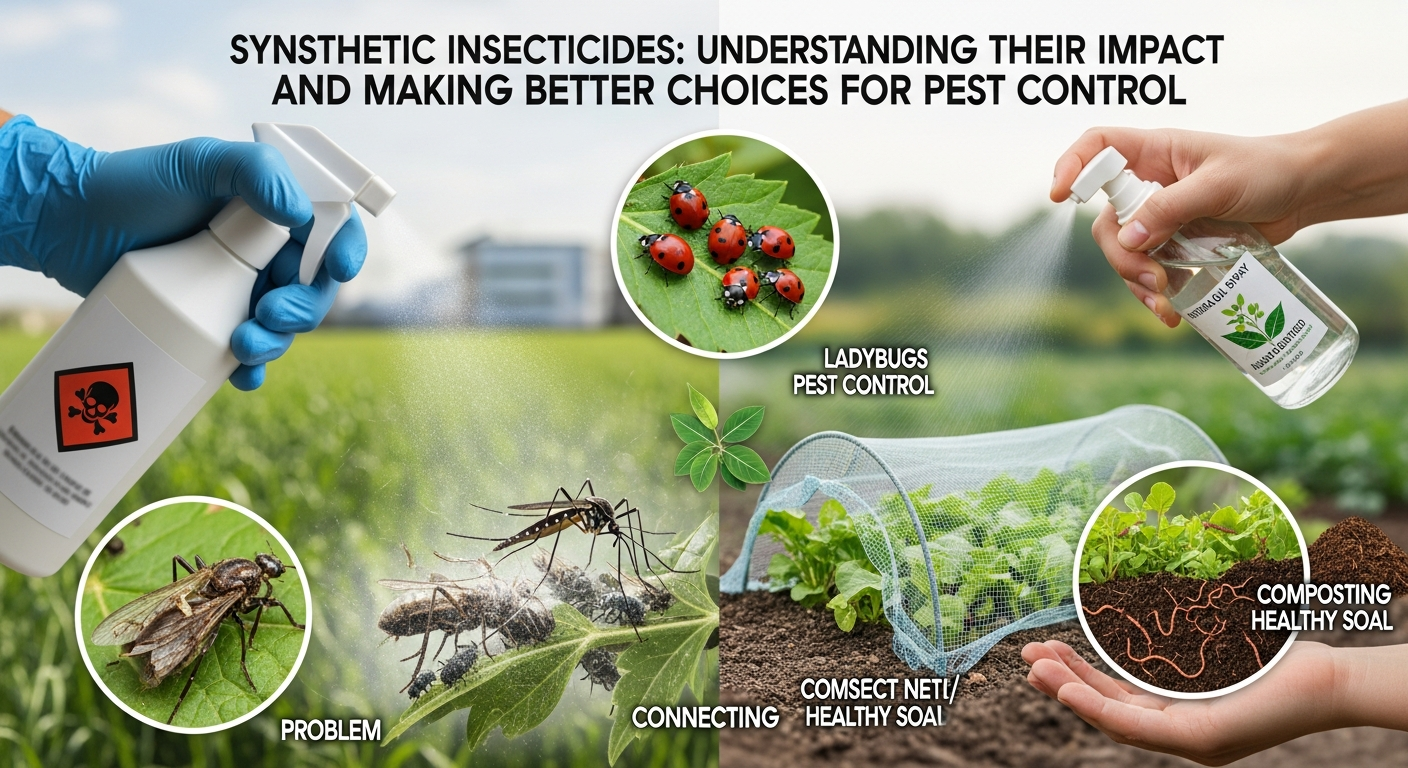
Synthetic insecticides are manufactured chemicals that have been specifically designed to kill, control or repel insect pests that are harmful to crops, other living plants and harvested food products. Farmers have long relied on these products because they work quickly in protecting crops from serious damage caused by insect pests.
There are different ways that insecticides can be used to kill insects; some need to be in direct contact with an insect to kill it, while others can be absorbed through the food source (plants) that the insect has eaten. Insecticides that are absorbed into the plant and travel throughout the plant (called systemic insecticides) will protect the leaves, stems and roots of the plant from being eaten by feeding insects and can provide long term protection from any future infestations.
Synthetic insecticides, such as organophosphates, carbamates, pyrethroids and neonicotinoids, are formulated to be able to target particular groups of insects. However, using synthetic insecticides improperly or excessively can affect the health of the soil, kill beneficial insects and contaminate the surrounding environment.
Learning how synthetic insecticides work and how to use them responsibly will help ensure that a balance is struck between effective pest control and environmental safety. This will lead to increased sustainability and smarter gardening and farming practices.
What Are Synthetic Insecticides and How Do They Work?
Synthetic insecticides have been developed chemically as a pest control system to protect crops, trees, & stored produce against insects which, when uncontrolled, cause economic loss & reductions in yield. They have been adopted in many areas of modern agriculture as they offer swift, effective results against a certain type of insect (targeted), & reliable control against a high level of infestation.
Synthetic insecticides disrupt critical biological processes in insects (such as nerve transmission, growth, feeding, or respiration). How synthetic insecticides work will depend on how they are formulated and the method used for applying them (i.e., quick verse long-term results); they can have an immediate effect upon contact with the target insects & remain active within the plant system to offer future protection.
Definition of Synthetic Insecticides
Synthetic insecticides are chemical insecticides made of synthetic components designed to create insecticides that eliminate insects. The chemicals in the synthetic category have all the necessary chemical properties and/or synthetic compounds to be able to destroy, repel or control insects. However, synthetic insecticides are typically much more effective (potent) than other cultivars. They also have a longer shelf life than other cultivars.
Examples of synthetic insecticides used in a variety of situations include :
- Field crops, vegetables and fruits
- Horticulture and plantations
- Forestry and landscaping
- Stored grain protection
Synthetic insecticides can be classified as either organophosphates, carbamates, pyrethroid or neonicotinoid-type insecticides depending on their intended use against species of insects while still being effective under a variety of environmental conditions.
Modes of Action in Pest Control
Modes of action for controlling pests via the synthetic insecticides are different due to the chemistry, and formulation of these materials. By having a good understanding of these various modes of action, we can prevent developing resistance, and therefore help to maintain the effectiveness of these materials for controlling pests.
Types of action that are used in pest control include:
- Neurotoxic Action: Affects the insect's nervous system causing them to become paralyzed and eventually die.
- Growth Regulation: Affects molting and stages of development by interrupting them.
- Respiratory Inhibition: Inhibits the insect from getting oxygen during the respiration process.
- Feeding Disruption: Prevents the insect from being able to eat the plants.

Systemic Insecticides for Trees and Crops
Systemic insecticides for trees can be absorbed through the tree's root, stem or leaf and transported using the tree's vascular system throughout the whole tree. As a result, they provide effective protection for sap-sucking and internal feeding pests by providing protection for the entire tree from root through stem to canopy.
Benefits of systemic insecticides:
- Long-term internal protection;
- Effective on hidden pests (borers/leaf miners);
- Reduces the frequency of spraying;
- Provides protection to new growth.
Types of trees/crops that are commonly treated with systemic insecticides:
- Fruit Trees
- Ornamental Trees
- Plantation Crops
- Forestry
When used properly (as indicated by the label), systemic insecticides have proven effective for pest eradication while producing low surface residue and therefore reducing the need for repeated applications.
The History and Evolution of Synthetic Insecticides
Over the years, the evolution of synthetic pesticides has changed the way we control pests. Starting with crude chemical compounds as the basis for pest control, synthetic insecticides have progressed to advanced precision products that are designed to better protect crops, trees, and food sources from damage caused by insects while at the same time increasing agricultural production on a large scale.
The progression from using chemical compounds in early research, to the precision-based products we now use, is indicative of advancement in science, toxicology, and environmental awareness.
Early Chemical Pest Control Methods
The pest-control methods of the late 19th century and the first few decades of the 20th century were primarily based on simple inorganic compounds that were capable of eliminating insects by contact. These methods of pest control were effective for controlling pests; however, the pesticides were typically not selective and were not safe for humans, animals, and/or the environment (soil quality).
The most common methods of pest control during the 19th and early 20th centuries included:
- Starting with a mixture of sulfur and lime
- Using arsenic-based compounds for crop protection
- Extracting nicotine sulfate from tobacco
While these methods of pest control reduced pest infestations, there was great danger to humans, animals, and soil health. Consequently, there was a need for safer and more controlled synthetic insecticides to be developed in the future.
The Impact of DDT and Organophosphates
Discovered in the 1940's, DDT was the first synthetic insecticide to be developed that provided long-term pest control and was instrumental in controlling agricultural pests and vector borne diseases due to the long-term pest protection they provided.
In addition to the introduction of DDT, organophosphate insecticides developed and gained a wide acceptance because of their broad pest control capabilities and effective insect control.
The key effects of the era of insecticides include:
- Increases in crop yields.
- Control of mosquitoes and crop damaging insects were improved.
- Concerns over how long these chemicals remain in the environment and the ability of organisms to accumulate these chemicals in their bodies developed.

Modern Advancements in Synthetic Insecticides
There have been significant advancements made in the development and production of synthetic insecticides that have improved their effectiveness, selectivity, and environmental safety. It has also allowed for the formulation of products designed specifically for specific pest(s) while diminishing negative effects to beneficial insect(s).
Examples of recently developed advancements in synthetic insecticides include:
- Targeted modes of action
- Decreased amounts applied with increased effectiveness
- Newer formulas (i.e., granulars, seed treatments)
- Systemic insecticides used more frequently in trees and crops providing internal protection against sap-feeding and internal pests and leaving no pesticide residue on the surface.
As a result, systemic insecticides are now routinely used in fruit trees, ornamental plants, and plantation crops providing long-term residual effects on sap-feeding, and internal pests while having little to no surface residue.
Benefits of Using Synthetic Insecticides in Agriculture and Public Health
Synthetic insecticides have proven to be very effective for protecting crops, trees, and people's health from destructive pests. In responsible use, synthetic insecticides allow farmers to remain productive, prevent losses, and control insects that spread disease; thus, they are an essential part of all modern agriculture and public health systems.
With their proven effectiveness, long shelf-life, and targeted nature, synthetic insecticides are a proven solution in large-scale farming and urban pest management programs.
Improved Crop Yields and Protection
There are many advantages of a synthetic insecticide, including providing a barrier to protect against large-scale infestation of crops from pests. Synthetic insecticides can help to protect crops from the damages caused to leaves, stems, roots and fruits; therefore these insecticides will allow for robust crop growth, maximizing yield productivity during each harvest period.
The benefits agriculture can receive from synthetic insecticides:
- Reduced crop loss from insects and borers
- Protection from destruction throughout the entire growth cycle of the crop
- Higher quality/market value produce at the time of sale
- Effective control of pest populations in trees/farm fields using a systemic insecticide.
Systemic formulations will provide internal protection from within the plant. This will result in providing maximum effectiveness against insect pests that consume plant sap and those that are located within the plant, as well as offering maximum protection from both the insect and plant perspective.
Disease Vector Control
The use of synthetic chemical pesticides to control insect pests that transmit serious diseases is a common method used in public health. These products help improve the health of people and reduce the impact of disease on the population by lowering the number of vector insects.
Some public health advantages of using insecticide-based vector control include:
a) Controlling mosquitoes that transmit the diseases of malaria and dengue
b) Reducing the number of flies and other insects that transmit disease from an urban environment
c) Supporting sanitation programs and programs that control urban pests
Synthetic chemical pesticides such as pyrethroids and organophosphate compounds have been used with success in some countries to reduce disease transmission through the indoor residual spraying of surfaces and the treating of nets.
Cost-Effective Pest Management
Synthetic pest control options, especially synthetic insecticides offer cost effective alternatives to repetitive and labor intensive mechanical/methods of pest control. This is most prevalent on larger commercial entries and farms.
Ways of being cost effective:
- Requires less chemical to be effective
- Long lasting residual effect, means less repeat application.
- Lower labor/cost time.
- High return on investment from crop protection.

Environmental and Health Risks of Synthetic Insecticides
Synthetic pesticides are useful when used correctly in the control of plant pests; however, improper use of synthetic pesticides may create environmental harm and/or health risks. Knowing the risks associated with the use of these products enhances the ability of farmers, growers, home gardeners and public officials to make safe and responsible choices regarding pest control.
Some of the concerns associated with pesticides stem from their ability to persist, migrate through soil and water and be dispersed beyond the target pests.
Effects on Non-Target Species
The effect of synthetic insecticides on non-target species is one major issue associated with synthetic insecticides. Many beneficial insects and wildlife are unintentionally affected.
The following is a list of some of the major impacts of synthetic insecticide use:
- The harmful effects on pollinators, i.e. bees and butterflies.
- The reduction of natural predators such as ladybugs and spiders.
- The toxic effects to birds, fish and aquatic organisms.
- The disruption of local ecosystems and food chains.
Although systemic insecticides for trees are only applied to specific plants, pollinators that feed on nectar or pollen from those trees may still be affected.
Soil and Water Pollution Concerns
Synthetic insecticides can remain in the environment long after being applied. They may contaminate soil and adjacent water sources by means of runoff, leaching and/or drifting.
Environmental concerns include:
- Degradation of soil microorganisms necessary for fertility
- Chemical residues entering rivers, lakes (both surface) and groundwater
- Accumulation of toxins present in aquatic organisms
- Reduced long term health of soil and sustainability of crops.

Human Health Risks and Exposure
Humans are exposed to synthetic insecticides during the processes of manufacturing, using, and consuming through waters or food with residue left behind after application. Long-term or constant exposure could be detrimental to your health.
Some of the possible health risks that could occur from using or being exposed to synthetic insecticides are as follows:
- Skin and eye irritation related to handling
- Breathing issues from inhaling particulate matter
- The nervous system is affected by specific chemicals.
- Long-term health issues could develop because of continued exposure.
Examples of synthetic insecticides that have been used for many years, such as organophosphates, are often found to have much higher toxicity than newer, safer products. As a direct result of this increased toxicity, the regulations and safety procedures for use have become increasingly strict.
Synthetic vs Natural Insecticides: Key Differences
When deciding upon an insecticide to use in pest control management, it is essential to understand the difference between synthetic and natural insecticides. Though both types have the same goal (control of a pest), they differ significantly in effectiveness of control, harm to the environment, and crop/type of pest affected (largely dependent on crop type, degree of infestation, etc.). These differences assist growers/farmers in selecting the most appropriate, effective, and environmentally friendly way to manage pest problems.
The primary characteristic of synthetic insecticides is that they provide fast acting and effective pest control; however, natural insecticides are generally considered to be the safer, less toxic method of pest control.
Effectiveness and Speed of Action
Synthetic insecticides have been manufactured for rapid and consistent action against insects, particularly during serious insect-related problems. As they have been selected for their ability to affect only those insects with specific biological and physiological mechanisms, they will kill the targeted pest immediately after application or shortly thereafter and exhibit long-lasting efficacy
Key points:
- Provide fast action and will kill pests
- Provide longer-lasting residue on plant and tree surfaces
- Will kill pests that are present in large numbers
- Include systemic insecticides that protect the host tree from within
Natural insecticides work more slowly and may need to be reapplied multiple times, making them more suited to initial or mild pest infestations.
Environmental Impact Comparison
Environmental safety is a major factor when comparing pest-control options. Synthetic and natural insecticides differ in persistence, selectivity, and ecological footprint.

Choosing the Right Option for Crops
When selecting an insecticide for your crops it is important to consider pest type, level of infestation, crop type, and environmental conditions, as well as your long-term sustainability goals.
When to Use a Synthetic Insecticide:
- When there is a severe pest infestation
- When a fast response is required
- When there is a need for long-term protection
When to Use a Natural Insecticide:
- When there are low to moderate pest levels
- When it is important to protect beneficial insects
- When you are using organic or environmentally friendly farming methods.
Often the best approach is to use both synthetic and natural solutions together in a combination called Integrated Pest Management (IPM). This will usually give the best overall results by combining the strengths of each type of solution.
Regulation and Responsible Use of Synthetic Insecticides
Irritating insects can be effectively managed through the use of synthetic insecticides; however, because of the dangers associated with using synthetic insecticides, there are strict regulations regarding their manufacture, sale, and application to protect human health, crops, and the environment. It is critical that we only use synthetic insecticides responsibly so we can continue to manage pests over a long period of time without causing undue harm to ourselves and the environment.
For sustainable management of pests, it is essential to understand the regulations regarding the use of synthetic insecticides, to use an integrated approach, and to utilize safe application methods.
Government Regulations and Safety Standards
More than a decade ago governments and agricultural authorities began regulating synthetic insecticides for safety, quality, and environmental standards before being approved for use by an agricultural producer.
The following are major types of regulations for utilizing synthetic insecticides, such as:
- Pesticides must be tested for toxicity and environmental effects before they can be approved
- All approved pesticides must have dosage limits and appropriate application methods
- All pesticides must include usage and storage instructions
- Examples of synthetic insecticides that may pose a higher risk to humans or the environment are subject to restrictions or bans
In addition to regulating using systemic insecticides on trees, these regulations help ensure that they will be applied in such a manner as to protect pollinators, soil health, and any water sources adjacent to the tree(s).
Integrated Pest Management (IPM) Approach
The integrated pest management (IPM) strategy promotes responsible use of synthetic insecticides while combining them with biological, cultural and mechanical control methods.
The principle of IPM is based upon the following:
- Monitoring pests regularly and treating them as needed once they have reached a certain threshold (threshold-based treatment).
- Using pest-resistant crop varieties.
- Using non-chemical means before considering the use of synthetic insecticides (non-chemical first).
- Applying synthetic insecticides only when no other alternatives are available.

Safe Application and Resistance Prevention
Correct use of synthetic insecticide is vital for safety as well as to help prevent pest resistance from developing over time.
Best practices for using synthetic insecticides include:
- Strictly adhering to label recommended dosages.
- Wearing appropriate protective clothing and equipment during the application of insecticides.
- Rotating between different insecticides having different mechanisms of action.
- Avoiding use of the same active ingredient in insecticide repeatedly.
Responsible use of systemic insecticides for trees is particularly important due to the fact that excessive application can result in developing resistance and expose non-target species to unwanted effects.
FAQs
Q1. What are synthetic insecticides examples?
Common synthetic insecticides examples include organophosphates, carbamates, pyrethroids, and neonicotinoids used for crop and pest control.
Q2. Are systemic insecticides for trees safe?
Systemic insecticides for trees are safe when used as directed, following label instructions and regulatory guidelines.
Q3. Can synthetic insecticides be used sustainably?
Yes, synthetic insecticides can be used sustainably when applied responsibly, in correct doses, and combined with IPM practices.
Q4. Are synthetic insecticides harmful to the environment?
They can be harmful if misused, but proper selection and responsible application significantly reduce environmental risks.
Q5. Can synthetic insecticides be used with IPM?
Yes, synthetic insecticides are commonly used within Integrated Pest Management as a targeted, last-resort control option.
Conclusion: Rethinking Our Dependence on Synthetic Insecticides for a Healthier Future
Chemical insecticides have been an essential part of increasing farm production and controlling disease-carrying insects to help farmers keep their crops safe and maintain food security via their speed, reliability, and availability (including newer systemic insecticides used for trees) are all examples of the usefulness of these products to modern agriculture when immediate and effective pest control is needed.
The increasing awareness regarding the environmental and human health issues associated with chemical insecticides urges us to rethink our over-dependence on these insecticides as well as how insecticides are evaluated, chosen, and applied in practice. The development of resistant pests, impacts from chemicals on non-target organisms, and chemical contamination of soil and water demonstrate that there is much work to be done in reducing our reliance on insecticides and adopting safer products through adherence to regulatory requirements.
The future of pest control will depend on using less toxins instead of completely eliminating them from our toolkits. Utilization of chemical insecticides in concert with Integrated Pest Management will allow us to manage our pest populations, monitor pest density, and prioritize sustainability will provide a better chance for crops, ecosystems, and humans to survive—thereby contributing to a healthier and more sustainable agricultural system for generations.