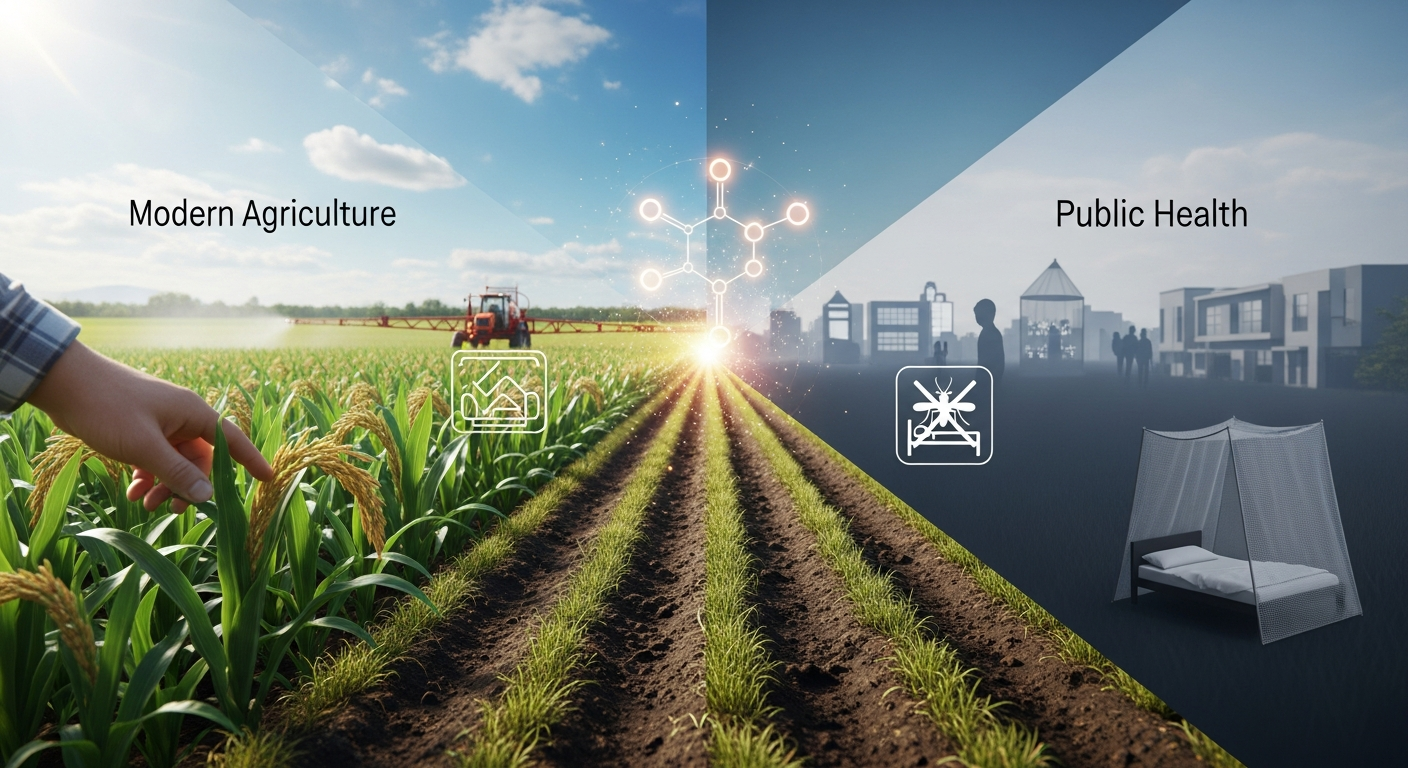
Insecticides serve an important function in the protection of crops, improving food security, and protecting communities from insect-borne disease. They are designed for the management of the destructive pests that impact agricultural systems by damaging fields, lowering yields, and threatening agricultural stability. When pest management is not done properly, farmers will suffer large crop losses that affect food availability locally and worldwide.
The purpose and impact of insecticides are not limited to farming. In agriculture, insecticides are used to protect important crops from pests including borers, aphids, and caterpillars, making it possible for healthier plants to grow and for farmers to produce more crops; therefore, insecticides are an integral part of modern agricultural practices, particularly in areas with high levels of pest pressure. When used responsibly, insecticides in agriculture allow farmers to protect their crops at all stages of growth while contributing to sustainable food production.
Insecticides provide similar benefits to agriculture for public health. Mosquitoes transmit a number of dangerous diseases such as malaria, dengue, chikungunya, and Zika. Controlling the populations of these insects is important in protecting communities from disease outbreaks. Insecticides can be used to reduce the population of mosquitoes and prevent disease outbreaks as well as improve hygiene in the home.
Understanding the Role of Insecticides: Definition and Importance
Pesticides have a valuable and indispensable function in providing stability to the agricultural system and health protection for mankind. As climate changes contribute to an increase in insect threats, Intensive Agriculture and the global food supply are increasing, and the need for effective pest management is higher than it ever has been. Pesticides are developed specifically to combat harmful insects that damage crops; impact food quality; transmit serious disease; and cause considerable financial losses. Pesticides protect a broad spectrum of agricultural production from Broadacre Farms, Orchards, and Small Gardens to Household Food Storage Facilities.
In addition to their ability to kill pests, pesticides are important to agricultural productivity. Pesticides enable farmers to manage pests that can destroy an entire crop, such as caterpillars, Stem Borers, Aphids, Beetles, and Whiteflies. Many of these insects survive and thrive year-round, especially as climate changes have caused warmer temperatures and shifting weather patterns, so the use of pesticides is imperative to protecting crops throughout their development. By preventing losses caused by insects, pesticides help to maintain overall crop health, increase yields, and provide a stable food supply for an ever-increasing population.
What Are Insecticides?
Insecticides come in many forms, including sprays, dusts, granules, and fumigants. Insecticides are substances used to kill or repel insects that may cause damage to crops, people, animals, and stored products. Insecticides also include biological agents (microorganisms or natural products) that provide a more natural way of managing pest populations.
Characteristics of Insecticides:
- Target-Specific Pesticides - Pesticides are often designed to be effective against only specific target pests, while minimizing harm to non-target organisms, such as crops or beneficial insects.
- Multiple Types of Modes of Action - The action of insecticides can occur in various ways or through different mechanisms of action. Some may affect the nervous systems of insects, others may interfere with the growth and/or reproductive systems of insects.
- Natural and Synthetic Pesticides - Insecticides can be produced from natural and/or synthetic sources. For example, neem-based insecticides are derived from the neem tree, while organophosphates are synthetic insecticides.
- Application of Insecticides - Insecticides can be applied in agricultural fields, greenhouses, homes, and warehouses.

Why Insecticides Are Essential
The use of pesticides to protect crops from insect damage is essential for the safety of both our food supplies as well as our health and economic system. Without pesticides, crops would suffer significant losses to pests every year. In addition, the presence of insect vectors of diseases, such as mosquitoes and flies, would leave communities vulnerable to serious illness.
The Role of Pesticides in Protecting Our Food and Health:
- Crop protection from damaging insects such as borers, aphids, whiteflies, beetles, etc.
- Control mosquito populations, thereby reducing the spread of infectious diseases including malaria, dengue fever, Zika virus and chikungunya.
- Protection of stored grain products from insect-related contamination during transportation and storage.
- Improved food quality and safety as a result of decreased pest-related contamination and spoilage.
- Economic stability for farmers and the agricultural supply chain as a result of reduced crop losses.
- Improvement in sanitary conditions of residential and commercial premises.
Importance of Insecticides in Agriculture
One of the areas of agriculture where insecticides play a prominent part is in protecting crops from harmful insects and providing stable, reliable high-quality yields. Farmers rely upon various combinations of chemical, biological and integrated pest management tools to maintain their crops in good condition.
The Importance of Insecticides to Agriculture:
- Increasing crop production: Preventing yield losses due to insect damage at all stages of crop growth.
- Improving plant health: Lessening the effects of insect attack on plants and thereby improving plant strength.
- Protecting cash crops: Insecticides are critical for protection of cotton, sugarcane, vegetable, fruit, rice and wheat crops from insect damage.
- Increasing farmers’ profit potential: Less crop loss means more crops can be sold and therefore better profits will be generated.
- Providing a stable supply of food: A major factor leading to major shortages and soaring prices on food items is widespread loss of crops; use of insecticides eliminates a significant part of this problem.
- Promoting sustainability when applied consistently and responsibly: Use of insecticides is an essential tool in Integrated Pest Management (IPM).

How Insecticides Safeguard Crop Yields and Ensure Food Security
Pesticides are vital to safeguarding agricultural production around the world from pest threats to our food supply. Climate change's effects on temperature increases, the introduction of new invasive species, and a general increase in the occurrence of insect pressures have all contributed to an increase in the number of insects attacking crops; and, therefore, this has created a tremendous need for insecticides to protect crop production from being lost through insect attack. Pesticides help to sustain crop health, prevent widespread insect infestations, and preserve food supply stability throughout the year.
Insects can destroy crops at any time, whether they are seedlings or fully developed; therefore, without effective pest management programs in place, farmers may experience significant losses to crop yields, lower income levels, and disruptions in food supplies. Pesticides protect crops in a timely manner; they break the lifecycles of pests, and prevent the movement of insects from field to field. The benefits of using pesticides are not limited to farms; they also protect the nation’s food reserve inventory, reduce food loss, and create global food security. When used appropriately, pesticides will promote sustainable farming systems where plants can grow stronger, healthier, and more resilient to repeated insect pressures.
Insecticides in Agriculture for Daily Crop Protection
Daily crop protection is important because pests can invade a field any day of the year. Insecticides help provide farmers with a reliable method of controlling invasive pests that may appear throughout the season, including during flowering or just prior to harvest. In addition, insecticides act as a barrier between pests and crops, promoting healthy crop development from seedling to mature plant.
Many areas of the world do not experience seasonal pest pressure; rather, pest pressures occur daily. The warm climate and continuing use of irrigation provide adequate conditions for the rapid reproduction and population growth of insects; therefore, it is important to apply insecticides on a daily basis to minimize growth of insect populations.
- Insecticides Shield Crops from Early-Stage Pests
- Control early-stage pests like cutworms and flea beetles.
- Prevent Continuous Feeding by Pests
- Reduce the number of times that a plant is attacked, thereby reducing leaf damage, sap loss, stunted growth, etc.
- Support Healthy Development of Nutrient-Sensitive Crops
- Promote better growth in nutrient-sensitive crops such as vegetables and oilseeds.
- Control Hidden or Soil-Dwelling Pests
- Control root-borers, termites, and grubs that may be present in the soil but not easily detected by farmers.
Preventing Crop Loss from Damaging Pests
Insect damage to crops is one of the top issues globally for farmers. When insects are not managed, they will consume plants' leaves, stems, flowers, roots, and grains. Insect damage will both decrease the amount of fruit and vegetables produced, and the quality of what is produced. Farmers can stop insect damage to their crops from becoming uncontrollable with insecticides.
Farmers may only have a few days to manage insect infestation before large-scale damage occurs. Farmers can have 70% loss of yield from one insect infestation in crops such as vegetables and cotton. Therefore, insecticides will help control the spread of insects before they can grow throughout the entire field.
Why is Preventing Loss Important?
- Reduce food waste in the field.
- Ensure the quality of crop harvests for market or export.
- Prevent a future resurgence of the insect population by breaking the pest's lifecycle early.
- This will protect the farmers' income by creating sustainable harvests.

Improving Yield and Overall Food Production
One of the primary advantages of using insecticides in agriculture is their ability to increase the productivity of crops. A pest-free environment allows for the maximum availability of energy and resources to support plant growth, fruit formation, and grain production rather than repairing damaged areas. In other words, healthy plants produce higher yields which increases food availability in the marketplace. By using insecticides early and effectively, farmers will minimize pest stress and allow plants to grow with less stress, leading to increased yields of larger and higher-quality crops.
Using Insecticides to increase Production:
- Improve Crop Vigor - Insecticides provide the necessary environment for healthy plants to develop into healthy crops.
- Increase Fruit-Set - For crops such as tomato, brinjal, and chile, insecticides help increase the percentage of flowers converted into fruit.
- Improve Grain Quality - For crops such as rice, wheat, and maize, insecticides improve the nutritional value of the grains.
- Support Farm Size - By using insecticides, farmers can take on larger growing spaces with confidence.

Types of Insecticides: Choosing the Right Solution for Every Need
There are many different types of insecticides, each formulated to target specific pests in order to protect growing crops, homes, and public health. This variety of insecticides enables farmers and other users to select the best type for their needs (based on the crop’s growth stage), what type of pest they have, and how to most effectively protect their environment and surroundings from pest damage.
When paired correctly, insecticides provide farmers with an enhanced ability to protect their crops against pest damage, limiting their risk of crop loss and allowing for safe application. Insecticides range from rapidly acting chemical insecticides to mild, plant based insecticides, and are also represented by advanced biological insecticide formulations. All of these types of insecticides play an important role in producing healthy harvests and sustainable agriculture.
Synthetic Insecticides (Chemical-Based)
Modern chemical formulations of insecticides - known as synthetic insecticides - effectively provide rapid, potent pest management and pesticide action. They achieve this by either primarily affecting the insect's brain and/or nervous system, actively interfering with the insect's feeding and tiny baby growth, and/or disrupting the entire growth cycle of the insect; thus being very effective against even extreme outbreaks. Synthetic insecticides are found in large-scale agriculture, where there is a need for immediate pest control due to the speed of reproduction by insects and consequent damage to crops.
Synthetic Insecticides Are Effective Because:
1. Rapidly Acts—Quickly reduce pest populations during outbreak periods.
2. Lasts Long—Provides protection against damage to crops from pests for up to days or even weeks, depending on the formulation.
3. Broad Pest Coverage—Pest control capabilities include caterpillars, beetles, borers, aphids, and many others.
4. Provides Excellent Reliability for Commercial Growers—Provides stable crop yield consistently, even through the critical stages of development.

Organic Insecticides (Plant-Based)
Organic pesticides are derived from plants, minerals and other natural oils. Organic pesticides are gentler than traditional or chemical based products, however their effectiveness makes them very appealing to use in organic farming and home gardening, as well as eco-friendly pest control. Organic pesticide helps support insecticide use in an environmentally sustainable manner reducing the overall chemical burden on the environment and providing a healthy habitat for beneficial insects.
Organic insecticide uses the natural defense mechanisms of both Plants and Insects to repel or deter insects from harming your plants. By disrupting insect feeding, breeding and egg laying, organic pesticides attractively cause the pest population to decline over time. Organic insecticides can be slower acting than synthetic pesticides but due to their safe and sustainable qualities, they play an important role in Organic and Integrated Pest Management programs.
Why Organic Pesticides are a Good Choice:
- Organic pesticides are safe for the environment, so they won't harm insects like ladybugs and butterflies.
- They are completely biodegradable and environmentally friendly, leaving little to no chemical residues behind on crops.
- Organic pesticides are excellent choices for crops that are particularly sensitive, such as herbs, tender leafy greens, and immature vegetables, as opposed to traditional or chemical-based pesticides.
- Organic pesticides have very low toxicity levels, so they are safe for people to use on small-scale farms or residential gardens.

Biological Control Agents (Microbial/Biological)
Microbiological insecticide pesticide products are made to work only on the species of insects that they have been developed to target (meaning that they are very specific). Microorganisms are used as the active ingredients in order to maintain a healthy ecological balance; therefore, no other insects, plants or humans will be harmed by the use of these products.
The main benefits of using microbiological insecticide pesticide products are as follows:
1. Only the bad insects (pests) are targeted, while beneficial pollinators and natural enemies of pests will not be affected.
2. There is a much lower chance of resistance developing to chemical insecticides due to the hard time that pests have in adapting to biological agents.
3. Insects will continue to be suppressed for a longer period of time (if these products are used repeatedly).
4. The active ingredients in pesticide products are safe for soil, water, and wildlife; therefore they are acceptable for use in eco-sensitive areas.

The Role of Insecticides in Public Health Protection
Insecticides are critical to agriculture and to protecting public health and controlling potentially fatal illnesses caused by certain types of organisms (for example, bacteria, viruses, and parasites) found in insects (e.g., mosquitoes). Insects are the primary carriers of these pathogens, which infect millions of individuals throughout the world. The use of insecticides by public health organizations has been demonstrated to decrease the incidence of illness among members of fragile populations and to establish a healthier environment.
The application of insecticides is beneficial in both the agricultural and urban sectors, therefore the safe application of insecticides supports a healthier lifestyle, particularly in tropical climates where vector-borne illnesses pose a continuing threat to humans.
Insecticides for Disease Vector Control
Mosquitoes, flies, fleas, and ticks are just a few of the major disease-carrying vectors around the world. Insecticides are designed to kill these vectors, interrupt their ability to spread diseases, and ultimately stop the rapid spread and increase the level of risk for the public in terms of larger scale outbreaks of infectious disease.
Vector Control: Vector control continues to be one of the most important public health interventions in areas where there is a large number of people in a small area. Insecticides can very rapidly lower the density of disease-carrying insects and prevent a disease from spreading before it becomes an epidemic.
In what ways do insecticides assist in the control of vectors?
- Insecticides kill adult insects, like mosquitoes and flies, that transmit diseases.
- Insecticides help to reduce the density of larvae, by killing them in standing water to reduce their lifecycle before they become adults.
- Insecticides reduce the likelihood of humans coming in contact with infected insects, thereby reducing the number of cases of infectious disease.
- Insecticides are important tools in the support of preventive health campaigns, particularly during monsoon season.

Mosquito-Borne Disease Prevention (Malaria, Dengue)
Mosquitoes are considered one of the deadliest insects on Earth because of their potential to transmit diseases that can result in severe illness or death. The targeted and effective use of insecticide will control mosquitoes and therefore reduce the risk of transmission through the use of insecticide against mosquitoes at all stages of their life cycle (e.g., larvae in water, adult females resting indoors, adult males and females flying outside).
While malaria and dengue continue to pose threats to people living in tropical and subtropical regions, insecticides can assist in reducing the number of mosquitoes by preempting their reproduction through the destruction of both their larval and pupal stages. Also, those living in areas at higher risk of contracting malaria or dengue can reduce their chances of exposure by utilizing insecticides.
There are several benefits of using insecticides for mosquito control:
- Decrease in the number of mosquitoes that reside in homes, public locations, and in areas where stagnant water is found.
- Prevention of the production of new mosquito larvae and pupae.
- Reduction of malaria and dengue transmission in high-risk regions.
- Provides protection for vulnerable demographics such as children, the elderly and pregnant women.

Public Health Pest Management Programs
Across the globe, many public health departments have implemented Pest Management Programs using insecticides to provide communities with safer and cleaner living environments. Public health pest management programs are primarily based on the use of insecticides for the management of disease vectors that are responsible for diseases, contaminate food, and create health hazards in both rural and urban communities.
Many public health Pest Management Programs use insecticides in combination with other methodologies to provide communities with healthy living conditions. Public health pest management programs typically consist of regular fogging treatments, larvicidal treatments, spraying high-risk areas, and conducting community awareness campaigns related to the prevention of mosquito breeding.
Objectives of Public Health Pest Management Programs:
- Provide protection to the public from insect-borne diseases.
- Ensure that public facilities (i.e., markets, hospitals, schools, and other public areas) are kept clean and free of pests.
- Prevent rapid pest reproduction in waste management facilities.
- Conduct regular inspections and spray as part of a national effort to promote health.

Balancing Benefits and Risks: Responsible Use of Insecticides for a Safer Environment
Insecticides play an important part in crop protection and food security; as well as protecting the public from disease. Therefore, insecticides must be used wisely and conservatively. To the maximum extent possible, insecticides can only be used effectively if they are used in ways that reduce any negative impacts to the environment and human health and maintain ecological balance.
Sustainable use of insecticides means more than simply decreasing pests; it means maintaining soil fertility, protecting wildlife, and ensuring that the planet is passed down to generations to come cleaner and healthier. By following best Management Practices and using ecological practices, farmers and communities can achieve the benefits of pest control, while protecting the environment.
Environmental Impact of Insecticides
Because of the sensitivity of our environment to chemicals, we must consider how we apply insecticides. If we use an unreasonable amount or use them incorrectly, we may cause long-lasting damage to the environment and disrupt the natural balance. For example, soil microorganisms will be compromised, pollinators may become harmed, and water quality will be impacted. Understanding these risks allows farmers to make safer decisions in using insecticides (e.g., using selective insecticides, biological controls, and applying insecticides only when needed) without jeopardizing the environment while taking advantage of the benefits of insecticides.
Effects of Insecticides on the Environment:
- Soil will be contaminated if you continue to use the same insecticide repeatedly.
- Insecticides that wash off into rivers, lakes, and groundwater can cause water contamination.
- All beneficial insects, including bees, ladybugs, and pollinators, will be harmed.
- Aquatic organisms (especially fish and amphibians) will be endangered.

Health Risks of Improper Use
Protecting human health is as important as pest control, therefore it is crucial to ensure that agricultural workers do not inadvertently expose themselves to hazards associated with the misuse of insecticides through the omission of safety practices. A large percentage of health problems encountered by these individuals result from inadequate access to protective equipment or the unintentional failure to follow the dosage instructions on the label.
Proper training, secure storage, and compliance with government recommendations, in addition to the employment of correct procedures during the use and handling of insecticides, can minimize health hazards associated with insecticides and produce the desired benefit of providing protection from insect pests without subjecting the user to risk from the everyday use of insecticides.
Health Hazards Associated with Insecticides:
- Possible skin irritation or allergic reaction from contact with insecticides.
- Respiratory problems due to inhalation of the vapor from the spray mist resulting from application to the crop.
- Symptoms of intoxication and poisoning, e.g., nausea, dizziness, headaches as a result of direct exposure.
- Long-term health safety problems from careless use of high-risk pesticides.

Sustainable Pesticide Application Practices
The practice of Sustainable Pesticide Use has evolved into a new standard for Agriculture. By combining modern technology with traditional Agricultural Practices, such as the use of Biological Controls, & Cultural Practices, Farmers will be able to rely on one less chemical (the toxic pesticides) to produce Food, Fiber & Farm Products. In doing so they will keep the effectiveness of the Insecticides available for a longer time period, as well as providing Safe Soil, Clean Water & A Healthy Community through Sustainable Agriculture.
Sustainable Ag Practices support Natural Predators, along with providing the ability to Maintain Healthy Soils, Fertility & Ecosystem Stability, which allows Modern Agriculture to be able to Produce More Food with Less Environmental Impact.
The 5 Keys to Sustainable Agriculture are:
- Use of IPM (Integrated Pest Management) combines B, C & C Methods.
- Use of Selective Insecticides to target Specific Pests.
- Timely Application of Insecticides to reduce Drift.
- Rotating insecticides to prevent Pest Resistance.
- Combining Chemical & Bio-Insecticides to achieve balanced control.

The Future Outlook: Innovations Shaping the Next Generation Role of Insecticides
Pest management is rapidly evolving to include safer, smarter, and more sustainable pest management solutions. As we have become more aware of our environment and agriculture starts to experience an increasing number of challenges, today's insecticides are designed to provide effective protection with the least amount of environmental impact possible. Insecticides will no longer solely rely on chemical controls; they will now utilize more intelligent, more targeted, and more environmentally friendly alternatives.
The future of pest management will be to help protect crops and human health as well as support sustainable, long-term agricultural production as the climate continues to change. Future insecticides will consist of both plant-based innovations and AI-based tools, giving farmers and communities better options for smarter pest management.
Biorational and Eco-Friendly Pesticides .
Biorational insecticides are specialty insect control products made with natural materials or biological systems. They are meant to catch harmful insects while facilitating coexistence with beneficial species such as pollinators and natural predator insects. They also encourage reduced reliance on chemical use in agriculture over the long term, ensuring sustainability.
Benefits of Biorational Pesticides:
- Natural or Low Toxicity, Minimizing Impact on Environment.
- Targeted to Specific Insects, Minimizing Damage to Bees, Butterflies, Soil Organisms.
- Fast Breakdown and Residue on Crops Are Negligible.
- Promoting Long-Term Soil and Ecosystem Health.

Advances in Pesticide Technology
Pesticide technologies are changing how we use insecticides. By focusing on safety and accuracy, the new ways to use insecticides will give farmers the ability to use less pesticide and get better results with less risk of harming the environment, developing resistance from pests, or damaging soil quality. Insecticide technology has led to more intelligent insecticides that provide an environmentally friendly and sustainable way to achieve added productivity.
Cutting-Edge Developments:
- Insecticides formulated at the nano-scale for increased plant uptake and efficient delivery of the active ingredient to the insect.
- Insecticides formulated as slow-release capsules, providing prolonged effectiveness.
- Insecticides formulated with precision-targeted molecules that will attack only specific pest varieties.
- Reduced chemical loads (by using lower-than-normal amounts) in soil and water.

Smart Farming Pest Control Tools
Farm management tools that integrate both technological and pest management techniques are designed to improve the efficiency and environmental friendliness of the use of pesticides. These tools allow producers to measure the health of their crops, identify pest problems, and make decisions regarding the amount and type of pesticide to be used on their fields.
Technology is Changing the Way Pest Management is Done.
- Artificial Intelligence systems that can predict pest outbreaks before they occur.
- Drone technology for precise and consistent application of pesticides.
- The Internet of Things (IoT) has enabled the development of sensors that can monitor pest activity 24/7.
- Mobile devices that provide quick access to pest diagnosis and treatment information.

FAQs
Q1. What is the role of insecticides in agriculture?
The role of insecticides in agriculture is to protect crops from harmful pests, prevent yield loss, and ensure healthier, more productive harvests.
Q2. Are insecticides always necessary for pest control?
Not always—light infestations can be handled with natural or cultural methods, but insecticides are essential when pests threaten crop health or food security.
Q3. What are the main types of insecticides?
The main types include synthetic chemical insecticides, organic plant-based insecticides, and biological or microbial agents.
Q4. How do insecticides help in public health?
Insecticides control vectors like mosquitoes and flies, reducing the spread of diseases such as malaria, dengue, and chikungunya.
Q5. Are insecticides harmful to the environment?
They can be if overused—but responsible application, safer formulations, and eco-friendly options greatly reduce environmental risks.
Q6. Can insecticides be used in organic farming?
Yes, organic farming uses plant-based and biological insecticides that are natural, safe, and environmentally friendly.
Q7. How can farmers use insecticides responsibly?
Farmers can use insecticides responsibly by following label instructions, rotating chemicals, using protective gear, and adopting Integrated Pest Management (IPM).
Conclusion: Embracing the Essential Role of Insecticides for a Healthier World—Act Responsibly Today!
Insecticides are a critical component of our society today, providing protection to either crop production or food production. They will continue to serve a necessary purpose as long as we are faced with the increasing threat of insect pests, global warming, and increasing food demands. The use of insecticides allows agriculture to produce a higher quality of crop, provides consumers with safe food, and protects our communities from harmful insects such as mosquitoes and flies.
In turn, the use of insecticides in agriculture must be done with stewardship and balance. When used correctly, insecticides can provide an increase in agricultural yields and lower the impact on the environment. Today, new eco-friendly products, new technologies, and new biological solutions are changing the way people manage their insect pest problems. By following these practices, the agriculture industry will continue to benefit from insecticides, and the agriculture industry will be able to maintain a healthy ecosystem through soil health, clean water, and biodiversity.
The future of the use of insecticides will require the cooperation of all involved—from growers to consumers—as responsible use will be necessary for all. Farmers, policymakers, industry personnel, and consumers need to work together to guarantee that insecticides are applied safely and legally, that training is provided to apply insecticides properly, and that products that promote eco-friendly practices are available to everyone. This way, we can ensure that we are able to protect both the current situation and future generations.