
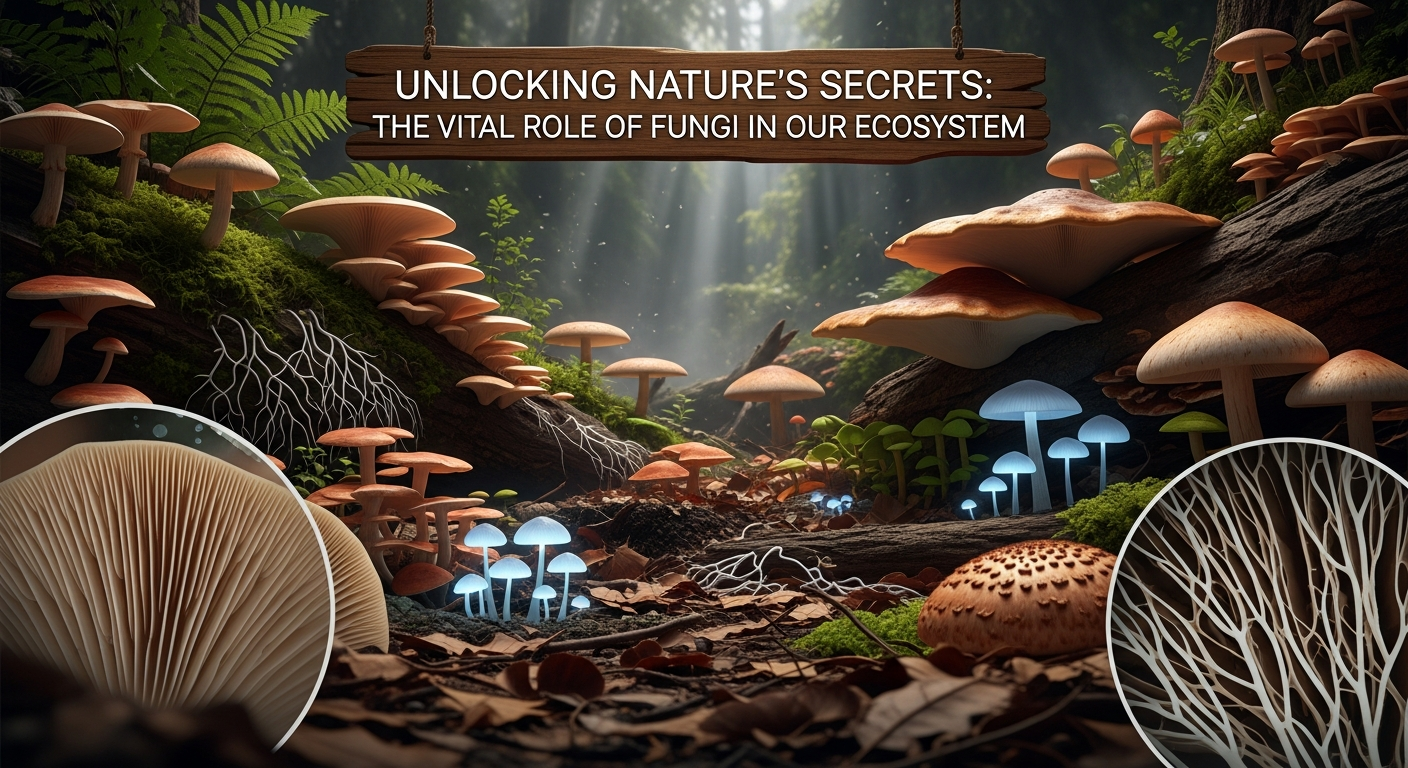
Fungi are an incredible variety of organisms that consist of many different types and have existed on Earth for millions of years. They have played a large role in how ecosystems work by supporting life and breaking down organic material, and the nutrients contained in these materials are used to enrich the soil and provide nutrients to plants to enable them to grow, making fungi one of nature's most important recyclers and deliverers of nutrients to plants.
Fungi are present in all environments, from the decomposer fungi that break down leaves into topsoil, mycorrhizal fungi that assist the roots of plants in taking up nutrients, to mushrooms and yeasts that provide food, medicaments and health for humans.
All types of fungi confer a unique benefit to the ecosystem, whether it is the beneficial mycorrhizal colonies of forests, the fungi that break down pollutants in the environment, or the fungi that have other medicinal uses, such as penicillin.
Understanding the Unique World of Fungi
There are a wide variety of fascinating forms of fungi that are significant to the balance within our Ecosystems. Fungi provide support for our Ecosystem, help to establish healthy root systems in plants, recycle nutrients, and provide food and medicine. Each of the many types of fungi has an important role to play in Ecology by providing the necessary services to keep our Ecosystem functioning properly.
Definition and Characteristics of Fungi
Fungi are a more primitive type of life compared to plants, animals, and bacteria. They are found mainly in damp and dark environments and in areas where there are many nutrients. They provide many important functions in terms of breaking down and decomposing organic matter and forming soil. They get their food by secreting enzymes onto the substrate (the surface on which they grow) and absorbing the nutrients directly through their hyphae. This makes fungi a major part of any ecosystem's recycling (or composting) processes.
Fungi have several unique characteristics:
- They cannot produce their own food through photosynthesis
- They absorb nutrients through their external environment
- They reproduce via spores
- They are found in many places such as soil, water, trees, and decomposing materials.
Because of their relatively simple structured bodies, they have a wide variety of functions on this planet.
Types of Fungi Found in Nature
fungi have different types that support our Earth in different ways.
Different Types of Fungi
- Saprophytic: These break down dead plants/organic matter; return nutrients to soil; create a nutrient-rich environment that supports sustainable long-term fertility & ecosystem health.
- Parasitic: These live on an organism (e.g. host plant); may cause disease to host; however they serve a purpose by keeping the population of species naturally in check and giving rise to genetic and biological diversity.
- Mutualistic/Symbiotic: These work with plants to create an infusion of nutrients into the soil, which helps with nutrient/water uptake by the plant roots – very valuable to sustainable agriculture.
- Yeast/Unicellular: These are an essential element of food fermentation/baking, brewing and biotechnological applications; demonstrate how fungi, in addition to their support of natural ecosystems, also support human survival.
Fungi provide a lot of diversity to these types of ecosystems, and consequently, support all types of ecological systems from forests to farmlands.
The Biological Structure and Function of Fungi
Although the structure of fungi may appear simple, it has an extremely high efficiency rate.
Fungi are mostly composed of hyphae, which are very small filamentous threads. These hyphae form into a collective mass called mycelium, which is the primary means by which fungi perform most of their functions.
1. Hyphae
are long, narrow filaments that grow through the earth and feed on decaying organic matter, breaking it down into simpler compounds such as sugars and proteins.
2. Mycelium
is a network of these filaments that forms a large and complex body of fungi that can connect the roots of various species and provide them both with nutrients and the stability of a well-structured root system.
3. Spores
are the reproductive cells of fungi; they are microscopic and serve as a method of dispersing the species to new locations. Spores are capable of surviving in some of the most extreme conditions and will only germinate when there are conditions that are favorable for their growth.
4. Cell Wall Structure:
Cell walls of fungi contain chitin, which is a strong and flexible compound that is found in insect exoskeletons. Chitin gives fungi their durability, ability to adapt and allows them to thrive in various environments.

Fungi as Nature’s Decomposers: Breaking Down Organic Matter
Fungi exist in a wide variety of types, and they play an important role in decomposing the organic matter, including dead plants, animals, and waste, from which new plants and animals arise. Fungi recycle dead organic matter back into the soil, providing nutrients for living organisms. This is why fungi help create a healthy balance in a balanced, fertile, and healthy ecosystem.
Saprophytic Fungi and Their Ecological Importance
- Saprophytic fungi, or "saprophytes," have been nicknamed "nature's clean-up crew" because they consume decaying and dead organic material (for example, decaying plant and animal remains).
- The enzymes produced by saprophytic fungi allow them to digest complex organic materials (for instance, wood, leaves) and convert these materials into simpler chemical compounds.
- Fungi make it possible for our forests and other natural ecosystems to remain free of debris and pollution while also creating rich, nutrient-filled soil that supports healthy plants and minimizes or eliminates pollution in natural areas.
- The enzymes produced by saprophytic fungi are a vital component of the flow of energy through the food web that sustains all forms of living organisms on Earth.
Fungal Role in Nutrient Cycling and Soil Fertility
Fungi accelerate the process of the cycling of nutrients by digesting and decomposing organic material, including dead plant and animal remains, and releasing essential elements (for example, nitrogen, phosphorus, potassium) back into the surrounding environment.
- Through the breakdown and release of organic materials, the fungi improve the structure of the soil, enhance its ability to store water and increase the amount of available nutrients for plants.
- The rich and fertile farmland, forests, gardens and more of the world are possible in large part to the fungi supplying a continuous source of organic fertilizers.
How Decomposition Supports a Balanced Ecosystem
- Soil life cycles provide for the ongoing cycling of dead organic matter, which promotes nutrient availability for plant growth.
- If not for soil life cycles, dead organic matter would accumulate, cause soil quality to decline, and reduce the ability of plants to thrive.
- The cycling of nutrients through decomposition provides essential nutrients to micro-organisms, insects, plants, and all other life forms in the food chain.
- This cycle of nutrients supports the preservation of ecological balance within forests, fields, and wetlands, as well as increases the resilience of all of these ecosystems.

The Symbiotic Relationships: Mycorrhizae and Plant Growth
Fungi play a vital role in sustaining life for all living things, particularly by working in partnership with plants to create one of nature's most strikingly beautiful partnerships. Mycorrhizal fungi are some of the first to colonize the soil; they produce an extensive interconnecting network of mycelium that extends throughout the root systems of the plant and supports the development of roots at great depths. The mycorrhizal fungi provide support for the plants' development through a variety of benefits. There are three primary benefits provided by these fungi to plants, and each of these three fungal benefits plays an important role in supporting the development of plants and growing crops sustainably.
Mycorrhizal Networks and Root Partnerships
Mycorrhizal fungi are found on plant root systems, and they form sizable networks under the ground that radiate outwards.
- These networks also function as a super root system, thereby increasing the overall surface area of the root system of the plant.
- These networks may connect many different plants together. That is, when a plant is well-formed and healthy, there will be opportunities for nutrient exchange and connections.
- Mycorrhizal fungi offer protection to roots in the presence of pathogens or pressing situations.
All of these interactions are working behind the scenes to assist the root systems of plants as they grow in forests, agricultural areas, or landscapes such as residential gardens.
Benefits to Plants—Water & Nutrient Uptake
Another great benefit that fungi provide for plants.
- Mycorrhizae allow plants access to important nutrients that include phosphorus, nitrogen, magnesium and many immaterial or small soil nutrients.
- They improve plants' ability to withstand drought by providing additional moisture storage capacity.
- They also help improve the physical (structural) condition of the soil in which roots grow by allowing for deeper, larger, healthier root systems.
As a result, mycorrhizal fungi help plants produce healthier, stronger leaves, more abundant flowers and higher quality fruit. By these other abilities, growth will be more efficient and resilient.
Fungi’s Role in Sustainable Agriculture
Nature has provided mankind with abundant opportunities to thrive through the use of Mycorrhizae, or mycorrhizal fungi. They are such an invaluable resource for environmentally friendly farming because:
- Decrease Dependence on Chemical Fertilizers
- Increase Soil Fertility by Enhancing Nutrient Cycling
- Improve Crop Tolerance to Heat, Drought, and Disease.
- Long-Term Maintenance of Soil Health Through Support of Sustainable, Regenerative Agriculture and Balanced Ecosystem Development; and Higher Yield Production.
The Role of Fungi in Human Life: Food, Medicine & Industry
Fungi are responsible for many parts of the human experience; from the foods we consume to lifesaving medications and industrial products which allow global economies to thrive. Fungi are an incredibly important and diverse resource in nature, and provide us with multiple types of nutrients. They are a very important part of how we live today.
Edible Mushrooms and Nutrient Benefits
Edible mushrooms provide our bodies with vital nutrients including protein, vitamin D, antioxidants, and minerals.
- They improve our immune system, promote brain health, and assist with overall wellness.
- In addition, mushrooms are able to promote digestive health due to their low calorie/fiber ratio.
- Button, shiitake and oyster mushrooms are often consumed and recognized for their flavor as well as their nutritional value, and are included in healthy diets throughout the world.
Antibiotics and Life-Saving Medicines from Fungi
Fungi have been responsible for many of the most significant medical breakthroughs throughout history.
- The introduction of penicillin, derived from Penicillium fungi, has changed the way we treat many diseases.
- There are also other classes of compounds produced by fungi that can be developed into immunosuppressants, cholesterol lowering drugs, and anti-diabetic medications.
- Our understanding of fungi continues to lead to the development of new drugs to treat infectious agents, chronic illnesses and life-threatening diseases.
Industrial Uses—Fermentation and Biotechnology
Fungi play a key role in industrial manufacturing at a global level:
- Fungi such as Saccharomyces cerevisiae are used in large volumes in the industrial production of baked goods, alcoholic beverages and wine through the process of fermentation.
- Fungi enzymes are incorporated into the textiles, detergents, biofuels and pulp and paper industries.
- The biotechnology industry utilises fungi extensively to manufacture enzymes, organic acids, vitamins and bio-based materials.
The ability to adapt biologically and chemically has made fungi a critical component of modern manufacturing systems regardless of the method of manufacturing used.

The Impact of Pathogenic Fungi on Plants and Humans
Fungal pathogens are part of a large group of fungi that can have a negative impact on people and plants. They disrupt plant development, reduce immunity to infections, create epidemics, change food safety and availability.
Plant Diseases Caused by Fungi
Fungal Infestations are one of the largest dangers to world Agriculture Fungi can infect plant parts, including leaves, stems, roots, and fruits, causing plant mortality and significant losses.
Plant Pathogens Include rusts, blights, mildews, wilts and root rots or any illness caused by a
fungal pathogen, which can do the following:
- Reduce the plant's ability to fight off disease
- Reduce the growth rate and photosynthetic ability of the plant
- Reduce the quality of fruit and grain
- Transit a large number of infections in humid and rainy conditions
Human Fungal Infections and Risks
Low immunity gives some fungi an opportunity to be a source of infection for humans. Infection from these fungi can cause anything from mild skin irritations to major organ disease.
Common examples of Fungal Infection are:
- Ringworm
- Athlete’s Foot
- Nail Fungi
- Yeast Infections
- Systemic Fungi (invasive functions in the lungs and bloodstream)
The impact of Fungal Infection upon Health and Well-Being is:
- Irritation/inflammation/damage to skin;
- Immune system suppression; and
- If untreated may pose a(n) additional risk factor(s) for those individuals diagnosed with diabetes or compromised immune systems.
Importance of Fungicides in Agriculture for Disease Control
The application of fungicides is necessary when managing or preventing fungal infestations in Agriculture, specifically in the production and growing of crops. Fungicides provide a protective barrier that prevents all forms of fungi from producing spores and/or germinating.
Fungicides provide the ability to :
- Keep plants, from very young stages of growth, free from the threats of fungus.
- Minimize the loss of grain crops caused by fungal rot and wilting.
- Increase the overall quality of grains, fruits, and vegetables.
- Maintain healthy foliage and increase the amount of photosynthesis produced by plants.
Many various types of fungicides function both on and/or through absorption into the plant's tissue, and will function differently based on the application of the fungicide.

Fungi and Environmental Health: Pollution Fighters & Climate Regulators
Fungi have a unique role to keep our ecosystem balanced. They help to clean up polluted areas, help with Cycling Carbon, and Hoof Soil. the benefits of fungi in Climatology and Land Health Sustainability. Fungi break down the toxins that contaminate the environment and also improve soil fertility.
Bioremediation and Mycoremediation Techniques
Mycoremediation refers to using fungi to decompose and eliminate toxic substances found in our environment. Fungi emit strong enzymes that decompose everything from toxic chemicals and heavy metals to oils and dye into safer, more natural forms. In addition, fungi produce extensive mycelium (the root-like structure of fungi) networks that act as natural filters. The mycelium of a fungus can filter out environmental contaminants much more efficiently than most chemical methods.
Advantages of Mycoremediation:
- 1. Breaks down toxic materials, pesticides and industrial waste.
- 2. Assists with the rehabilitation of polluted soils, rivers and waste disposal sites.
- 3. Provides a viable, environmentally friendly alternative to chemical cleaning methods.
Fungi in Carbon Cycling and Climate Regulation
Fungi are critically important to the global Carbon Cycle because of the way they decompose organic matter and enable the storage of carbon into soils. This helps reduce the amount of CO₂ that is released into the atmosphere. Mycorrhizae, a group of fungi that form Mutualistic Relationships with higher plants, are one of the most effective means of increasing and stabilizing soil Carbon.
Key Advantages of Mycorrhizae:
- Controlled decomposition of organic materials has increased the amount of CO₂ that is released into the atmosphere.
- Improved ability of higher plants to absorb and store carbon.
- Enhanced Long-Term Carbon Cycling will result in continued Climate Stability and Decreased Global Warming.
How Fungi Maintain Soil Structure and Health
Soil structure, soil fertility, and long-term soil resilience are improved when fungi adhere to soil particles. By using a natural adhesive (mycelium) to hold soil particles together, they are able to provide better aeration and water retention. Healthy fungal networks allow for the creation of nutrient-dense soils, resulting in enhanced agricultural productivity and ecological sustainability.
Benefits of Fungi in Soils:
- Soil structure is strengthened and soil erosion is reduced
- Increase availability of nutrients for the plants
- Improved water retention and support of root health.

FAQs:
Q1. What is the main role of fungi in ecosystems?
Fungi are important natural decomposers in recycling organic materials and maintaining nutrient cycling in our environment.
Q2. How do fungi help plants grow?
Mycorrhiza has a symbiotic relationship (with many plant species) with fungi to increase nutrient and moisture absorption by plants.
Q3. Why are fungi important for soil health?
Fungi will help develop soil structure and fertility; they will help improve and develop microbial balance in soil to maintain long-term soil stability.
Q4. What are some beneficial uses of fungi for humans?
Fungi provide sources of food, vitamins, and medicines (i.e. penicillin), as well as being important for fermentation and biotechnological applications.
Q5. How do pathogenic fungi affect agriculture?
Fungi can cause crop diseases; this may lead to reduced crop yield, therefore fungicides are required in order for the crop to be effectively managed.
Conclusion: Embracing the Essential Role of Fungi for a Sustainable Future
Fungi are not simply things that live underground; they are some of the biggest ecological "engineers" of our planet. From recycling nutrients to creating healthy soil, helping plants grow, regulating atmospheric carbon, and even cleaning up our polluted environment, fungi help keep the natural balance of life intact. In addition to providing benefits for many ecosystems, fungi provide humans with medicine, food, materials for industry, and their potential to create sustainable solutions to our environment. Climate change, soil degradation, biodiversity loss (plants/animals), presently contributes significantly to many of the current problems the world faces as well as putting at risk many marine ecosystems. To be able to better resource developmental efforts worldwide using fungi - and thus increase our collective capacity to solve many problems using such diversely useful resources - it's essential we support the research community by providing increased funding, awareness, recognition of the importance of fungi (and fungi diversity) for terrestrial and aquatic ecosystems, and embrace environmentally-friendly fungi-based uses. In doing so, you are not only supporting the continuation of scientific research but are also helping create a healthier, more sustainable planet for your children and their children.