
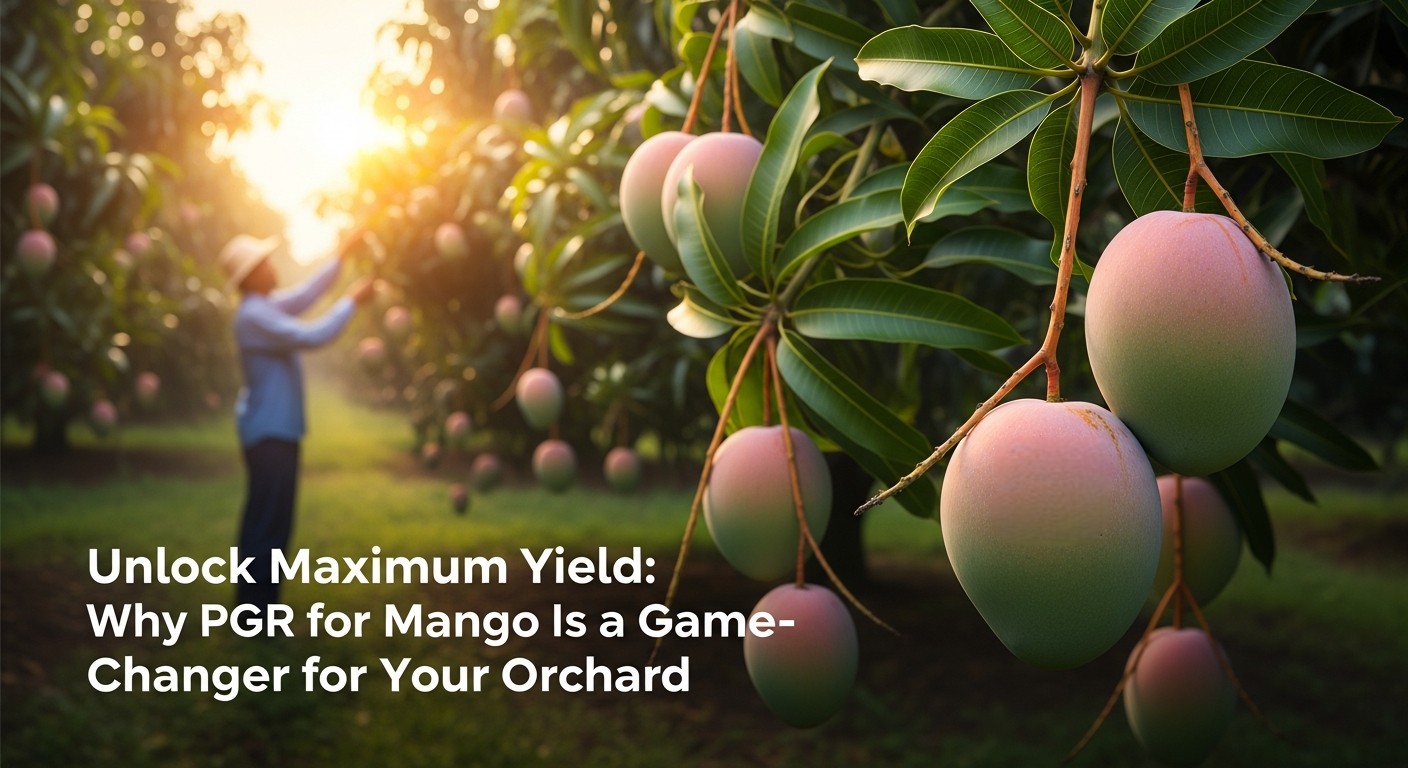
PGR (Plant Growth Regulators) in mango cultivation are an established part of contemporary management practices for orchards to improve the way mango trees grow and their ability to produce more mangoes with fewer inputs. The PGRs allow managers to influence important steps of the life cycle of mango trees, including the timing of flowering, the development of fruit, and the balance of canopy development, thereby enhancing the efficiency and productivity of a mango tree.
Some of the advantages of using PGRs include flower induction, fruit retention, and uniform fruit development. PGRs help maintain an optimal level of growth hormones within mango trees, which reduces the occurrence of fruit drop, increases size and improves the consistency of crops each season.
The way PGRs interact with the natural physiological processes of mango trees is very gentle, therefore they can easily be integrated into the cultural practices of the orchard. Using PGRs in combination with a properly balanced pgr fertilization program for mangoes will provide the manager with the maximum yield industry potential while providing maximum fruit quality ensuring that each harvest contains only healthy, market-ready mangoes.
Understanding PGR for Mango: What Are Plant Growth Regulators?
Plant Growth Regulators, or PGRs, are chemical compounds used on plants in crop production to influence how plants grow, bloom, and bear fruit. Within the scope of mango production, the use of PGR for mango has a very important role in managing the flowering cycles of mangoes, improving the proportion of fruit that set and growing (developing) the vegetative and reproductive growth of the tree.
While various types of millets provide specific nutrients for a baby's development, PGRs provide particular support to mango trees at very critical periods in their growth cycles.
What Does PGR Mean in Mango Cultivation?
The term PGR refers to compounds that control the influence of the internal hormone activity of the tree.
Examples of how PGR will help manage different elements of mango orchards:
- Initiation and intensity of flowering
- Setting and retention of fruit
- Control of excessive vegetative growth
- Reduction of alternate bearing of fruit
- Uniformity of development of fruit
Using the use of pgr for mango growers allows growers to control the trees' behavior without imparting unnatural influences on the tree's growth. By manipulating the hormone balance of mango trees, growers can direct the energies of the trees from the formation of unnecessary leaves to their flowering and fruit production cycles.
Natural vs Synthetic PGRs Used in Mango Farming
Growers can determine which type of PGRs to use based on their particular orchard needs, whether they are new trees or mature on production objectives.
- Natural PGRs work more slowly than synthetic but are much gentler on the new trees.
- Synthetic PGRs act much faster and are far more precise in their application than natural PGRs
- Using Integrated treatment regimens will help ensure long-term viability for your orchard.
As millets are better tolerated by babies, organic PGRs are typically used for stressed young mango trees while synthetic PGRs, while requiring exact application, produce incredible results in mature mango trees. The correct PGR will promote sustainable growth and development without negatively affecting either the health of your trees or the balance of nutrients in your soil.

Key Plant Hormones That Influence Mango Growth
The growth and production of mangoes are regulated by several different plant hormones, which can be influenced by the application of PGR. Of the numerous plant hormones used in the production of mangoes, the three most commonly employed are as follows:
- Auxin - Helps retain fruit on the tree and reduce the likelihood of fruit dropping;
- Gibberellin - Affects flowering and the elongation of fruit;
- Cytokinin - Increases cell division and the overall size of fruit;
- Ethylene - Responsible for determining the ripening and maturity of fruit.
The Science Behind PGR and Mango Tree Development
There is an intricate harmony between the vegetative and floral growth of the mango tree, as well as the fruiting and flowering phases of mango tree growth. Growth regulators (PGRs) act on mango trees by modifying the internal hormones of the tree, allowing them the flexibility to distribute their energy when and where it is required.
Application of pgr, when applied correctly, allows for the synchronization of flowering, stabilization of the set fruit, and canopy control which allows for greater health of the mango tree and greater consistency in yields.
How PGRs Influence Mango Flowering
The hormonal signals sent to the tree determine when a mango tree bud will change from vegetative growth to flower bud formation.
Some ways pgr’s help improve flowering:
- Stimulate flower bud initiation
- Uniformity of panicle emergence
- Decrease alternate bearing problems
- Produce flowering at the same time that weather conditions are optimal for flowering
PGR's relationship to flowering is that hormone ratios (including gibberellins and cytokinins) must be properly applied at the correct timing in order to trigger flowering and synchronize flowering.
Improving Fruit Set and Reducing Drop with PGR
Fruit Drop in Mangoes is common and usually related to a lack of hormones, environmental stress, and poor nutrient competition.
Using PGRs as a tool for improving fruit set:
- PGRs improve the viability of pollen and thus, increase the likelihood of fertilisation.
- PGRs help to provide less physiological loss of fruit through development.
- PGRs improve the translocation of nutrients to the developing fruit.
- PGRs help to provide earlier support to young fruit by strengthening attachment to the tree.
PGR application after flowering has an important role in stabilising fruit set by enhancing/retaining the hormonal signals required to maintain fruit attachment to the tree. When used in conjunction with balanced nutrition achieved through a PGR-based fertiliser, trees will experience less stress through critical stages of fruit production which leads to greater levels of fruit retention, as well as improved fruit uniformity in development throughout the season.
PGR Impact on Vegetative Growth and Canopy Management
It is critical to manage vegetative growth for the results of successful fruit production. Some of the advantages of PGR's in terms of canopy management include:
- Decreasing excessive shoot elongation.
- Promoting an even distribution of leaves throughout the canopy.
- Increasing the amount of light that can penetrate the canopy.
- Reducing competition between shoots and fruit.

Top Benefits of Using PGR in Mango Cultivation
Modern-day Mango Producers utilize PGR as a means of maximizing the quantity and quality of fruit from their plantations. PGR is used to control the growth of the Mango tree and provides numerous benefits to fruit development (flowering, fruit set and fruit size).
As with other grain products that help support the growth of infants at different stages, PGRs support the growth of the mango tree during critical points, flowering to harvest, in conjunction with proper nutrient management will generate healthier trees, higher quality fruit and more consistent yields.
Increased Flowering and Uniform Fruit Set
The improved flowering structure and fruit setting are very noticeable advantages of PGR use in mango orchards. To be specific:
Benefits of flowering:
- Synchronizes flowering events across orchards
- Reduces abundances of flowers developing on trees within an orchard
- Increases the efficiency of flower pollination.
- Stabilizes or reduces early drop rates of developing fruit.
Mango trees typically experience irregular flowering patterns and alternate bearing cycles. By using proper pgrs, mango trees can better manage the balance of hormone activity to promote uniform and synchronized flowering across the entire tree. .
Bigger Fruit Size and Improved Quality
PGR's effect on the size and quality of mango fruit is essential.
- Improvements to Fruit Quality and Size
- Increased size of fruit with less variation
- More ideal shape and smooth skin of fruit
- More pulp & less seed
- Stronger colour and firmness of fruit
Similar to how babies consume nutrient-dense foods for growth, pgrs direct nutrients and energy toward growth of the developing mango fruit. This directs nutrients and energy to the developing mango fruit and allows for better growth of the mango fruit thereby resulting in improved appearance, overall weight and increased useable life for mangoes
Better Yield Consistency and Orchard Productivity
Pgr use provides a consistent yield of mango trees and long-term benefit to mango orchards.
Producing Advantages:
- Less frequent alternate blooming cycles
- Achieve more consistent year to year mango tree yields
- Improved health of the mango tree and thinned out canopy
- Increase the efficiency of fertilizer applications

How to Apply PGR Effectively: Best Practices for Mango Growers
The proper application of PGR for mango trees is critical for optimal flowering and fruit setting and the maintenance of a consistent yield. The PGR application for mango trees must consider the growth cycle of the mango. Additionally, the timing, method of application, and dosage of PGRs are all important factors that help ensure the PGRs do not hinder the natural growth processes of the mango tree.
The use of PGRs, when applied correctly, promotes a balance between vegetative and reproductive growth within the mango for long-term success.
Best Time to Apply PGR in Mango Orchards
Timing is important to regulate the hormone activity in the mango tree. Early application promotes flowering, while timely follow-up applications of PGRs helps to hold fruit and improve size. Incorrect timing results in uneven flowering, reducing the effectiveness of PGRs.
When to use PGR by growth stage of mango tree:
- PGR pre-flowering (inducing flowering)
- PGR early flowering (enhances fruit development
- PGR early fruit (decreases amount of dropping)
Application Methods – Foliar Spray vs Soil Drench
Both foliar spray and soil drenching methods are used on mango trees depending on the PGR's intended outcome.
Foliar Spray:
- Quickly absorbed via leaves.
- Most effective at inducing flowering and fruit set.
- Should be applied during calm weather.
Soil Drench:
- Slowly absorbed through the roots of the plant.
- Often used in conjunction with growth-regulating PGR's.
- Provides longer-lasting effects.
Many growers use a combination of both applications to provide maximum PGR benefit without stressing their mango trees.

Recommended Dosage and Use of PGR Fertilizer
Using the correct dosing for PGRS is extremely important in order to achieve the safest and most effective results.
Dosage best practices:
- Always follow manufacturer recommendations.
- Adjust dosage based upon tree size and age
- Avoid multiple high-dosage applications.
- Allow the proper interval between doses.
Using PGR Fertilizers effectively:
- Combine nutrients with either organic or conventional fertilizers according to your needs.
- Avoid excess nitrogen at the time of application.
- Maintain healthy roots and promote healthier plants with nutrient-rich soil.
Just like a baby needs balanced nutrition to grow properly, so do mango trees need inputs in a regulated and controlled manner. Proper usage of PGR Fertilizers ensures the regulated growth of mango trees along with their nutrient needs.
Safety and Environmental Considerations When Using PGR on Mangos
The use of plant growth regulators (PGRs) to increase flowering and fruit set and improve yield in mango production can greatly assist in improving crop yields; however, practice proper environmental stewardship and safety are critical first considerations. Just as a baby requires a balanced and gentle food source.
When properly applied, the correct amount of PGR and considered application of the PGR will enhance crop performance without negatively impacting fruit quality, soil health, and surrounding environments.
Safe Use Guidelines for Plant Growth Regulators
Using PGRs properly helps protect the crop and the grower by establishing safe guidelines for using the product. The main guidelines for safe PGR application are as follows:
Always follow the manufacturer's recommended dosage and timing
- Only use PGR at the manufacturer's recommended growth stages
- Always wear protective equipment when Applying the PGR by spraying
- Do not use incompatible chemicals with PGR
- Do not exceed the manufacturer's recommended maximum number of applications in one season
Just as proper millet selection supports healthy digestion at the correct age, the timing of PGRs used at the proper time will promote healthy growth of the mango tree. Mistiming or overapplying PGR may cause trees significant stress or result in PGR being less effective.
Residue Management and Fruit Safety
In order for Mangoes to remain safe for the consumer and to meet market standards, it is essential to manage residues.
The following are recommended residue management practices for mangoes:
- Observe recommended pre-harvest intervals (PHI)
- Do not over-apply late in the season.
- Only use approved PGRs on fruit crops.
- Thoroughly wash all equipment between applications.
If Mango Fruits are managed appropriately using PGRs, the fruit will naturally develop without excessive residue buildup and with good health. Proper residue management protects consumer health, while at the same time, assists to ensure that all growers, especially those growing Mangoes for export, can comply with domestic and international quality standards.

Sustainable and Eco-Friendly PGR Practices
Sustainable practices for the Mango Orchards will continue to be a part of the growth and sustainability of Mango Farms. The use of PGRs should be a part of the growth and management of the Mango Farms and not be harmful to the long-term productivity of the orchard.
Eco-Friendly/Green PGR's include the following:
- Preference for and/or use of low toxicity, biodegradable PGRs.
- Use of Organic Soil Amendments (i.e., compost, Fungi, etc.) with PGRs.
- Minimize and reduce the use of chemicals through the use of Integrated Management.
- Continuous monitoring of the health and activity of the soil and the Microbes.
In the same way that nutritious Millets provide a Sustainable form of Nutrition, Sustainable PGR Practices in Mango Farming will provide long-term productivity of the Orchard. The use of PGRs together with correct Nutrient Balancing, Efficient Watering, and Proper Soil Care, allow the Mango Tree to produce for many years without compromising the quality of the Environment. The Eco-Friendly/Green use of PGR's is in alignment with Responsible Farming and is connected with Yield Improvement.
Choosing the Right Product: Top-Rated PGR Solutions for Mango Orchards
When planning a new mango orchard or making modifications to your current operation, choosing the right type of plant growth regulator (PGR) should be at the top of your list of priorities. Just like how different varieties of millet provide different benefits to growing babies, there are different types of PGRs available to help manage all stages of mango tree growth, such as flowering induction, fruit set and development.
Ultimately, the right PGR for your mango tree helps create a uniform tree structure, high quality fruit and predictable harvests while reducing the stress placed on the trees and soils.
Commonly Used PGRs for Mango Trees
There are many PGRs that can be found in mango orchards today. Each type of PGR will have its own purpose.
PGRs that are common in mango orchards include:
- Paclobutrazol (PBZ) – inhibits vegetative growth and facilitates the flowering of mangoes
- Gibberellic Acid (GA₃) – increases fruit size and maintains fruits for an additional day before fruit drop
- Ethephon – enhances uniform flowering and/or ripening of fruits
- Seaweed-based natural PGRs – promote overall tree health by increasing stress tolerance
Similar to ragi (a type of millet that is easy for infants to digest), PBZ helps to strengthen the productivity of mango trees by directing the energy of excessive vegetative growth into the production of flowers. Natural PGRs, like the ocean-based products, support it by working with the mango tree to enhance the long-term health of orchards and produce better mangoes for sustainable agricultural practices.
Factors to Consider When Selecting a PGR Product
There are many orchard-specific considerations when selecting a PGR for your growing operation.
Key Factors to Consider:
- Age of trees & Variety
- Climate and Soil Type of the Orchard
- Current Growth Phase - Vegetative, Flowering or Fruiting
- What type of result you want - Inducing flowers, Increasing fruit size, Stabilizing yield
- The degree to which it is compatible with your current inputs.
In addition to being able to choose the appropriate PGR from a product selection standpoint, it's also important to understand what PGR will work best in your grower's specific orchard conditions. Applying a strong PGR to young trees can create stress, while applying a PGR with specificity to mature orchards can provide additional benefits.
Integrating PGR with Orchard Nutrition Programs
The best combination of results from PGRs is achieved when PGRs are used in conjunction with a complete and balanced nutrition plan as opposed to the PGR being used by itself.
Best Methods for Combining:
- The timing of PGR applications combined with consistent application schedules of balanced pgr fertilizer.
- Do not exceed recommended levels of nitrogen during the flowering phase.
- The activity of PGRs can be enhanced with the inclusion of the micronutrients zinc and boron.
- Maintain the proper levels of moisture for proper uptake of applied nutrients.
The nutrient value of complementary food to the millets enhances their overall value as a food source, similarly, a properly designed and planned pgr fertilizer program increases the effectiveness and efficiency of PGR use in your mango orchards.

The Future of Mango Farming: How PGR Is Shaping Modern Orchard Management
Mango farming today is focused on precision, efficiency, and sustainability; all of these areas rely heavily on the use of PGR for mango trees. In the same way that different types of millet can support infants during specific developmental stages, PGR for mango trees can also be beneficial at certain times, such as when being used to encourage flowering, establish a fruit set, and then later when managing the tree's canopy.
Through PGR use, a farmer is able to maintain optimal hormonal balance for their mango trees throughout their growing cycle, resulting in more consistent yields, improved quality of fruit, and less long-term risk of production loss.
Managing Alternate Bearing with PGR Technology
At present, Alternating Bearing in mango orchards is an issue that all producers face—it results in one year of a large crop yield followed by a smaller crop yield in the following year. Many PGR technology solutions have been developed to help mango producers manage their production imbalances.
PGRs will assist producers in managing the production cycle of their orchards by:
- Regulating the intensity of flowering from year to year
- Balancing the growth of the vegetative portion of the tree with that of the reproductive
- Promoting a uniform fruit set of mango throughout the growing seaso
- Lessening the amount of stress experienced by trees that had a heavy crop the previous year.
When a grower uses PGR for mangoes in managing their production cycles (ranging from excessive flowering and/or vegetative growth), this regulation will assist in allowing greater recovery to take place after having experienced a high-yield on any given year.
Innovation in Fruit Production and Orchard Efficiency
Use of Plant Growth Regulators (PGRs) creates opportunities for greater efficiencies in how mango orchards utilize their resources; these efficiencies lead to increased productivity in mango growing.
Efficiency Gains Provided by PGRs:
- More Efficient Nutrient Uptake by Mango Tree
- Reduction in Tree Canopy Size
- Improved Tree Canopy Light Penetration
- More Uniformly Sized and Matured Fruit
By combining the use of PGR Fertiliser with the application of PGR using a targeted approach, growers are able to reduce the amount of waste generated by excessive nutrient application and the amount of nutrients used to produce mango. The combination of these innovations allows orchards to produce higher-quality fruit with fewer resources, increasing the efficiency and sustainability of mango farming.

Role of PGRs in Sustainable Mango Farming
Sustainability is becoming increasingly important in fruit production, and PGRs play an important role in this transition when applied appropriately.
The Benefits of Sustainability From Using PGRs:
- Reducing the Amount of Inputs used
- Reducing Stress on the Trees;
- The Improvement in Soil/Nutrient Balance;
- Enhancing Orchard Productivity for Many Years to Come.
When applied according to the manufacturer's recommended dosage, a PGR for Mango enhances the natural growth of the tree rather than forcing excessive tree production. Proper Nutrition and Irrigation paired with the application of PGRs will help to sustain the health of the tree, reduce the environmental impact of producing mangoes, and ensure the long-term productivity of mango orchards.
FAQs
Q1. What is PGR for mango farming?
PGR for mango farming involves using plant growth regulators to improve flowering, fruit set, and overall yield.
Q2. Is PGR fertilizer safe for mango orchards?
Yes, PGR fertilizer is safe for mango orchards when applied at recommended doses and stages.
Q3. Which PGR is commonly used in mango cultivation?
Paclobutrazol, gibberellic acid, and ethephon are commonly used PGRs in mango cultivation.
Q4. When should PGR be applied to mango trees?
PGRs are typically applied during flowering induction, fruit set, or early fruit development stages.
Q5. Can PGR improve mango fruit size and quality?
Yes, proper use of PGR helps increase fruit size, uniformity, and overall quality.
Conclusion: Take Your Mango Production to New Heights with the Right Use of PGRs!
Mango Producers in the tropical regions of the world utilize Plant Growth Regulators (PGRs) as an established, proven way to increase the growth of and yield from their orchards. If applied at the correct time during mango tree growth, PGRs will enhance the development of the vegetative growth as compared to the reproductive growth in mango trees; reduce the number of fallen fruit from an already developed fruit set; and promote evenness in fruit size. Ultimately, these advantages promote a stronger tree structure and a better harvest result.
The proper use of PGRs and the integration of a properly designed PGR Fertilizer program through the proper application of PGRs enables mango producers to efficiently utilize the available nutrients, water, and labour resources to produce consistently high-quality mangoes and sustain the long-term viability of their orchards. By effectively combining the proper application of PGRs with best management practices, mango producers are able to overcome many of the challenges they face with mango production, such as alternating bearing and fluctuating yields, and steadily increase their level of production every year.