
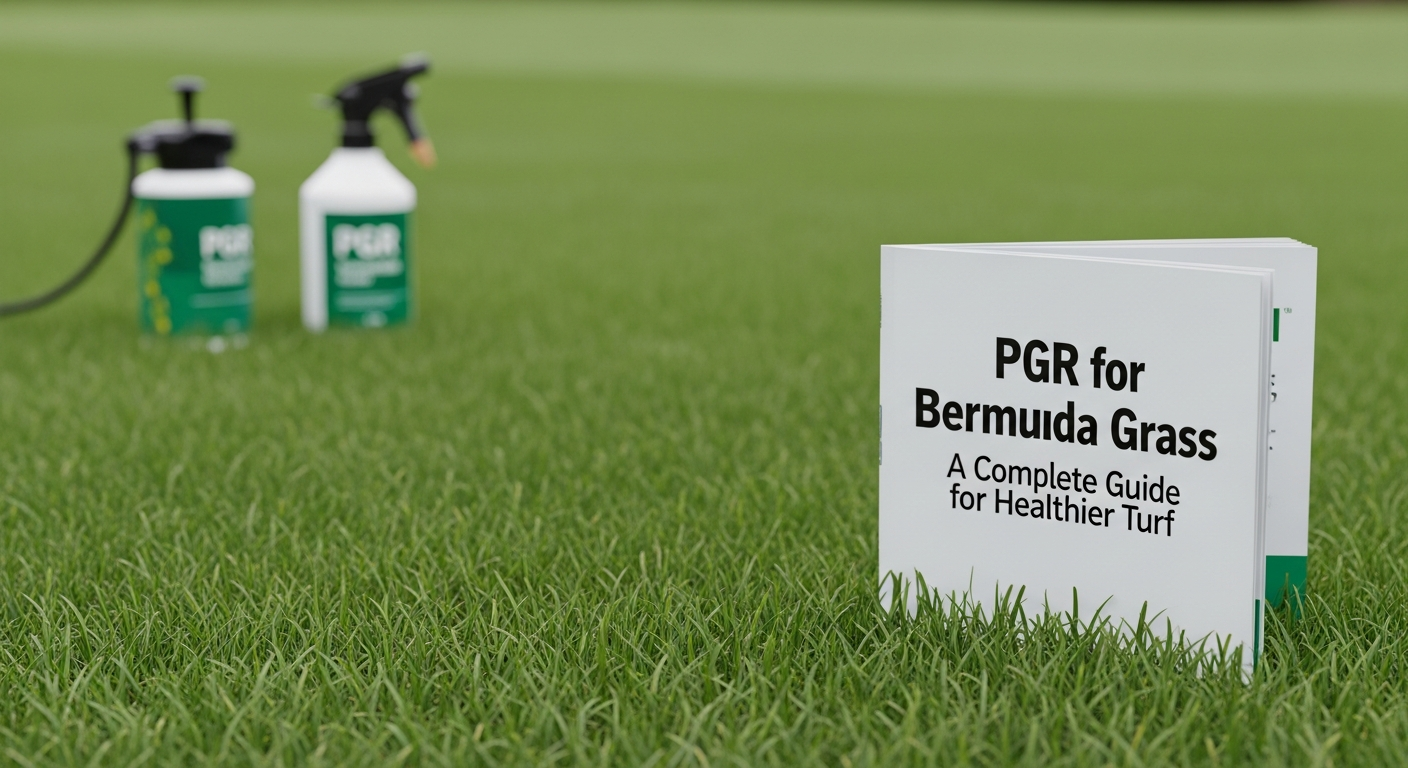
The use of plant growth regulators (PGRs) on Bermuda grass is a progressive approach to managing turf grass in the areas of agriculture, athletic fields, and residential lawns. By limiting the rate of vertical growth of Bermuda grass and encouraging a larger root system and a denser lateral spread, PGRs can help maintain the health of Bermuda grass, provide similar colour and thickness, and increase the longevity of the turf.
By enhancing the efficiency of nutrient uptake and decreasing the amount of stress on Bermuda grass, the use of PGRs can lead to healthier turf and allow for less frequent mowing and a reduction in the amount of time spent maintaining Bermuda grass.
When selecting a PGR for Bermuda grass consider: trinexapac-ethyl-type PGRs, as well as other growth regulators that last longer than their initial application rate; these products will provide consistent colour and thickness for Bermuda grass and allow for economically sustainable turf performance over time.
Understanding PGRs in Turfgrass Management
The understanding of PGRs in the management of turf grass is essential to the success of turf and agricultural practices today.
In the right environment, PGRs can create a more uniform growth pattern for Bermuda grass, resulting in uniform turf quality, lower maintenance costs, and healthy turf without adversely affecting the overall health of the plant appropriate PGR product for Bermuda grass, and apply it properly to produce sustainable results.
What Are Plant Growth Regulators (PGRs)?
Plant Growth Regulators (PGRs) are chemicals added to plants or soils to influence the development of plants without adding actual nutrients. PGRs may be used in agriculture and on turf to influence all three phases of growth - germination, vegetative stage and reproductive phase - by regulating the plant's internal environment.
PGRs have the following attributes:
- Control the activity of plant hormones responsible for controlling growth.
- Do not provide nutrition or protect against diseases, pests.
- Only requires small amounts, controlled application.
- When used as directed on the label, PGRs are not harmful to turfgrass.
How PGRs Work in Bermuda Grass
PGRs work by blocking certain enzymes that promote cell elongation in the leaves of Bermuda grass. This limits the vertical increase in height while allowing more energy to be devoted to spreading laterally, developing the root system and storing food energy.
Benefits of using PGRs on Bermuda grass:
- Decreased over-extension of leaves.
- A thicker turf canopy.
- Increased chlorophyll concentration = Darker green color.
- Greater drought tolerance and increased root mass.

Role of PGRs in Modern Agriculture
In modern agriculture and turf, the use of PGRs has helped improve the efficiency, sustainability, and quality of the turf. In this case, improving the turf’s appearance—from a functional point of view—is included as part of its overall benefit. By using PGRs, you reduce your need for labor and other resources.
PGRs are directly associated with many agricultural and turf-related benefits including:
- Reduced fuel consumption and mowing frequency.
- Improved tolerance of turf to heat, drought, and traffic.
- Enhanced nutrient use efficiency.
- Increased uniformity of sports fields and lawns.
There are many different kinds of applications for PGRs for Bermuda Grass, including the following:
- Agricultural research plots
- Golf courses and athletic fields.
- Commercial landscapes.
- Residential lawns.
When PGRs for Bermuda Grass are used in combination with a structured plan, they allow both farmers and turf managers to accomplish healthier and longer-lasting turf while promoting environmentally sustainable agricultural methods.
Benefits of Using PGR for Bermuda Grass
PGR application onto the Bermuda Grass has been established as a method of managing and producing Bermuda Grass through proper turf management, resulting in a high-quality, healthy, and well-maintained turf. Selecting the appropriate PGR (plant growth regulator) is just as important as selecting the appropriate grain for your nutritional needs.
Both assist in improving the quality of your Bermuda Grass, while reducing the labor necessary to maintain it, and providing long-term viability of your turf. Below are descriptions of the advantages of applying a PGR on Bermuda Grass.
Reduced Mowing and Maintenance Costs
The largest benefit of using plant growth regulators (PGRs) on Bermuda grasses is their capability to restrict the rate of growth without negatively impacting plant health. A side effect of this, however, is that people don’t have to mow their lawns as frequently.
Here are some additional advantages associated with PGR use on Bermuda grass:
- Reduces the rate at which Bermuda grass grows vertically by affecting its plant hormones
- Thirty to fifty percent fewer mows are required
- Up to thirty percent reduction in fuel use, labor, and equipment wear
- A uniform height can be maintained for longer periods
Improved Turf Density and Color
PGRs will force Bermuda Grass Energy use to grow taller less. IImprove the amount of lateral spread and increase the amount of chlorophyll produced; therefore, the result will be a thicker turf with a darker and richer green appearance.
Ways PGRs Increase Turf Quality.
- Promote lateral tillering of Bermuda Grass
- Increase the chlorophyll levels in Bermuda Grass
- Produce a Darker and Consistent Green Appearance
- Decrease Patchiness or Thin Areas of Bermuda Grass.

Enhanced Stress and Drought Tolerance
Pgrs have also provided the following benefits to Bermuda Grass:
- Increased stress resistance due to reducing excessive foliar growth, thereby conserving energy and producing deeper rooting systems.
Some of the advantages of stress tolerance are as follows:
- Decreased root and soil compaction,
- Greater drought tolerance and resistance to high temperatures and traffic,
- Increased ability to recover from mowing or injury.
Choosing the Best PGR for Bermuda Grass
The process of selecting the ideal plant growth regulator (PGR) for your Bermuda grasses was much like selecting the best type of millet to feed to a growing child as each has its own unique purpose and advantages; there are several different types of PGRs on the market and they will differ in relative strength, length of effects and suitability for use in a given climate or for a specific turf maintenance goal.
Choosing the correct PGR for Bermuda grass assists with the establishment of a healthier turf and also provides the grower with opportunities to create more sustainable, controlled growth on their Bermuda grass for many years to come.
Trinexapac-Ethyl Based PGRs
Trinexapac-Ethyl Based Plant Growth Regulators (PGRs). Trinexapac-ethyl has become one of the most commonly used active ingredients in Bermuda grass PGR applications due to its proven reliability and the predictability of the green response of synthetic turfgrass.
The key benefits of trinexapac-ethyl as a PGR are as follows:
- Trinexapac-ethyl provides a moderate level of short to medium-term growth suppression.
- It provides uniform turf density and color.
- When applied appropriately, there is a minimal chance of turf injury.
- Trinexapac-ethyl works well with frequent mowing schedules, such as for sports fields.
What makes trinexapac-ethyl the ideal PGR for Bermuda grass?
- There is a rapid visual response to the application of trinexapac-ethyl within 7 to 10 days.
- Trinexapac-ethyl can easily be combined with most fertilization programs.
- Due to the rapid recovery from stress provided by trinexapac-ethyl, golf course superintendents can expect to get their turf back into good shape sooner.
Paclobutrazol and Flurprimidol Options
The available options for Paclobutrazol and Flurprimidol exhibit the same characteristics as other long-lasting plant growth regulators (PGRs) due to their ability to suppress plant growth for a longer duration than other PGRs and their use in lower maintenance (or larger or more densely populated) agriculture.
The characteristics of Paclobutrazol and Flurprimidol PGRs are:
- Longer duration of growth control
- Greater root development than other PGRs.
- Effective in areas with little or no ability to apply mechanical means
- Slower to act than Trinexapac-ethyl.
Factors to Consider When Selecting PGRs
Selecting the appropriate PGR(s) for Bermuda Grass is dependent on many agronomic and environmental factors.
- Final Use of Turf: PGRs providing rapid recovery will be best suited for high footfall areas.
- Climate: Climate affects temperature and precipitation levels on PGR performance.
- Soil Type: Sandy soils have a quicker response time than heavier soils.
- Maintenance Levels: Consideration should be given to high-maintained lawns versus low inputs with agricultural turf.

How to Apply PGR for Bermuda Grass Effectively
The choice of the proper growth regulator (PGR) for Bermuda grass is only part of the equation; how you apply them is equally important. Just as when introducing millets to an infant's diet, PGRs must be applied at specific rates, times and methods that ensure the longevity of turf, safely and effectively.
Properly applying PGRs will enhance the overall health of Bermuda grass; therefore, reducing stress while maximising the performance capability of the best available PGR for this species.
Best Time to Apply PGRs
Timing is one of the most important factors in being successful with pgr on Bermuda Grass.
- Apply PGRs only when Bermuda Grass is actively growing, which is during the Warm Season. When soil temperatures consistently remain above 18°-20°C.
- Avoid applying PGRs during dormancy and immediately after Scalp Cutting.
- Do Not Apply During Extreme Heat, Drought Stress And Heavy Rainfall.
Applying PGR at the correct time will enable you to effectively control the growth of Bermuda Grass without causing, yellowing and delaying the recovery of the grass.
Correct Application Rates and Mixing
The correct amount of PGR to use on Bermuda grass will determine the efficacy of your treatment. Applying too much PGR can result in discoloration to the plant or a slower recovery after application. Applying too little may not produce effective results.
General mixing and rate of application instructions:
- Measurement must always be made according to the manufacturer's recommended rates.
- Use calibrated measuring devices for accurate measurement.
- Use clean water for mixing PGRs until fully dissolved.
- Ensure uniform spray coverage.

Equipment and Safety Practices
Usage of safe, effective tools and equipment for the application of plant growth regulators (PGRs) in agriculture and/or turf, through adherence to safe application protocols (SOPs).
Recommended Items/tools for applications:
- Use a calibrated backpack/boom spray rig
- Utilize flat fan nozzle to ensure uniform coverage
- Tanks free of fertilizers
Essential Safety Practices:
- Wear appropriate PPE (gloves, mask, protective clothing)
- Do not apply PGRs under windy conditions
- Do not allow people or pets access to treated turf until it has dried
- Store your PGR products in properly labeled containers & away from heat.
Common Mistakes to Avoid When Using PGRs
When utilizing PGRs on Bermuda grass, the application must be precise to achieve maximum benefits. The same principle applies to introducing millet too soon to an infant's diet.
Using PGRs improperly can stress the turf and diminish its performance. To promote healthy, consistent, and strong growth of Bermuda grass, be familiar with common mistakes made with PGR use to avoid them.
Overapplication and Turf Yellowing
Excessive use of plant growth regulators (PGRs) on Bermuda grass is probably the most common error made by owners of Bermuda lawns. The over application of PGRs will inhibit chlorophyll production temporarily and slow down the recovery of the turf.
Common problems caused by over applications of PGRs:
- Yellowish or pale green colored turf
- Mowing after the application will have a delayed regrowth
- Decreased Photosynthesis
- Increased turf stress during periods of drought or heat
Ways to prevent overapplying PGR:
- Always Apply PGRs at the rates recommended by the label.
- Calibrate your sprayer before you make your application.
- Avoid overlapping your applications.
- Use reduced rates during the summer months and other high-stress times.
Uneven Spray Coverage
Uneven spray application can lead to inconsistencies when trying to achieve uniformity on the turf.
- Overlapping sprays create a patchy look when finished.
- Untreated areas grow faster than treated areas.
- Visual inconsistencies lead to poor quality turf.
- Poorly calibrated equipment will reduce the effectiveness of PGR's.
When you use equipment that is properly calibrated to provide even coverage, you will achieve better results from the PGR's.
Ignoring Environmental Conditions
Environmental conditions will significantly impact the effectiveness of PGR. When you use PGR on Bermuda Grass when it is experiencing environmental stress, the application will most likely lead to reduced PGR effectiveness and increase the amount of stress on the turf itself.
Common environmental errors when using PGR's include:
- Applying PGR during drought conditions
- Spraying PGR while under extreme heat conditions
- Applying PGR prior to a large rainfall
- Not monitoring soil moisture levels.

PGR vs Traditional Lawn and Turf Care Practices
PGR and more traditional lawn and turf care (L&TC) methods of management are evolving from the reliance on fertilizer (for quick-acting growth) and regular mowing of the turf, to the use of PGRs (Plant Growth Regulators) to regulate growth and improve the quality, structure and long-term maintenance of the turf.
Understanding the difference between these methods allows turf managers to select the best type of PGR for their Bermuda lawns, while also maximizing the efficiencies of their inputs and resources.
PGRs vs Fertilizers
Fertilisers and PGRs play an important role in managing turfgrass, however, they accomplish differing objectives. While Fertilisers provide nutrient sources to the turfgrass, PGRs for Bermuda Grass are a method used to manage how Fertilisers are used by the grass.
Important Differences:
- Fertilisers provide vertical growth and an increase in biomass
- PGRs use hormonal application to prevent the over-growing of the grass.
- Fertilisers will require more frequent mowing than PGRs.
- PGRs will increase turf density and uniformity.
Cost-Benefit in Agricultural Turf Management
Agriculturally, over time ( the economic benefit of using plant growth regulators [PGRs] with Bermuda grass) PGRs will provide an economic return. While PGRs have an initial cost of product input, they will reduce the ongoing expense of turf maintenance.
The cost savings of PGRs include:
- Reduced frequency of mowing
- Reduced fuel and labour costs
- Reduced/Decreased amount of equipment wear
- More infrequent repair of the grass
Sustainability and Resource Efficiency
Resource Efficiency & Sustainability are two of the most important areas of focus on today’s farms and turf management. Using a Plant Growth Regulator (PGR) to manage Bermuda Grass promotes sustainable agriculture and turf management by maximizing the growth potential of Bermuda Grass while reducing inputs and pollution levels.
The environmental benefits derived from the application of PGRs include:
- Decreased Amounts of Fuel Emitted During Mowing ( less mowing)
- Increased Efficiency of Water Usage
- Increased Efficient Utilization of Nutrients
- Decreased Risk of Nutrient Runoff From Turf

FAQs
Q1. What is the best PGR for Bermuda grass?
Trinexapac-ethyl–based products are widely considered the best PGR for Bermuda due to their consistent growth control and turf safety.
Q2. How often should PGRs be applied to Bermuda grass?
Most PGRs are applied every 3–6 weeks during active growth, depending on the product and turf conditions.
Q3. Can PGRs replace fertilizers?
No, PGR for Bermuda grass regulates growth but does not supply nutrients, so fertilizers are still required.
Q4. Are PGRs safe for agricultural use?
Yes, PGRs are safe for agricultural and turf use when applied according to label recommendations.
Q5. Will PGRs make Bermuda grass thicker?
Yes, PGRs for bermuda grass promotes lateral growth, resulting in denser and more uniform turf.
Conclusion: Smarter Turf Management with PGR for Bermuda Grass
Applying plant growth regulators (PGR's) can be utilized in producing healthier and easier-to-handle Bermuda grass for agricultural, athletic and ornamental uses. Whereas the conventional practices of most turf managers promote high-growth rates which frequently excess those established in the growing environment, applying PGR's means that the growth of Bermuda grass is regulated resulting in denser turf, better colour, reduced need for routine mowing and an overall healthier turf plant. In conjunction with a properly balanced N-P-K fertilizing and irrigation system, PGR applications will generate stronger root development and enhance turf plants' tolerance of periods of stress (drought, disease, etc.).
When selecting a PGR to be used on Bermuda grass and applying PGR products at optimal times and in correct applications, the turf manager will be able to maintain optimal turf quality with a reduction in the long-term costs associated with maintaining healthy, dense Bermuda grass. The savings on labour and fuel costs, in addition to the much better, more consistent appearances of turf areas over large areas are just a few examples of the benefit of using PGR's in managing turf. Additionally, through improved resource efficiency and decreased environmental impacts, using PGR's in turf management provide further benefits towards achieving modern agricultural objectives.
In conclusion: Incorporating PGR use into Bermuda grass management strategies maximizes efficiency and thus, cost-effective and efficient turf systems will provide the means for providing quality turf surfaces year-round by making smart product choices and recognizing the mistakes commonly made in application.