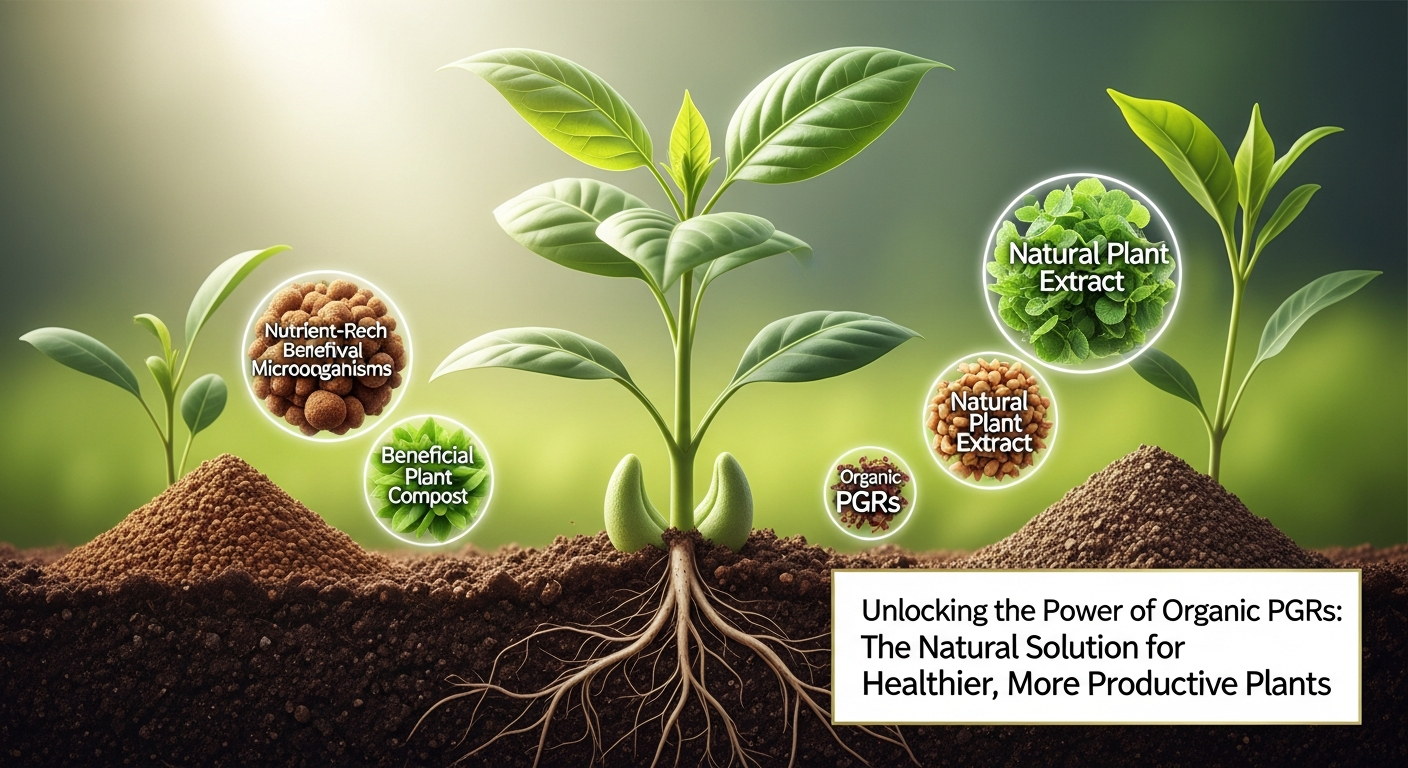
Organic Plant Growth Regulators (PGRs) are natural plant growth facilitators that help sustain the environmentally responsible farming practices used for centuries. All organic PGRs perform in the same manner as conventional PGRs by providing nutrients to the roots of the plant to assist in faster growth, producing larger and healthier plants.
Organic PGRs are rich in hormones, minerals, and bioactive components that contribute to the overall growth and development of the plant, including: improved development of root systems; flowering; increasing the size of fruits; improving stress tolerance. Because organic PGRs do not contain chemicals and work with the natural environment, they are the preferred option for home gardeners as well as commercial organic growers.
Organic PGRs are the choice of many growers because they are environmentally safe, are free of any chemical residue, and can be used effectively in conjunction with fertilizers. Therefore, growers can use organic PGRs in conjunction with natural fertilizers to create plants with superior root systems, provide increased production, and produce more vibrant crops.
Organic PGRs work well on every plant, including vegetables, fruits, ornamentals, and grains; therefore, no plant is excluded from the use of organic PGRs for maximum growth and overall health.
Understanding Organic PGRs: What Are They and How Do They Work?
Organic Plant Growth Regulators (PGRs) are derived from natural sources such as plants, microbes, seaweed and/or organic substrates. As a result PGR's have been shown to assist with healthy plant growth across the entire life cycle of a plant. The way in which Baby Foods Provide nourishment for infants; Organic PGRs Provide nourishment through the bioactive component in the food without adding Chemicals to the diet. Therefore Organic PGRs can be safely incorporated into the existing soil ecosystem and will help maintain longer term fertility of the soil. Organic PGRs are quickly becoming the preferred source of Growth Enhancement for Organic Gardeners and Farmers who are trying to Use Natural Growing Methods.
The way in which Organic PGRs enhance Plant Functions is by improving the plant's own Hormone System, Organic PGRs enhance the plant's Ability to Form Roots, When Flowering Immature flowers Develop into Mature Flowers and Start to Bloom, Expand the Surface Area of the Leaves and to Enhance Stress Resistance of Plants by providing nourishment via a Natural Method. Organic PGRs can be both sprayed onto a plant's foliar Surface or Drenched into the Soil Where They Will be Available for Plant Roots in An Oxygen Thirsty ( Soil ) Environment.
What Are Organic Plant Growth Regulators?
Organic plant growth regulators (PGRs) are naturally formed substances that support plant development, as a control mechanism. They are derived from seaweed, compost tea, humic acid and fermented flower extracts.
Characteristics:
- Natural, non-chemical input.
- Soil and plant safe; environmentally sound.
- Develop root systems and increase nutrient absorbance.
- They are effective for gradual growth and long-term balanced growth.
Desirable for both organic and conventional farming; naturally-derived inputs have consistently been considered to be the most effective organic PGR solutions, as they support plant functions and have no residue or harmful effects after application.

How Organic PGRs Influence Plant Hormones Naturally
Organic plant growth regulators promote or enhance the plant's naturally occurring hormones. These hormones (auxins, gibberellins, and cytokinins) are critical to the healthy growth of plants.
How Organic PGRs Function
1. Stimulate the root hormones to promote a deeper and stronger root system.
2. Promote the expansion of the leaves to increase the plant's energy production.
3. Increase the number of flowering hormones available to promote higher yields.
4. Increase the amount of stress-response signals sent to the plant when experiencing drought conditions or heat stress.
5. Increase the amount of nutrients available for stronger growth and structure.
Organic PGRs closely resemble natural processes, meaning the plants will react positively with no shocks from abrupt growth or chemical based sources.
Organic-based PGRs work slowly and gently which is ideal for farmers who put an emphasis on soil health and long-term production of crops.
Why Organic PGRs Are Preferred Over Chemical Alternatives
Organic plant growth regulators (PGRs) are becoming the most popular option among growers looking for a safe and sustainable method to promote plant growth while avoiding synthetic chemicals.
Reasons Growers Choose Organic PGRs:
- There are no chemicals in organic PGRs; they don’t leave behind any chemical residues on the food crops
- Organic PGRs will improve the fertility of the soil instead of damaging it like chemical fertilizers.
- Organic PGRs have proven to be effective in both organic farming and for use in home gardens.
- Organic PGRs do not have any negative effects on important insects and microorganisms that benefit gardens.
- Growers can use organic PGRs as a replacement for using harsh chemical fertilizers.
Many growers have reported that by combining organic PGRs with a natural fertilizer, they receive both hormone support and nutritional balance, resulting in stronger, healthier plants.

The Benefits of Using Organic PGRs in Your Garden or Farm
Organic Plant Growth Regulators (PGRs), as opposed to chemical fertilizers, use plant-derived materials to help increase overall vegetal well-being, much like how proper nutrition allows a child to grow to their optimal physical stature. These products provide crops with additional strength when experiencing environmental stress, along with improved overall yields when used as additives rather than exclusive formulations. Organic PGRs consist of a variety of substances including: seaweed extracts, humic acids, and/or various forms of beneficial microorganisms, making them an effective method for producing healthy plants as well as improving ecosystem health. When organic PGRs are combined with a Natural PGR Fertilizer, these combined products become exponentially more effective and endure longer than either ingredient on its own.
Naturally Boosting Plant Health & Stress Resistance
Crops will grow better with Natural Hormones which assist in healthy growth. Organic Plant Growth Regulators will aid in building the crop's internal systems by providing them with strength to deal with heat, drought, pest and lack of nutrients.
Benefits:
1. Benefit to Root Development - Root Development - In addition to helping with root development, plants will also benefit from additional nutrients through root growth.
2. Benefit to Crop Survival - Plants will have a better chance of surviving during heat stress, drought, and/or soil stress.
3. Benefit to Leaf, Stem, Flower Development - Plants will be more healthy due to improved leaf, stem and flower development.
4. Reduced Seedling Failure - Early Seedling Growth Failures will be reduced.
How It Works:
Natural extracts such as Seaweed and Humic Acid provide the same type of support for mature plants as Ragi (Red-grained) provides for infants (strong bones). The extracts contain Bioactive compounds that support increased Metabolism, Enzyme Activity, and Natural Immunity. Therefore Organic PGR's would be the preferred Organic PGR Options for Farmers who are looking for strong, naturally resilient crops.
Increasing Yield While Reducing Chemical Inputs
Organic plant growth regulators (PGRs) are mainly advantageous because they allow farmers to increase yields through natural practices while greatly reducing their dependence on synthetic fertilisers and pesticides.
Most of the benefits of using organic PGRs include:
- Improved flowering and fruit setting
- Better quality and larger crops
- Improved uniformity among crop sizes.
- Reduced need for synthetic chemicals.
Organic PGRs stimulate the natural plant hormone pathways, which include auxins, gibberellins and cytokinins, thus providing an overall improvement in the plant’s ability to produce fruits and seeds, resulting in reduced usage of chemical boosters and supplements. In conjunction with the use of organic PGR fertilisers, an approximate doubling in overall production quantities is obtained without the introduction of harmful residues.

Protecting Soil, Water, Pollinators & Biodiversity
The use of Organic PGRs supports healthy ecosystems because they eliminate the use of harmful chemical residues on most chemicals used to control pests and disease in agriculture. Additionally, PGRs protect pollinators such as honeybees, butterflies and other beneficial insect species and earthworms.
Advantages of Using an Organic Plant Growth Regulator
They do not negatively impact earthworm populations, honeybee colonies, the butterfly population or other beneficial insect species.
- Organic PGRs support a wide variety of beneficial soil microbes.
- Organic PGRs help reduce chemical runoff into rivers and other aquatic habitats.
- Organic PGRs build long-term soil fertility.
Pesticides and herbicides are synthetic products that can disrupt natural ecosystems; organic PGRs are biodegradable and environmentally friendly. By feeding beneficial soil microbes and keeping surface water free from contamination, organic PGRs are a great option for regenerative farming systems and can help producers grow crops sustainably.
Comparing Organic vs. Synthetic Plant Growth Regulators
The way organic and synthetic plant growth regulators (PGRs) function is very different from each other; therefore, when farmers understand how each type works, they can make better decisions about their farm. Organic PGR's are made from plants and are therefore gentle; they also work in conjunction with nature (not against it) to enhance the growth of healthy plants. Synthetic PGR’s are manufactured using chemicals, work quickly, and might have consequences that can affect the plant over the long-term. Similar to how foods can be used to support different stages of human development, so can organic PGRs safely and sustainably support the healthy development of plants. Below is a breakdown of how each type of PGR works and why many growers are opting for organic PGRs over synthetic PGRs.
Key Differences in Safety, Function, and Impact
Types of PGR's:
1- Organic PGR's are those that are obtained through the use of natural materials such as humic acids, compost extracts and plant growth regulators found naturally occurring (i.e., plant hormones). Synthetic PGR's are manufactured chemicals that are designed to force the plant to respond in a specific way.
2- Organic PGR's support the plant's growth and development by enhancing the natural processes that aid root development, flowering and nutrient uptake. Synthetic PGRs can speed up or suppress the growth of the plant quickly and cause stress on the plant.
3- The organic PGR's are considered safe, non-toxic, have no residues, while synthetic PGR's can leave chemical residues on the crop when used incorrectly.

Why Organic PGRs Are Safer for Food Crops
While PGRs are widely available and recommended for consumers, the safety of organic PGRs can be questioned. Because they do not leave residue and work with the plant's existing systems, organic PGRs are cleaner and can promote more interesting food quality attributes.
The following properties may help consumers understand the benefits of organic PGRs:
1.No Residue
Organic PGRs have been shown to break down naturally into non-toxic compounds that do not remain in or on food.
2.Natural Action
Organic PGRs utilize the body's natural hormone balance that helps to shape the plant's natural growth cycle, rather than dictating how to grow.
3.High Quality Food
Organically grown produce often contain greater amounts of the flavor and nutrients that provide consumers with greater satisfaction when consumed.
4.Certified Organic
Organic PGRs are compliant with organic farming regulations globally, thus ensuring that produce can be sold under the organic label with assurance of safety and cleanliness.
Organic PGRs work by allowing a plant to develop at its own rate without being forced to change by forcing air movement and water into its roots. By allowing plants to grow naturally, organic PGRs allow consumers the opportunity to consume food that has retained its natural flavor, nutrient content, and safe for consumption as humans. Organic PGRs are the best choice for families and markets that demand a chemical-free food sour
Environmental Risks of Synthetic PGRs
Synthetic PGRs are extensively applied in commercial agriculture and are associated with high levels of environmental risk due to improper use and overapplication.
Major Environmental Issues
1.Decreased Soil Quality Decreased Microbial Diversity:
The existence of chemical residues in the soil can decrease the number of microbial populations in the soil and disrupt the natural cycling of the nutrients in the soil.
2.Groundwater and Surface Water Contamination:
Excessive application of synthetic PGRs can introduce synthetic PGR residues into ground and surface waters.
3.Negative Effects on Beneficial Insects:
A number of synthetic PGRs can have negative effects on pollinators and soil microorganisms.
4.Persistence:
Chemicals can persist in the soil for years and interfere with the growth of subsequent crops in the same field.
Importance of Healthy Soil and Water Healthy soil and water are necessary to achieve sustainable agriculture. The application of chemical PGRs can create an imbalance in the natural cycling of nutrients in the soil and result in decreasing crop quality over time. On the other hand, organic PGRs contribute to improving the structure of the soil and increasing microbial activity, particularly when used in conjunction with a natural PGR fertilizer, which could provide a safer, healthier, and more sustainable alternative for farmers and the environment.
Top Organic PGR Products and Ingredients to Look For
Natural plant growth regulators (PGRs) have different natural origins; but, generally, they provide plants with the opportunity for healthy crops as well as more productive yields, while still remaining organic. The products are gentle, they are easily absorbed into the plant, and they are safe for the environment. All natural plant growth regulators can provide support through the various stages of a plant's growth; from root development to blooming and fruiting. If you are new to growing or have a lot of experience, knowing what to look for when purchasing the best organic plant growth regulators will help you make wise choices about what inputs to utilize and achieve maximum crop yield. Seaweed extract and compost tea are just two examples of the multitude of natural benefits that each organic plant growth regulator has to offer.
Seaweed Extract—One of the Best Organic PGR Options
Of the many plant growth regulators available that can be used safely and effectively, seaweed extract is by far one of the best choices for organic growers because of its high amounts of natural plant hormones: cytokinins, auxins, and gibberellins.
Seaweed extract has many positive effects on plants:
1. Encourages root growth during initial development.
2. Promotes flowering and fruit production.
3. Increases a plant's ability to survive under high-temperature, drought, and salinity conditions.
4. Enhances a plant's capacity to absorb nutrients and increase its overall vitality.
Because seaweed extract is gentle on young root systems, it is an excellent source of nutrient support for seedling and transplant crops as well as sensitive plant types (e.g., soft fruits, ornamental crops) and should be considered in the same way as high-quality, easily Digestible foods for human babies.

Humic & Fulvic Acids for Root System Development
Humic and Fulvic Acids are food for the Soil, enhancing Soil Structure, Moisture Retention, Nutrient Absorption, and gently stimulating Root Development, thus making Humic and Fulvic Acids the essential components of most Organic Plant Growth Regulators.
Essentially, Humic and Fulvic Acids will:
- Enhance your soil's aeration and texture
- Encourage your plants to develop strong, deep root systems
- Improve the efficiency of your nutrient uptake
- Reinvigorate Weak or Damaged Plants
Organic boosters, such as Humic and Fulvic Acids, work exceptionally well with Plants that have Poor Soil or Nutrient Imbalances. They allow Roots to explore the Soil as if it were Smooth, Light and Fluffy. This is similar to how the introduction of Gentle, Fibre Rich Foods supports a Baby’s Digestion.
Compost Tea, Coconut Water & Botanical Extracts
These natural substances are gentle but potent organic Plant Growth Regulators (PGRs), providing the nutrients that help plants grow in the same way that organic food sources provide nutrition to children. All of these products are beneficial for helping to provide all of the necessary nutrients to the plant in order to support a healthy, consistent growth rate.
What Is The Effectiveness Of These Organic PGRs?
- Compost Tea helps to Increase Microbial Activity and Boosts the Plants' Immunity
- Coconut Water Has Cytokinin Activity That Stimulates Flowering and Cell Growth
Botanical Extracts (such as Neem, Aloe and Moringa) Provide Numerous Benefits, Including Disease Resistance, Nutritional Enhancement, and Stimulation of Plant Growth
The compounds supplied by these products will provide plants with a variety of plant-friendly compounds to support their growth at different stages. All of these organic PGRs are simple to produce, environmentally friendly and suitable for every type of crop.

How to Effectively Use Organic PGRs: Application Tips & Best Practices
Organic plant growth regulators (PGRs) are designed to complement the effects of nutritional supplements (e.g. , protein shakes) on human growth and development. Although organic PGRs promote root development and increase the ability of plants to absorb nutrients from the soil, their use can also have a positive effect on all aspects of plant health. To obtain maximum benefit from using organic PGRs, growers must apply these products according to recommended methods (spraying, drenching, using in conjunction with an appropriate PGR fertilizer, etc. ). By following the proper application procedures, growers can produce healthier, stronger and more vigorous plants that will thrive for the life of the plant.
Dosage Guidelines for Organic PGR Foliar Sprays
By using Foliar Sprays, Plants Can Absorb Organic Plant Growth Regulators (PGR) through their leaves quickly and effectively, making this practice an ideal solution for improving plant growth and recovery from injury
Best Practices for Foliar Application:
1.Dilution: Most organic PGRs require a rate of dilution (e.g., seaweed extract—2 to 5 ml Per litre). Excessive use of PGR can cause a reduction in the ability of the plant to utilize them for their intended purpose.
2.Time of Day to Spray: The best times to apply foliar sprays are during the early mornings or late afternoons. Applying at these times helps prevent the burn or damage to leaf tissue, as well as allows for increased amounts of PGR absorption.
3.How Often to Apply: Once every 10 to 15 days interval.
4.Coverage Area: Ensure that both top and underside of all leaves have received adequate coverage from the spray solution.
Why Foliar Sprays Work
Foliar application provides a quick method of delivering immediate nutrient and hormone support to plants in need. Many of the best organic PGR Products have been formulated to supply the micro-hormones quickly, with little or no stress to the plant.

Soil Drenching & Seed Treatment Using Organic PGRs
Soil drenches provide the means for organic PGRs to penetrate into soil, where they build up the foundation of the plant's structure and assist in the absorption of nutrients.
Soil Drenching Guidelines:
- Dilute PGRs: 10-20 ml/L in most natural extracts
- How to Apply: Pour directly at the base of the plant
- When to Apply: Every 20-30 days
Benefits: Increased root branching and drought resistance, enhanced uptake of nutrients
Seed Treatment Guidelines:
- Soak Seeds: 30 minutes in diluted organic PGR solution
- Dry Seeds Before Sowing: To allow for uniform germination
- Benefits: Faster germination, healthier plants, decreased early growth stress
Why Do They Work?
The root system effectively absorbs organic PGRs naturally. This results in continued benefits for the plant. Therefore, we can say that plants start out stronger from the moment they germinate, just like a child develops stronger as a result of being properly nourished during early childhood up until the time they are adults.
Combining Organic PGRs with pgr fertilizer for Best Results
Combining Organic Plant Growth Regulators (PGRs) with an organic PGR fertilizer for your crop provides a well-balanced feeding program that encompasses, both, the regulation of growth and the enhancement of nutrient supply.
The benefit of Combining Organic PGRs with Organic PGR Fertilizer:
- Improved root and shoot (stem) development
- Improvement in flower and fruit production
- Increased Microbial Activity in Soil
- Recovery More Quickly From Stress (e.g., extreme heat, transplanting, and drought)
Steps To Combine Organic PGR and Organic PGR Fertilizer:
Step 1. Use an organic PGR foliar spray as a source of hormones.
Step 2. Apply an Organic PGR Fertilizer To Support Nutritional Health Of Soil.
Step 3. Alternate Applications of Organic PGR and Organic PGR Fertilizer Every 10 - 15 Days.
Step 4. Monitor Plant Growth and Adjust Dosage According To Response.

The Future of Sustainable Agriculture with Organic Plant Growth Regulators
Organic plant growth regulators or PGRs are integral to sustainable agriculture as they aid in the development of plants using natural substances instead of synthetic chemicals. Organic PGRs improve the overall health of the root system and enhance the plant's natural ability to grow larger flowers, produce higher yields, and have stronger stems while protecting the soil and ecosystem.
Organic PGRs each type of organic PGR provides distinct benefits for enhancing plant performance and growing conditions. All organic PGRs will work properly on all crop types.
The Shift Toward Low-Chemical, High-Productivity Farming
Farmers are looking for natural solutions to increase productivity while reducing the effect of chemicals on the health of themselves, their land and their crops. Rising soil damage, chemical residue concerns, and farmer health concerns due to synthetic chemicals are among the reasons for this shift in agriculture.
- Organic Plant Growth Regulators (PGRs) can help achieve high yields with no chemical residues in crops, while providing a safe and healthy environment for crops to grow.
- By using organic PGRs, chemical residues are reduced in both soil and crops, soil is protected by keeping the balance of plant hormones in check and beneficial insects and soil microbes are protected.
- Long-term support for soil fertility can be achieved by using organic PGRs in conjunction with compost and PGR fertilizers.
Just like some varieties better suited to early weaning and easy digestion, organic PGRs are a great fit for farms transitioning away from the use of chemical fertilizers. They allow for the continuation of plant growth with less stress through chemical stimulation and allow for better absorption of nutrients through the use of natural hormones. Farmers adopting the use of Top Organic PGR will have an increase in yields naturally and will preserve fertile soil for many future generations.
Innovations in Biological & Fermented PGR Technology
Innovations in the use of bio-based and fermented plant growth regulators (PGRs) will help to resolve many of today’s agricultural challenges. These innovative products use beneficial microorganisms, fermented plant extracts, amino acids, and natural hormone-like substances to stimulate rapid and healthy plant growth. They provide an additional benefit to the plant through every growth phase from germination to maturation.
The Latest Developments in Plant Microbial and Fermentation
Fermented PGRs function most efficiently because they have been pre-digested by the microbes; therefore, they are readily available to plants as a nutrient source.
Key Benefits
1. Quicker Nutrient availability for plants to consume
2. Increased plant resistance to drought and insects
3. Enhanced flowering and fruiting of the plants
4. Free of any chemical residues
5. Excellent compatibility with other organic materials
Fermented organic PGRs have a smoother interaction with plant cellular makeup, as do milled grains that are beneficial to the digestive system due to their soft and easily digestible components. Fermented organic PGRs contain enzymes, amino acids, and other naturally occurring growth-promoting compounds, which are available for the developing plant immediately upon application. Fermented seaweed, plant tea, and microbial extracts are becoming increasingly popular in sustainable agriculture. When applied in conjunction with organic compost and as part of a regular mild PGR fertilization regime, they improve root development and root strength, increase the size of leaves, and improve the overall health of the plant.

Why Organic PGRs Will Shape Future Crop Management
Main Points:
- Safer and Cleaner Food and Agriculture
- Less Dependence on Synthetic Chemicals and Fertilizers
- Greater Soil Health and Fertility Due to Natural Nutrition
- Compatible Across an Organic Production System
- Consistent Yields Under Climate Stress
As consumers are increasingly asking for cleaner, residue-free foods, organic Plant Growth Regulators or Organic PGRs are becoming integral tools for modern-day agricultural practices. These product lines can improve the health of a plant's immune system, assist in its ability to absorb nutrients from the soil, and help plants withstand temperature fluctuations due to droughts or extreme heat, as well as diseases. Furthermore, when combined with a Natural PGR fertilizer product line, Organic PGR products create a total Nutrition and Growth System for a plant and will become the pre-eminent approach for managing crops in the future.
FAQs
Q1. What are organic PGRs?
Organic PGRs are natural plant growth regulators made from sources like seaweed, humic acid, compost tea, and botanical extracts.
Q2. Are organic PGRs safe for food crops?
Yes, organic PGRs are safe because they leave no harmful residues and work naturally with plant biology.
Q3. What is the best organic PGR for overall plant growth?
Seaweed extract is considered the best organic PGR due to its balanced hormones and broad benefits for roots, shoots, and flowering.
Q4. Can organic PGRs replace synthetic growth regulators?
Yes, organic PGRs can effectively replace synthetic ones in most crops while providing safer, eco-friendly results.
Q5. How do I apply organic PGRs for best results?
Apply them as a diluted foliar spray or soil drench, preferably in the early morning or late afternoon.
Q6. Are organic PGRs compatible with regular fertilizers?
Yes, they work well with organic composts and biofertilizers and can also be paired with a natural pgr fertilizer.
Q7. Do organic PGRs improve yield?
Absolutely—organic PGRs enhance root strength, nutrient uptake, and stress tolerance, resulting in higher yields naturally.
Conclusion: Take the Next Step Toward Greener Growing—Adopt Organic PGRs Today!
The use of organic plant growth regulators has been one of the greatest advances for sustainable agriculture. It allows farmers and gardeners to easily enhance plant health and yield (as well as plant resilience) without using any damaging chemical additives. Organic plant growth regulators act in concert with the natural growth cycle of a crop, promoting root development, nutrient uptake, and resistance to environmental stressors without the need for synthetic products. By using organic plant growth regulators, the grower can nurture healthier crops while preserving the land, water, and environment for future generations.
Because they are biodegradable, gentle on the environment, and safe for all crops — including vegetables, fruits, flowers, and field crops — organic plant growth regulators lack the negative effects associated with synthetic plant growth regulators. Organic plant growth regulators are used in a number of forms including seaweed extract, humic acid, compost tea, and many other botanical-formulated products. Regardless of which products are chosen for use, organic plant growth regulators will promote a healthy and robust crop by supporting the long-term maintenance of soil fertility. Selecting the proper organic plant growth regulator will guarantee a consistently produced, naturally grown plant without compromising food safety or quality.
Incorporating organic plant growth regulators into your routine has a very easy method for doing so when combined with plant growth regulator fertilizers of superior quality. This combination will provide a plant with complete and comprehensive nutritional support which will promote root strength; stimulate vigorous shoot growth; and enable the continued development of abundant fruits and flowers. With continuous utilization, plants will be provided with increased immunity to heat stress, drought stress, and pest stress, allowing them to thrive even during periods of environmental stress.