


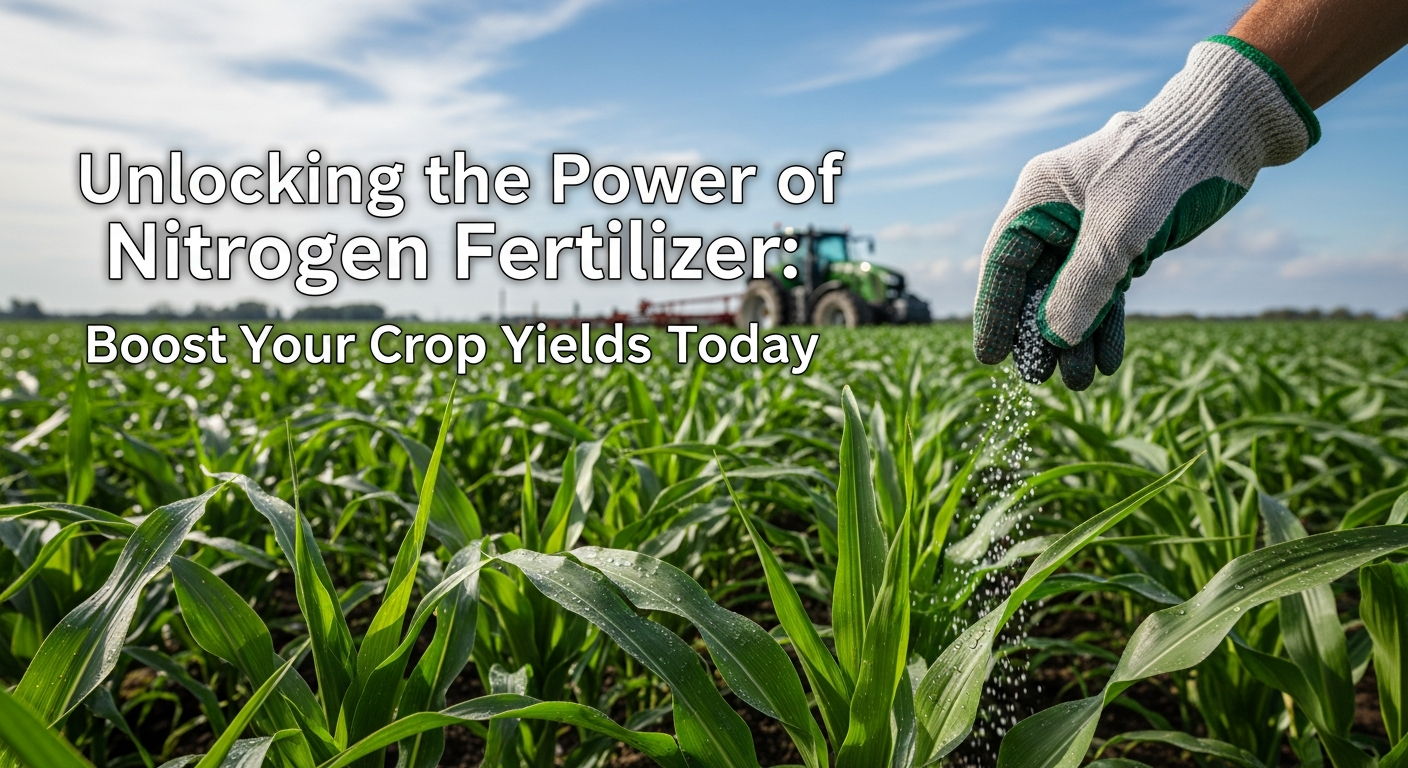
Different forms of nitrogen fertilizers exist and provide an important source of nutrients to all types of crops and plants for growth. They provide nitrogen, one of the most essential nutrients for plant growth, necessary for improved leaf production, general plant growth, and improved crop yield. the different types of nitrogen fertilizers support different agricultural requirements and that of the soils.
Understanding Nitrogen Fertilizer: What It Is and Why It Matters
In agriculture today, nitrogen fertilizers are among the most valuable fertilizers utilized by farmers, sustaining plant growth and promoting healthy crops since ancient times. Nitrogen is critical to the formation of chlorophyll, proteins, and enzymes and is one of the key building blocks of plants in order to acquire the attributes of vitality and robustness necessary for effective crop development. Nitrogen increases the rate of vegetative growth, increases the efficiency of photosynthesis, and increases the ability of crops to take in other important nutrients, thereby improving crop development and increasing yield potential.
All forms of nitrogen fertilizers, including urea, ammonium nitrate, liquid nitrogen, and slow release blends, are essential in providing the initial energy to help crops reach their maximum potential during all phases of their lifecycle.
What Is Nitrogen Fertilizer? Key Definitions
Fertilizer nitrogen is designed as a source of nutrients to enable plant growth. It is rich in the plant-essential nutrient nitrogen.
- Plant proteins and amino acids contain nitrogen as an integral component.
- Fertilizer nitrogen promotes rapid crop growth by providing crops with the nutrients necessary to grow rapidly and develop healthy foliage, i.e., green, lush foliage.
- Nitrogen can be supplied in many different forms, including: urea, ammonium nitrate and liquid nitrogen solutions.
The use of nitrogen fertilizer by farmers has made it one of the most commonly used fertilizers globally due to its ability to provide plants with the nutrients they need for healthy growth.
Importance of Nitrogen in Plant Nutrition
Nitrogen is one of the most essential nutrients throughout all phases of plant development.
- Provides the building blocks needed to produce chlorophyll necessary for photosynthesis.
- Empowers plants' abilities to use light (sun) energy more efficiently to convert into food (energy).
- Encourages fast vegetative growth & increased yield potential.

Without sufficient amounts of nitrogen, your crops will appear sickly pale, lack strength, and yield far fewer fruit or grain than if they had enough nitrogen fertilizer applied correctly.
Why Fertilizer With Nitrogen Is Essential for Agriculture
Nitrogen is Important to Agriculture Production.
- Nitrogen promotes rapid crop growth and many very large crops through increased mass.
- Nitrogen provides added stress resistance and nutrition deficiency to plants.
- Nitrogen keeps the yield of high-quality crops in nutrient depleted soil.
Nitrogen Fertilizer is necessary for producing consistent, healthy, profitable yields from single crop and multi-crop farms.
The Science Behind Nitrogen: How It Fuels Plant Growth and Productivity
Nitrogen is a plant's most needed nutrient. It is essential for growth and health and plays an important role in plant productivity. Nitrogen helps make proteins, chlorophyll, and amino acids, which are needed for healthy crop development. Crops that are grown in soils that do not contain adequate nitrogen receive the correct amount of nitrogen fertilizer; therefore, nitrogen fertilizer is nitrogen in the right quantity and form. nitrogen supports multiple metabolic processes in a plant, including energy production, leaf growth, and overall vigorous growth for the entire growing season.
Nitrogen’s Role in Photosynthesis and Chlorophyll Formation
The photosynthesis pigment associated with plants is chlorophyll, and the ingredient that makes up chlorophyll is nitrogen.
- Nitrogen allows plants to utilize sunlight for energy.
- Nitrogen enables plants to maintain healthy green leaves and build up biomass through photosynthesis.
- Nitrogen gives crops more vigor and helps them develop larger canopies.
If a plant does not have enough nitrogen in its cell structure, the leaves will become yellow or light green, which renders the plant incapable of making its own food.
How Plants Absorb and Use Fertilizer Nitrogen
Plants absorb nitrogen predominantly from nitrates (NO3-) and ammonium (NH4+).
- Nitrate is quickly absorbed by plants because it is readily available in soil water.
- Ammonium supports vigorous growth of the root system.
- Both sources supply nitrogen for the formation of protein and enzymes.
Nitrogen fertilizers provide additional materials for these processes to allow quicker and greater growth of crops.
Understanding the Nitrogen Cycle in Soil
The nitrogen cycle describes the movement of nitrogen through soil, plants, air, and microscopic organisms (microbes) on the Earth (lands).
- Organic material decomposes, producing free nitrogen (gas) or ammonia.
- Soil microbes turn ammonium or nitrate into usable plant food or nutrients.
- Nitrogen in excess may leak into water or return to the air.

Farmers who understand this cycle can apply nitrogen as needed to improve plant growth while reducing nitrogen waste.
Types of Nitrogen Fertilizers: Choosing the Right Option for Your Farm
There are many different nitrogen fertilizers available. Each nitrogen fertilizer type can be beneficial to a specific crop(s) or set of farming conditions. All nitrogen fertilizer types function to stimulate plant growth, increase chlorophyll production and promote the creation of healthier, higher-productivity fields. Each of the most commonly used nitrogen fertilizer types is outlined below with regard to how they can benefit your farm.
Urea Fertilizer: High-N Efficiency for Crop Growth
Urea fertiliser is an important nitrogen source in agriculture because its nitrogen content is among the highest (46%) for any fertiliser that provides nitrogen.
- Promotes healthy green foliage
- Promotes rapid vegetative growth
- Very cost-effective, and applicable to a variety of soils.
The fine particle size and solubility of urea means it can be effectively broadcast or applied via fertigation. Urea is particularly advantageous for crops such as rice, wheat, maize and sugarcane, making it a popular choice for growers who are looking for quick and efficient delivery of nitrogen to their plants.
Ammonium Nitrate: Fast-Acting Nitrogen Source (graphic)
Ammonium Nitrate - a highly effective, wide-ranging nitrogen source that produce both Ammonium & Nitrate forms of nitrogen which are available for immediate use as well as continued support of plant growth.
- Early crop development is supported through rapid uptake by newly emerging seedlings.
- Best suited for regions experiencing long winters with little soil microbial activity.
- Provides a steady-state feed of Nitrogen to Plants grown in Soils which have low Microbial Activity.
Ammonium Nitrate dissolves quickly in granular form and is preferred by growers as a reliable, fast-acting Nitrogen source at the peak of the growing season.
Liquid Nitrogen Fertilizers and Their Uses
Nitrogen Fertilizers In A Liquid Form Create A Quick, Even Feeding System And Are Particularly Useful When Plants Are Asking For High Levels Of Nutrients (Peak Nutrient Demand).
- Rapidly absorbed by the soil and through the leaf surface.
- Ideal For Foliar Application, Drip Irrigation, And Precision Agriculture Applications
- Suitable For Vegetables, Fruitiers, And Commercial Crops That Require An Immediate Nutrient Repair.
These fast acting Liquid Fertility Products Provide A Great Deal Of Flexibility And Convenience To Today's Growers Utilizing High-Tech Irrigation Technologies.
The Benefits of Using Nitrogen Fertilizer Effectively
When applied properly, Nitrogen Fertilizer can benefit both farmers and their crops by increasing enzymes that aid in plant development, which produce increased plant production and the availability of nutrients to plants growing in healthy soil. Farmers benefit from all three of these three benefits equally in creating healthy agricultural ecosystems with high crop yields from their utilization of Nitrogen Fertilizers.
Increased Crop Yields and Better Plant Performance
Nitrogen is the most important nutrient for producing fast-growing, robust plants because it is responsible for enhancing the photosynthesis process in plants to increase energy production.
- It increases photosynthetic production to support lush Green foliage and strengthen stems of plants.
- It enables all crops to realize their complete yield potentials.
When applied correctly, nitrogen promotes uniform, rapid, and healthy plant growth, thereby improving the appearance of the field.
Improved Soil Fertility and Balanced Nutrition
Nitrogen helps to enhance the nutrient value of soils by supplying the nutrients necessary for proper cellular/metabolic functions in vegetation. Additionally, Nitrogen enhances the microbial activity of the soil, which assists in breaking down organic matter into useful nutrients.
- By allowing for proper balance of other nutrient mineral elements, such as Phosphorus and Potassium, Nitrogen helps to achieve optimal levels of soil fertility.
- Proper management of Nitrogen will also enable farmers to create productive soils for their crops over the long term.

Higher Profitability and Better Resource Efficiency
The utilization of nitrogen fertilizer correctly will result in significantly greater economic returns.
- Crop yields will correlate directly with increased marketing options.
- Healthier crops = Less crop loss = Better quality harvested crops.
By utilizing nitrogen efficiently, farmers can reduce fertilizer losses thus maximizing their return on investment (ROI). Efficient usage of nitrogen is one of the most cost-effective ways for today’s farmer to be productive and profitable.
When farmers properly manage their nitrogen use, they can utilize water, soil, and nutrient resources more effectively.
- Proper nitrogen management will increase nutrient uptake and therefore decrease the amount of fertilizer wasted.
- Nutrient management through nitrogen increases the ability of precision agriculture practices to save resources.
- When used properly, the risk for nutrient runoff with nitrogen is greatly reduced.
Greater resource efficiency from nitrogen contributes to greater farm efficiency and supports growers who operate responsibly.
Application Methods: Maximizing Efficiency and Minimizing Waste
Farmers apply nitrogen fertilizers through various efficient methods, each method has its benefits on the health of crops and the performance of soil. When determining how to apply nitrogen fertilizer, it is critical to select the best application method to optimize nutrient uptake by crops. Additionally, selection of consumption methods will reduce waste and improve crop yield. Each of the following methods represents reliable application methods utilized today by many farmers.
Best Techniques for Applying Fertilizer Nitrogen
Selecting the correct methodology ensures that nitrogen is present at the root zone of crops, the area where it is most needed.
- Broadcast application will distribute the fertilizer evenly and consistently throughout the field.
- Banding places the nitrogen adjacent to the seed row and promotes early growth of crops.
- Foliar applications allow crops to rapidly absorb nitrogen through their leaves at key growth phases.
All methods allow crops to access nitrogen, and stimulate chlorophyll production and overall plant growth.
Timing and Dosage for Maximum Crop Response
By applying nitrogen when the crops are at their biggest growth periods, the farmers can maximize the benefits of the nitrogen fertilizer.
- A nitrogen application before the season starts will promote greater root and leaf development.
- A nitrogen application during the middle of the growing season will aid in producing flowers and making grain.
- By using the proper rates of nitrogen, the risk of burning with excess nitrogen or causing a loss of nutrients to the environment will be diminished.
When the timing of the nitrogen application is correct, the plant will efficiently absorb the nutrient, resulting in stronger growth and greater yield quality.
Split Applications for Better Nitrogen Management
When the nitrogen is split into two or three applications, the farmer will minimize the nitrogen he or she has applied and optimize the amount of nitrogen utilized throughout the season.
- Requires less nitrogen to be lost through leaching and volatilization.
- Ensures steady availability of nutrients throughout the growing season.
- This is particularly beneficial for crops like maize, wheat, and sugar cane which have long growing seasons.
As a result of this management technique, nitrogen efficiency is improved and there is a corresponding increase in yield and soil productivity.

Sustainable Use: Managing Risks and Environmental Impact
Fertilizers which contain nitrogen can enhance the yield on farmed land. However, because of their misuse they can cause the loss of nutrients due to runoff and leaching from the soil. The correct application of nitrogen provides greater crop growth, better soil health and long-term sustainable agricultural production. Many of the strategies listed below provide a specific way in which farmers can implement practices to decrease the losses of nitrogen while providing optimal crop nutrition.
Preventing Nitrogen Runoff and Leaching
Nitrogen runoff is when excess nitrogen runs off into the nearest water body while leaching is when nitrogen is absorbed into the soil beyond the root zone.
- Runoff causes contamination of lakes and rivers and contributes to harmful algal blooms.
- Leaching reduces the effective use of fertilizers and increases groundwater pollution. The application of controlled-release nitrogen and the timing of nitrogen application during periods of active crop uptake will help minimize the losses of nitrogen.
Best Management Practices (BMPs) for Safe Use
BMPs provide a guidance system for farmers to improve the efficiency of the application of fertilizers, and at the same time, protect natural resources.
- Apply the recommended amount of nitrogen as determined through soil testing.
- Apply the “4R Rule”. Apply the right source, at the right rate, at the right time, and in the right place.
- Do not apply fertilizer just prior to a major rain event to maximize crop use of fertilizer while minimizing waste and contamination.
Eco-Friendly Fertilization Methods for Modern Farmers
Sustainable agriculture is a modern agricultural practice that has numerous benefits for the environment and promotes efficiency in nitrogen use.
Examples include:
- Using organic sources of nitrogen, such as compost and manure;
- Using nitrification inhibitors to delay the conversion of Nitrogen into Nitrate;
- Using cover crops to maintain the Nitrogen in the soil.

Nitrogen Management Strategies to Maximize Yields & Profitability
Management of nitrogen effectively can improve crop health, soil fertility, and overall profitability of farm operations. There are numerous nitrogen strategies for a variety of crops, soils A farmer can manage nitrogen better if he/she is more aware of how, where, and when to apply the nutrient(s) than if they only apply one type of fertilizer and use it haphazardly.
Smart Fertilizer Scheduling & Seasonal Planning
- Successful management of nitrogen begins with timing.
- Timely application of fertilizers helps maximize the uptake of nitrogen at the time of greatest need—when plants are actively growing.
- Timely application of nitrogen and using a multi-stage approach (split application) will reduce the amount of nitrogen wasted through rain or volatilization and improve the efficiency of nitrogen use.
- Weather conditions during the growing season and the stage of development of the crop should be taken into consideration to maximise the advantages of managing nitrogen.
Soil Testing to Determine Nitrogen Needs
Soil Testing: Different Soil Types Require Different Nutritional Needs.
- Nitrogen Deficiencies, Existing Nutritional Levels, and Soil Health
- A Soil Test at the Right Time Limits the Amount of Nitrogen Applied to a Crop and Prevents Farmers from Applying An Excess of Nutrients. It Also Prevents Farmers from Spending More Than Necessary To Produce Healthy, Efficiently Grown Crops.
Cost-Effective Nitrogen Inputs for Farmers
- Cost-Effective Nitrogen Options Allow Farmers To Produce More Crops For Less Money.
- Finding The Right Form of Nitrogen Fertilizer (Urea, Ammonium Nitrate, Liquid Nitrogen, And Slow-Release Products) Can Greatly Affect Crop Yield and Budgeting.
- When Fertilizers Match Crop Demand and Soil Conditions, Input Cost Can Be Reduced and Production Can Be Maintained at A High Level. Buying Fertilizer in Bulk, Using Improved Application Technology, and Using Efficient Management Practices Will Help Farmers Achieve Greater Nitrogen Use Efficiency and Create Greater Profitability.

FAQs:
Q1. What is nitrogen fertilizer used for?
It promotes a healthy growth of plants, greening of leaves, and a greater yield of crops.
Q2. Is fertilizer with nitrogen safe for all crops?
Yes, omnivorous crops generally require nitrogen, but the application mechanisms must also vary between crops
Q3. How often should I apply fertilizer nitrogen?
Needed to be applied to the crop based on the crop variety and would usually require an application divided into two separate doses during the growing season.
Q4. What is the best nitrogen fertilizer for farming?
Urea or Ammonium Nitrate are common to use and among the highest percentages of effectiveness.
Q5. Can nitrogen fertilizer harm soil or water?
Yes, excess application of nitrogen can lead to both nutrient runoff and groundwater pollution.
Conclusion: Take Action—Elevate Your Farming Success with Smart Nitrogen Fertilizer Strategies!
The use of Nitrogen fertilizer is important for crops and growing productivity and profitability on your farm is dependent upon the judicious use of Nitrogen fertilizer. Understanding how Nitrogen works, selecting a suitable type and applying at the correct time is important for the plant to develop strong roots, full foliage and improved yields from harvest. Good Nitrogen management will enhance your crop's current performance as well as promote future soil health and reduce unnecessary waste.
Implementing the use of precision and efficiency in the management of Nitrogen fertilizer will lead to improved crop quality and overall performance on your farm. Appropriate planning and use of Nitrogen fertilizer presents an opportunity to improve results whether an owner of small or large farms. Take time now to incorporate into your farming practices all of the benefits that Nitrogen fertilizer offers, and make strides to become an agriculturally productive, profitable and future-forward Farmer.
