
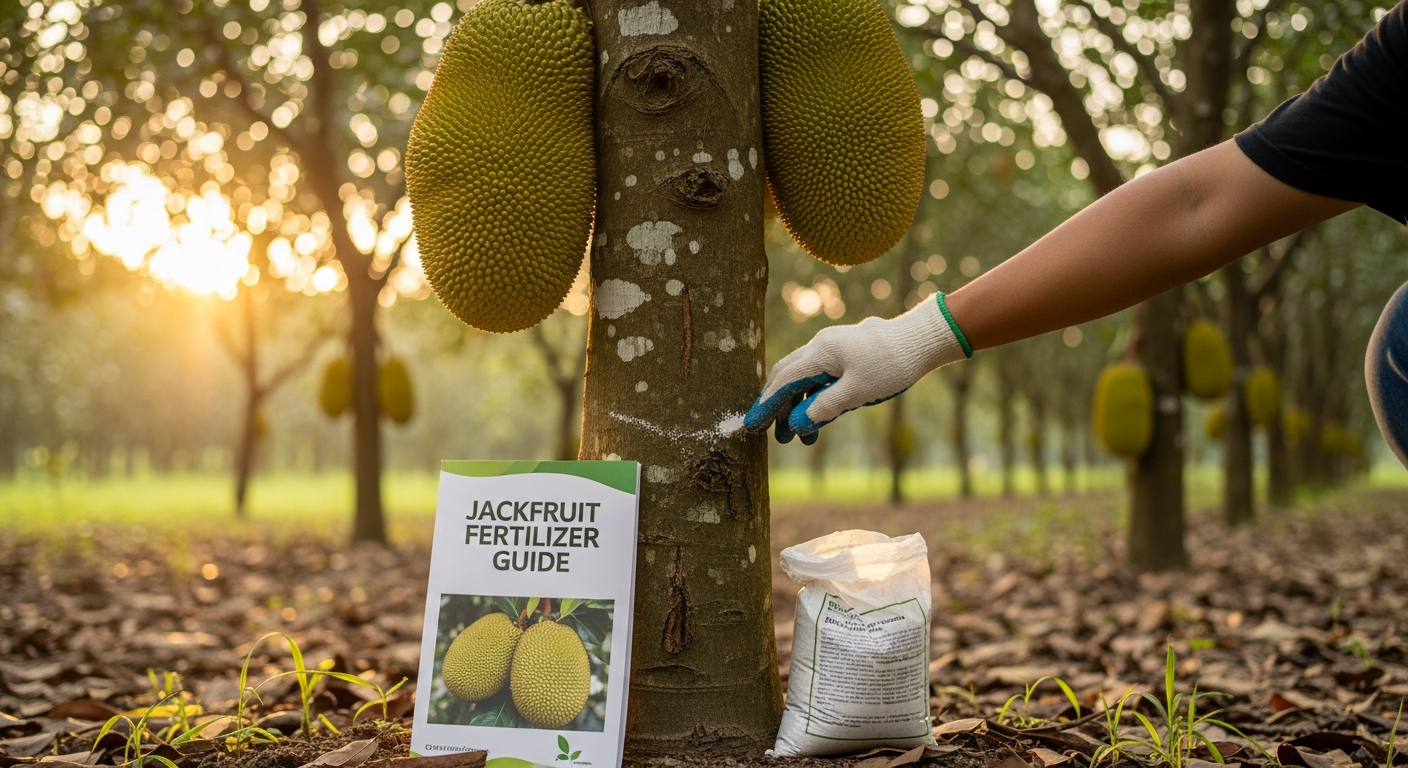
Jackfruit is an old world tropical fruit species that has been grown on farms and backyard plots for centuries because of its great yield and nutritional value. To maintain its large-size canopy, deep (tap) root system, and heavy weight of fruit, jackfruit needs to be nutritionally managed. Correctly using jackfruit fertilizer can help the jackfruit tree develop and produce healthier and stronger trees throughout its life.
The key nutrients that jackfruit trees get from fertilizers include nitrogen, phosphorus, potassium, and micronutrients. These nutrients promote strong vegetative growth, enhance the development of flowers, and allow for proper fruit maturation when utilized properly. When provided to jackfruit trees properly, these nutrients all get absorbed to the fullest extent possible, making fertilizing an important means of insuring trees are consistent producing throughout their life.
From the first time they are grown as small seedlings to their final stages of fruit production, jackfruit trees appreciate a balanced fertilizer program designed specifically for fruit plants. While the needs of jackfruit trees will vary from the fertilizing needs of other crops (such as dragon fruit plant), the basic principle remains: through timely and proper nutrition, better yield and fruit quality, as well as healthy tree growth can be achieved each year.
Understanding Jackfruit Fertilizer and Fruit Plants Fertilizer Needs
Jackfruit is long-term, heavy-fruiting, and dense-caned. For this reason, it requires a well-balanced fertilization plan to promote vegetative growth and maintain fruit yield. Jackfruit, like other tropical plants, will benefit from a consistent supply of macronutrients and micronutrients as well as good soil health. A well-developed and implemented nutrition programme is critical to ensure optimal flowering, fruit size/development, and overall tree longevity.
Why Jackfruit Fertilizer Is Essential for Tree Growth
The jackfruit tree is a long-term tree that continues to grow tall and produce fruit for decades. Proper nutrient management is a crucial element of successfully growing a jackfruit tree. Trees that are not properly fertilized may exhibit slow growth, flowering that is inconsistent, fruiting that is irregular, and produce fruit that is of low quality.
The following are the reasons why it is important to use the correct jackfruit fertilizer.
- Provides support for strong development of the trunk, branches, and canopy.
- Encourages timely flowering and fruiting.
- Increases the size, flavor, and overall quality of the jackfruit produced by the tree.
- Increases the jackfruit tree's ability to withstand pests, diseases, and environmental conditions.
Nutrient Requirements of Jackfruit and Other Fruit Plants
The Jackfruit tree needs a combination of major nutrients and trace elements to thrive. Most of the nutritional needs of the Jackfruit tree are very similar to those of most tropical fruit trees, which is why it is possible to formulate a very effective fertiliser for all types of tropical fruit trees.
The Major Nutrients that are important for the growth of the Jackfruit tree include:
- Nitrogen (N): Stimulating the development of the canopy through increased leaf growth.
- Phosphorus (P): Promoting the rooting of jackfruit and the development of flowers.
- Potassium (K): Increasing the size, sweetness and quality of fruits produced by jackfruit.
Calcium and Magnesium: Supporting the integrity of the cell walls of jackfruit and reducing the incidence of fruit disorders.
Micronutrients (Zn, Fe, B): Supporting the enzymes involved in the flowering process as well as the process of flowering.
While fertilising dragon fruit plant is mainly intended to support the vine-growing and flowering phase, jackfruit fertiliser focuses on providing support for the continued structural growth of the jackfruit tree and the continued production of fruit over the long-term.

Soil Fertility and Its Role in Jackfruit Fertilizer Efficiency
The efficiency of any jackfruit fertilizer will depend on the fertility of the soil in which it is applied. Healthy soil supports the retention of nutrients in the ground, provides an environment where microorganisms can thrive, and allows roots to absorb these nutrients effectively.
There are several factors that can affect how well fertilizer works on jackfruit trees, including:
- Soil's acid/alkaline level- Ideally, the pH should be between 5.5 - 7.5
- Amount of organic material within the soil
- The ability of the soil to drain and have air flow
- The level of activity of microorganisms within the soil
Using organic material (often compost or manures) improves the physical structure of the soil and enables it to better support the growth of both organic and chemical fertilizers for fruit trees. A fertile soil reduces the amount of nutrients lost to the environment, allowing jackfruit to receive the benefits of fertilizer applications.
Types of Jackfruit Fertilizer Used in Agriculture
Jackfruit requires a consistent supply of nutrition to thrive as it is a heavy feeder with a large canopy and has potential for producing significant yields. A balanced fertilizer program is typically developed by farmers using organic matter, chemical products, and modern slow-release fertilizers that are developed specifically for the jackfruit tree's age, as well as the soil conditions surrounding it.
Selecting the appropriate mix of nutrients will result in greater flowering, increased fruit size, a larger overall yield, and increased root strength and longevity of the soil's health.
Organic Jackfruit Fertilizer for Sustainable Farming
Jackfruit growers typically use a variety of organic fertilizers to contribute to the improvement of soil structure, microbial activity, and slow nutrient release.
Young jackfruit trees benefit the most from organic fertilizers because they are especially important for long-term orchard sustainability.
The most common forms of organic fertilizers used for jackfruit are:
- Farmyard manure (FYM) or cow dung compost
- Vermicompost for slow-release nutrient source
- Green manures and crop residues
- Neem cake for soil health and pest control
Organic fertilizers for jackfruit provide the following benefits:
- Increase soil moisture and fertility
- Decrease dependence on chemicals
- Promote steady growth and rooting of jackfruit trees
- Promote safe, long-term fruit production
The use of organic fertilizers forms the foundation for a sustainable jackfruit fertilizer approach, and this is especially true for traditional and natural farming systems.
Chemical Fruit Plants Fertilizer and NPK Ratios
To grow jackfruit, our highest nutrient demands are met with chemical fertilizers during the flowering and fruiting phases because the trees will have maximum nutrient needs at these times. In addition, chemical fertilizers are available in exactly the right amount and cause a quicker response from the plants than organic options.
The following general guidelines on NPK ratios are recommended for growing jackfruit:
- For young trees (Non-bearing): There should be a slightly higher amount of nitrogen to promote vigorous vegetative growth.
- For producing trees (Bearing): A balanced amount of NPK with an increased amount of potassium should be used.
Following are the typical nutrient roles of each nutrient.
- Nitrogen (N): For growth of leaves and branches.
- Phosphorus (P): For root strength and flowering.
- Potassium (K): For the overall size, quality and sweetness of the fruits.

Slow-Release Fertilizer for Dragon Fruit Plants and Jackfruit
More orchards are using slow release fertilisers, due to the increasing popularity of these types of fertilisers for jackfruit and other crops that require similar amounts of fertiliser, such as dragonfruit.
Slow release fertilisers provide continued nutrition to the crop by gradually releasing nutrients over time.
The benefits of using slow release fertilisers include:
- Lower amounts of nutrients leaching away from the soil
- Extended (up to three months) feeding perio
- A significantly lower chance of over fertilisation
- Less frequent applications.
Best suited for:
- Large orchard
- Sandy or well-draining soils
- Farmers & growers wanting to implement an easy to manage low maintenance nutritional program.
A successful approach to using slow release fertilisers is in conjunction with organic manures as a highly effective and sustainable balanced system of jackfruit fertilisation.
Best Fertilizer Schedule for Jackfruit and Dragon Fruit Plants
Jackfruit and Dragonfruit require fertilization schedules that are designed for their growth stages, soil conditions, and seasons to help them reach their full potential for yield and fruit quality while sustaining their long-term health.
Instead of applying all of the nutrients at one time, balanced programs will typically use a split-nutrient application to improve nutrient uptake, reduce nutrient loss as waste, and support sustainable methods of farming. By strategically timing the delivery of these critical nutrients to these two crops, producers will be able to provide the essential nutritional needs for optimum vegetative growth, flower production, and fruit production.
Seasonal Fertilizer Application for Jackfruit Trees
There are many different nutritional requirements for growing jackfruit trees during their life cycle. Each stage requires different levels of nutrients in order for the plant to thrive.
The following is a breakdown of fertilizer needs for jackfruit trees at various stages of growth:
- Young stage (monsoon): apply a high-nitrogen jacker/plum tree fertiliser in order to provide the necessary nutrients for developing leaves and branches
- Pre-flowering stage: use an NPK fertiliser to help with the development of buds and flower formation.
- Fruit-producing stage: use additional potassium to improve fruit size, fruit weight, and fruit sweetness.
- Post harvest stage: apply compost or organic compost to restore soil nutrients to the soil and assist the jackfruit trees in recovering.3

Frequency and Dosage of Fruit Plants Fertilizer
The frequency and amount of fertilization depend on how old the plant is, what kind of soil it is growing in, and what type of crop it is. Applying too much fertilizer can be detrimental to the root system of the plant; however, applying insufficient fertilizers will restrict the yield.
Here are some temporary, general rules for fruiting plant fertilization procedures:
- For young plants, fertilize less often with smaller quantities.
- For Older Plants, fertilizer is required in larger amounts over numerous application cycles.
- Sandy Soil requires more frequent applications and less quantity.
- Clay Soil requires fewer frequent applications with more quantity.
Recommended Applications:
- Jackfruit Apply every three to four times a year.
- Dragon Fruit applies once every 30-45 days during periods of active growth.
Application Dosage:
- You should apply the fertilizer at the root zone of the plant and not adjacent to the trunk.
- You can mix chemical fertilizers with organic materials.
- Evaluate the application dosage according to the results found from soil testing.
Timing Fertilizer for Dragon Fruit Plants and Jackfruit
Timing is very important for fertilizing both Dragon Fruit and Jackfruit because how well the nutrients are absorbed by the plant is directly related to temperature, moisture, and growth. Improper timing can cause the fertilizer not to be absorbed well and lose more nutrients through loss of moisture.
Best Timing to Apply:
- Irrigate before fertilizing so that you can obtain maximum nutrient absorption.
- Fertilizer should NOT be applied in extreme heat and/or excess moisture.
- You should consider scheduling fertilizer before flowering occurs as well as before fruit set occurs.
Application Methods for Jackfruit Fertilizer in Farming
The effectiveness of proper application is equal to picking the correct fertilizer for jackfruit. A jackfruit tree has a heavy feeder and deep root system and if applied improperly or inefficiently, nutrients could be wasted or cause an imbalance or uneven growth and/or poor fruit production. The proper selection of method(s) taking into consideration influences
Soil Application Techniques for Fruit Plants Fertilizer
As the method most commonly used in traditional agriculture, the soil application technique, the nutrients can be placed directly into the soil and will be available to the roots for future growth. When following best practices for soil application of fruit plant fertilizer, the recommended procedures for applying Jackfruit fertilizer are:
- Fertilizers must be placed along the drip line (the circular trench) of the tree's canopy not directly at the trunk
- The fertilizer should be mixed in lightly with the top layers of soil to reduce the amount of nutrient loss
- The use of split application will reduce the leaching effect and avoid over-fertilizing
- For balanced nutrient availability; organic manure should be used in combination with chemical fertilizers.
The soil application is the best method of application for all fruit plants fertilizer programs for the vegetative stage of crop development through early fruit development.

Fertigation for Dragon Fruit and Jackfruit Crops
Fertigation is the method by which fertilizers are applied to crops via irrigation and has become an increasingly popular method of fertilizing crops in modern orchards. The most common use of fertigation for fertilizing dragon fruit plants, however, it is equally successful for jackfruit using drip irrigation as well.
Benefits of fertigation include:
- Even distribution of nutrients
- Enhancing fertilizer-use-efficiency
- Reduction of fertilizer application labour time
- Reducing the amount of nutrients lost through runoff.
Watering Practices After Fertilizer Application
The ideal form of jackfruit fertilizer or liquid fruit plant fertilizers is for fertigation systems, particularly when fruit are flowering and setting.
Best use of fertigation:
- Drip-irrigated orchards
- Light sandy soils, which can be leached
- High-return fruit crops that require precision nutrition
- Watering practices following fertilizer application
The way in which we manage water plays a significant role in how effectively jackfruit fertilizers work. If the way in which we water does not correspond with the application of jackfruit fertilizers it is possible we may either wash away the nutrients or create stress on the root system, thereby reducing the benefit of jackfruit fertilization.
Guidelines for the best watering practices after fertilizer applications:
- Light irrigation immediately following the application of jackfruit fertilizer is helpful in activating nutrients
- Avoid over-watering, as this may cause leaching
- Maintain slightly moist—not saturated—soil conditions;
- Adjust the frequency of watering with the seasons and types of soil.
Careful management of moisture following the application of jackfruit fertilization, as well as dragon fruit fertilization, allows the nutrients to remain available to the roots of the plants and enable better plant response.
Micronutrients in Jackfruit Fertilizer for Higher Yield
The primary macronutrients that provide structure to a jackfruit tree are nitrogen, phosphorus and potassium. They are the "building blocks" of the tree's structure. Other, smaller, components of the building block are referred to as micronutrients. Micronutrients help with enzymatic functions, chlorophyll formation and nutrient transport.
Therefore, resolving mutilated nutrient deficiency exhibits many risks to growers because many times, the ability for trees to produce is compromised prior to the visible deficiency appearing (what we call "hidden hunger")
Role of Zinc, Magnesium, and Iron in Fruit Plants
Each micronutrient plays a distinctive role in promoting the overall health and yield of jackfruit trees.
- Zinc: Promotes shoot growth, elongation, and production/setting of flowers. Zinc is also necessary for proper leaf development and producing/setting jackfruit.
- Magnesium: Magnesium is the central atom in the structure of chlorophyll, and therefore, magnesium helps the plant convert sunlight into energy via photosynthesis, as well as continue to produce energy for continued fruit development from the sun.
- Iron: Iron is the primary activating agent for enzymatic reactions, including chlorophyll production, and promotes more efficient transport of nutrients and increased plant vigor in plants in alkaline soils.
Deficiency Symptoms in Jackfruit and Dragon Fruit Plants
Jackfruit and Dragonfruit plants are vulnerable to the adverse effects of insufficient micronutrients when not managed properly and at the right times.
Common deficiency symptom signs:
Zinc deficiency: Produces small leafsize, decreased internode length, and reduced flowering potential.
Magnesium deficiency: Appears as yellowing between leaf veins on older leaves first.
Iron deficiency: Develops as young leaf yellowing with green veins (chlorosis).
These symptoms reduce photosynthetic capability, weaken the plant, and reduce the plant's production potential. Proper diagnosis and timely correction with Jackfruit fertilizer or Dragonfruit fertilizer provide the nutrition required to improve plant health and increase production potential.

Micronutrient-Enriched Fertilizer for Dragon Fruit Plants
Like Jackfruit, Dragonfruit plants require micronutrients to maximize blooming and quality fruit production. Applying a fertilizer that provides additional micronutrients to Dragonfruit plants provides the nutrients necessary for balanced nutrition and prevents future hidden micronutrient deficiencies that may cause crop loss.
Benefits of Using Micronutrient Enriched Fertilizers include:
- Increased flowering and fruit development
- Increased size, colour, rate of ripening, and sweetness of fruit
- Increased resistant to environmental stressors (such as drought or hail)
- Long-term soil fertility improvement
Micronutrient-enriched fertilizers and a balanced nutrients-based Fruit Plant Fertilizer, combined, provide complete nutrition to all fruit plants that are grown in diversified orchards with Jackfruit, Dragonfruit, and other tropical fruit crops.
Common Mistakes in Using Jackfruit Fertilizer
Jackfruit trees will live well over 100 years old, will need high nutrient levels, and yet many times growers over-fertilize them, resulting in slow growth rates, delayed flowering, and unhealthy trees.
Many growers think that by providing too much fertilizer, they are increasing the production of their trees, leading to potentially avoidable issues. By using proper fertilization techniques (like those used for Snapdragons), an acid-loving flower, farmers will continue to have healthy soils and consistent production from their farms without having to deal with the problems of excessive nutrients.
Over-Fertilization Risks in Fruit Plants Fertilizer
Over-fertilization represents one of the most significant mistakes a jackfruit grower can make. Excessive nutrients, particularly nitrogen content, negatively affect both the vegetative (root) and flower (fruit) phases of a jackfruit tree's growth cycle.
Problems created by over-fertilization with jackfruit tree fertilizer:
- An abundance of leaf growth but lack of flowering
- Poorly developed roots as a result of salt concentrations
- Greater susceptibility to pest infestations and diseases
- Diminished fruit size and diminished quality of fruit produced
Increased concentrations of fertilizers cause soil:
All of these issues create greater probability of soils contaminating adjacent soils and ground water. Always take care to use the proper amounts recommended for your specific needs by breaking down the total recommended dosage into smaller, more frequent applications rather than applying a single bulk application.

Incorrect Fertilizer Selection for Jackfruit Trees
Some fertilizers will not work with jackfruit trees, which will disrupt the nutrient balance of the tree and cause it to grow poorly. Many of the common mistakes made when selecting fertilizer for jackfruit trees are:
- Choosing a fertilizer with high nitrogen content that would typically be used for leafy crops.
- Selecting the wrong type of fertilizer (i.e., a fertilizer designed for short-term crops).
- Not considering the micronutrients available in the fertilizers, such as: Boron, Zinc and Iron.
- Not understanding that fertilizer for Dragon Fruit plants has different nutritional needs than jackfruit trees (because of their different growth habits).
Jackfruit trees require a well-balanced jackfruit fertilizer with the proper ratios of NPK and micronutrients for successful flowering, fruiting, and long-term health of the tree.
Poor Soil Testing Before Fertilizer Application
When you apply fertilizer without understanding the condition of your soil, you will likely waste nutrients and cause your crop to stress. Soil properties such as pH, organic matter, and the presence of existing nutrients will greatly impact how efficient fertilizer will be on your crop.
Some problems associated with inadequate soil testing include:
- Applying dry fertilizer where you have enough nutrients in the same soil layer
- Not being able to absorb certain nutrients efficiently due to the wrong pH of the soil.
- Excessive spending on fertilizer when the crop's available nutrients will strengthen the plant at a lower cost
- Having uneven growth patterns throughout your orchard.
Soil testing on a regular basis allows a farmer to pick a fertilizer program specifically designed for the needs of his or her fruit trees based on actual soil conditions rather than simply guessing.
Sustainable and Eco-Friendly Jackfruit Fertilizer Practices
The jackfruit, a high nutrient user, requires sustainable care of its soil and nutrients so that farmers can get consistent harvests and keep their trees productive for longer.
By using naturally occurring nutritional components, such as composting and using organic products, rather than synthetic fertilizers or pesticides, farmers can create healthier soils and have a greater balance of nutrients in their soils.This will lead to better quality harvests and will protect the important water and soil resources of the tropical areas where this tree is grown.
Compost and Biofertilizers for Fruit Plants Fertilizer
Compost & Biofertilizers are the two main sources of sustainable nutrition for jackfruit trees. Compost & Biofertilizers provide slow-releasing nutrient sources while improving soil structure and increasing the number of healthy soil microorganisms.
The benefits of using compost and biofertilizers are:
- Improve the amount of organic matter and moisture retained in soils
- Improve the amount of nutrients available and the amount the tree's root system can absorb
- Promote the development of various beneficial microorganisms such as nitrogen-fixing bacteria.
- Reduce the reliance on chemical fertilizer(s).

Integrated Nutrient Management for Jackfruit Farming
Integrated Nutrient Management, or INM, utilizes a combination of organic, biological, and limited chemical fertilizers to provide the best possible solutions for growing crops while maintaining soil health.
The key principles of INM include:
- The combination of organic manures and an appropriate amount of other recommended fertilizer.
- The application of nutrients according to soil test results.
- The use of split applications to reduce the loss of nutrients from soil by ensuring that they are available for plants when they need them.
- The provision of a balanced supply of both macro and micronutrients.
This type of nutrient management system provides jackfruit trees with consistent amounts of nutrients for all the different growth stages of the tree (Vegetative, Flowering and Fruiting), thereby increasing nutrient use efficiency while reducing fertilizer costs while ensuring sustainable production.
Long-Term Soil Health with Organic Fertilizers
The use of Organic Fertilizer is essential for sustaining soil fertility in Jackfruit Orchards over time. Chemical fertilizers, if used continuously, can cause soil structure to deteriorate, while Organic Fertilizers restore/provide soil life and soil resilience.
Organic Fertilizers Benefit Long-Term Soil Health By;
- Improving the Structure and Aeration of Soil
- Increasing the Ability of Soil to Retain Moisture
- Increasing Microbial Diversity in Soil
- Decreasing Soil Erosion and Leaching of Nutrients
Repeated use of organic jackfruit fertilizers supports the sustainable production of healthy trees and the continued production of Jackfruit and other fruit crops (including similar type systems used to fertilize Dragonfruit). If Organic Fertilizers are used in conjunction with Good Orchard Management, they will produce productive Soils that produce jacksfruit and other similar fruits (including systems like those used to fertilize dragonfruit).
FAQs:
Q1. What is the best jackfruit fertilizer for high yield?
A balanced jackfruit fertilizer with nitrogen, phosphorus, potassium, and micronutrients gives the best yield.
Q2. Can fertilizer for dragon fruit plants be used for jackfruit?
Yes, it can be used, but the dosage and nutrient balance should be adjusted for jackfruit trees.
Q3. How often should fruit plant fertilizer be applied?
Fruit plants fertilizer is usually applied 2–3 times a year based on growth stage and soil condition.
Q4. Is organic jackfruit fertilizer better than chemical fertilizer?
Organic fertilizer is better for long-term soil health, while chemical fertilizer gives quicker results.
Q5. What are signs of nutrient deficiency in jackfruit trees?
Common signs include yellowing leaves, poor growth, reduced flowering, and low fruit yield.
Conclusion: Improve Agricultural Yield with the Right Jackfruit Fertilizer
To grow strong trees and provide consistent fruit production, you need a proper Jackfruit Fertilizer. Using a properly formulated Jackfruit Fertilizer with balanced nutrition will improve root growth, flowering, and fruit development, leading to a greater overall yield and quality of fruit for the grower.
An effective fertilization program requires the use of organic material as well as precise timing on when to apply nutrients to the trees. A properly fertilized Jackfruit tree will have greater overall fertility in the soil, providing long-term productivity for the grower.
By properly selecting a fruit plant fertilizer and applying it to the plant throughout its respective growth stages, Jackfruit growers can produce better quality fruit and have more productive and profitable Jackfruit farms year after year.