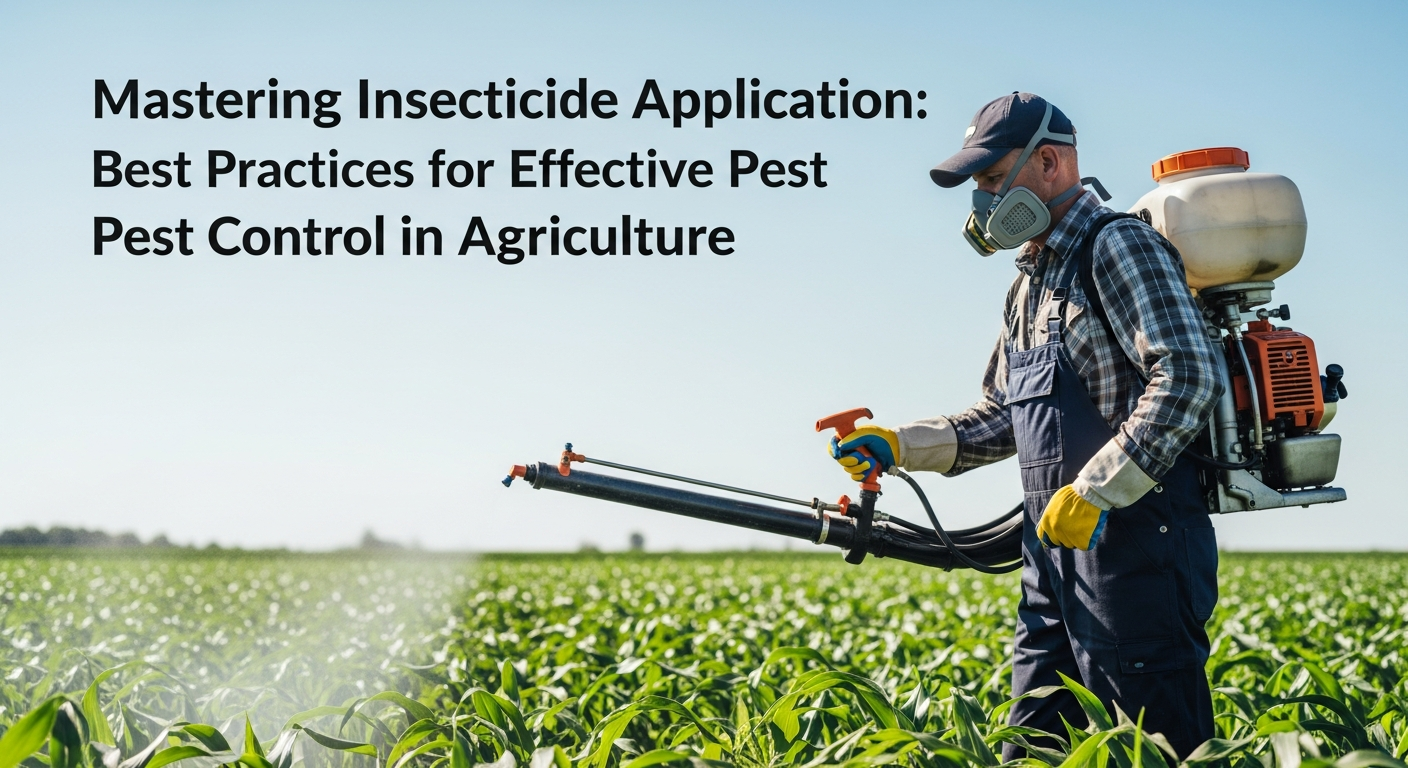
Farmers have been using insecticide application as part of their agricultural practices to prevent crop damage by pests for many generations. The successful application of insecticides depends on several factors: the accuracy with which the insecticide is applied, when it is applied, how much is used, and how it is applied. When implemented properly, these aspects are easily implemented and result in an effective means of providing healthy crops by better controlling pest problems and ensuring that farmers continue to operate their farms productively over the long term. Whether selecting an insecticide spray or determining the correct application time, each part of the application process has an important role in producing the most robust, safe and dependable outcome in the field.
Understanding Insecticide Application: What It Is and Why It Matters
Insecticide use is one of the many ways farmers can protect their crops against damaging insects while maintaining good crop health. When applied correctly, insecticides provide optimal results with very little waste and enhance plant growth as well as increase production.
What is insecticide application?
- Insecticides are applied to crops, soil or the plant surface in a controlled manner to kill pest insects that cause damage to the crop by applying insecticides when the insects are at their most vulnerable.
- Insecticide usage provides balance to crop production and prevents crop yield losses during the growing season.
Why correct application matters in agriculture
- Correct insecticide application means having the insecticide in the right location of the crop to kill the pest insect populations that cause damage.
- Correct application also reduces pesticide use throughout the year because it is less likely that a grower will overuse or misuse an insecticide and it minimizes environmental impacts and resistance development to the insecticides.
- Growers that use correct insecticide application practices experience better pest control and healthy growing fields.
Pest management challenges farmers face
- Pest populations grow rapidly and can adapt quickly, making effective control difficult without proper management strategies.
- Variable weather conditions, increasing pest resistance, and poor spray patterns will negatively impact insecticide application performance.
- Growing producers must be vigilant in monitoring for pest populations, evaluating growing conditions, and assessing pest pressure.

Types of Insecticides and Their Ideal Uses
Different forms exist among insecticides, and they each have a different function for protecting crops from damage. By selecting the correct types of insecticides, farmers can help control the pest populations affecting their crops in an efficient manner while assisting the long-term sustainability of agriculture.
Chemical insecticides in farming
Chemical insecticides are fast-acting and efficient at controlling even the most persistent pests. Most commonly used to manage a high number of pest populations and protect high-value crops, chemical insecticides, when applied correctly, greatly decrease the risk of crop damage and increase crop stability.
Organic and botanical insecticides
- Seems to be derived from natural sources such as neem, plant extracts, and biological organisms.
- As such, organic insecticides provide farmers with a more environmentally friendly approach to pest control.
- Organic insecticides maintain a balance within the ecosystem and are considered acceptable within organic farming systems.
Systemic vs. contact insecticides
- Systemic insecticides move within the plant to provide a longer-lasting form of protection, and contact insecticides physically kill the pest when the pest comes in contact with the surface of the insecticide.
- A good understanding of when to use a systemic or contact insecticide enables farmers to provide accurate and successful pest control.

Proper Timing and Frequency for Successful Insecticide Application
Different crops and pests require insecticide application at different times (for example: during certain stages of a crop’s growth cycle). If you apply insecticide at the right time, you will get better results, have healthier crops, and protect your crops from pests longer. The next most important decision you will make when controlling pests is when and how often to apply insecticides. The effectiveness of the insecticide depends on when and how often you apply it.
Best time to apply insecticide for different crops
Each crop type, along with the pest(s) that attack that particular crop, will have a different best time to apply insecticides; however, in general, early morning and late afternoon are the best times because they provide cooler temperatures, lower rates of evaporation, and greater presence of actively feeding insects on plant surfaces.
Key Takeaways
- For maximum effectiveness of your insecticides, apply them early in the morning or late in the afternoon.
- Do not spray insecticides when there is direct sunlight or excessive heat on your plants.
- Spray insecticides when wind speeds are at their lowest possible level to minimize drift.
- When to spray insecticides may vary depending on the growth stage of your crop.
Understanding seasonal pest cycles
Seasonal life cycles of pests Knowing when the various types of pests will emerge, reproduce, and begin damaging crops helps farmers schedule their spray treatments accordingly.
Key Points:
- Observe pests throughout the growing season of each Crop. Many pests are at their peak during wet, warm weather.
- Early season and mid-season sprays can be done to prevent initial infestations of crops.
- Regular Field Scouting makes it possible for the grower to recognize the pest's presence in the crop before they do damage.
Correct application intervals to prevent resistance
The improper use of insecticides (too frequently or too late) can result in decreased performance and developing resistance. Using Recommended Application Intervals assists in controlling pests and prevents pests from developing resistance to the insecticides used.
Key Points:
- Use only the recommended spray interval on the label.
- Avoid using two consecutive sprays from the same Chemical Group.
- Maintain adequate re-entry time and waste management between applications.
- Use Integrated Pest Management Pillars as a means of reducing reliance on chemical insecticides.

Techniques for Safe and Efficient Insecticide Application
Every type of insecticide application method has its own role in the protection of crops, and in turn, supports farmers’ ability to apply insecticides safely, accurately and successfully – with increased pest control and improved/healthier crops.
How to use insecticide spray correctly
Application of insecticide sprays correctly will protect the correct amount of crops, while waste and environmental harm are reduced.
The proper application of insecticides reduces pest limitations on long-term farm health.
Main points:
- Follow label instructions for dilution and dosage.
- Spray during calm conditions to minimize drift.
- Cover the upper and lower surfaces of leaves.
- Use the proper application pressure for even distribution.
Equipment calibration for accurate dosage
Proper calibration of the equipment will provide correct insecticide application; too little or too much insecticide can result in crop loss.
Properly calibrated equipment allows for the consistent application of insecticide across the entire field.
Main points:
- Measure the output of the sprayer prior to spraying.
- Adjust nozzle and pressure settings.
- Keep droplet sizes uniform.
- Regularly clean the equipment for consistent flow.
Safe spray techniques for field crops
Safe spraying helps protect farmers and crops against unintentional exposure as well as the environment; safe spraying provides good practices, will reduce spray drift, improve coverage and will protect other ecosystems.
Key Points.
- Wear proper PPE: gloves, masks, goggles and boots.
- Use low drift spray nozzles to reduce spraying movement.
- Maintain consistent walking speed during manual spraying.
- Avoid using spray near water sources.

Avoiding Common Mistakes in Insecticide Application
Farmers frequently experience difficulties when applying an insecticide, and even a minor blunder could impair the efficacy of the insecticide; therefore, a thorough knowledge of common errors will enhance application results and decrease the expense related to damages caused by insects.
Over-application and its consequences
Overuse of an insecticide may cause damage to crops while raising costs and contaminating the environment.
- Promotes resistance to insecticides by pests
- Damages plant tissue
- Contaminates soil and water
- Causes a loss of money and product.
Under-application leading to poor pest control
Use a reduced amount of insecticide, and weak pest control, and reindentation will occur.
- Leaving larvae or pests partially alive
- Encouraging the development of resistance
- Lower yields
- Requires additional applications & treatment
Mistakes in mixing and measuring insecticides
Not mixing the insecticides correctly provides inconsistent spray quality, poor performance, and unsafe residues.
- Improper dilution causes an ineffectiveness in the product
- If they're not mixed correctly, clogged tips will form
- Inaccurate measuring of active ingredients results in crop injury
- Always adhere to written instructions on the label.

The Role of Record-Keeping and Monitoring After Applying Insecticides
Regular monitoring and maintaining accurate records are critical to agricultural production. Just as one would track a baby's diet to ensure healthy growth, tracking pesticide applications ensures that a crop receives the correct treatment (timely, adequate quantity, correct product). Well-monitored applications help a farmer determine how effective their insecticide application has been and what changes might improve their insecticide application for pest management.
Importance of maintaining spray records
Keeping an accurate record of all insecticide applications helps farmers to be more organized and make more informed decisions about pest management.
Benefits:
- Tracking insecticides will provide information about which insecticides were applied when and at what rate.
- Preventing overuse of insecticides and reducing the amount of chemical on a crop protects it.
- Planning for future pest infestations will be facilitated by accurate records of past applications.
Monitoring pest response after application
Monitoring indicates to farmers how effectively they've executed the use of insecticide sprays.
- Monitoring indicates how pests responded to treatment.
- Monitoring indicates recovery of crops and decrease in pest populations.
- Monitoring shows whether or not the pests are still active or if they are beginning to return.
Early detection of resistance or spray failure
Recognizing and addressing pest resistance early can help farmers mitigate future crop loss on a larger scale.
Below are several points about this concept.
- It gives insight to the farmers regarding when pests will no longer be controlled by their current insecticide.
- It will allow them to identify a failure of application so that it does not broaden.
- This information can be a motivator to move towards Utilising Alternative Pest Management Techniques...such as Integrated Pest Management (IPM), crop rotations, etc.

FAQs :
Q1. What is insecticide application in agriculture?
It is the process of spraying insecticides on crops to control pests and protect yield.
Q2. How do I use insecticide spray safely on crops?
Follow label instructions, wear protective gear, and spray during calm weather conditions.
Q3. When is the best time to apply insecticides?
Early morning or late afternoon when temperatures are cooler and pest activity is higher.
Q4. How often should insecticides be applied?
Only as recommended on the label—overuse can cause resistance and crop stress.
Q5. What mistakes should farmers avoid during application?
Avoid overdosing, spraying in strong winds, improper mixing, and using faulty equipment.
Conclusion: Take Control—Achieve Superior Results with Smart Insecticide Application Strategies
In order to effectively grow/adult crops that are free from pests and subsequently succeed in agriculture, long term farmers must have mastered the application of insecticides. By understanding how to apply the correct product(s) in the correct amount and at the correct time, farmers can achieve significant improvements in crop production while decreasing potential risks. Record keeping, accurate and consistent monitoring and early identification of issues creates predictability and efficiency in managing pests. By utilizing smarter, safer and more responsible spray strategies, farmers can not only safeguard their crops, but are also able to significantly improve their overall yield and produce a much more sustainable model for agriculture.