
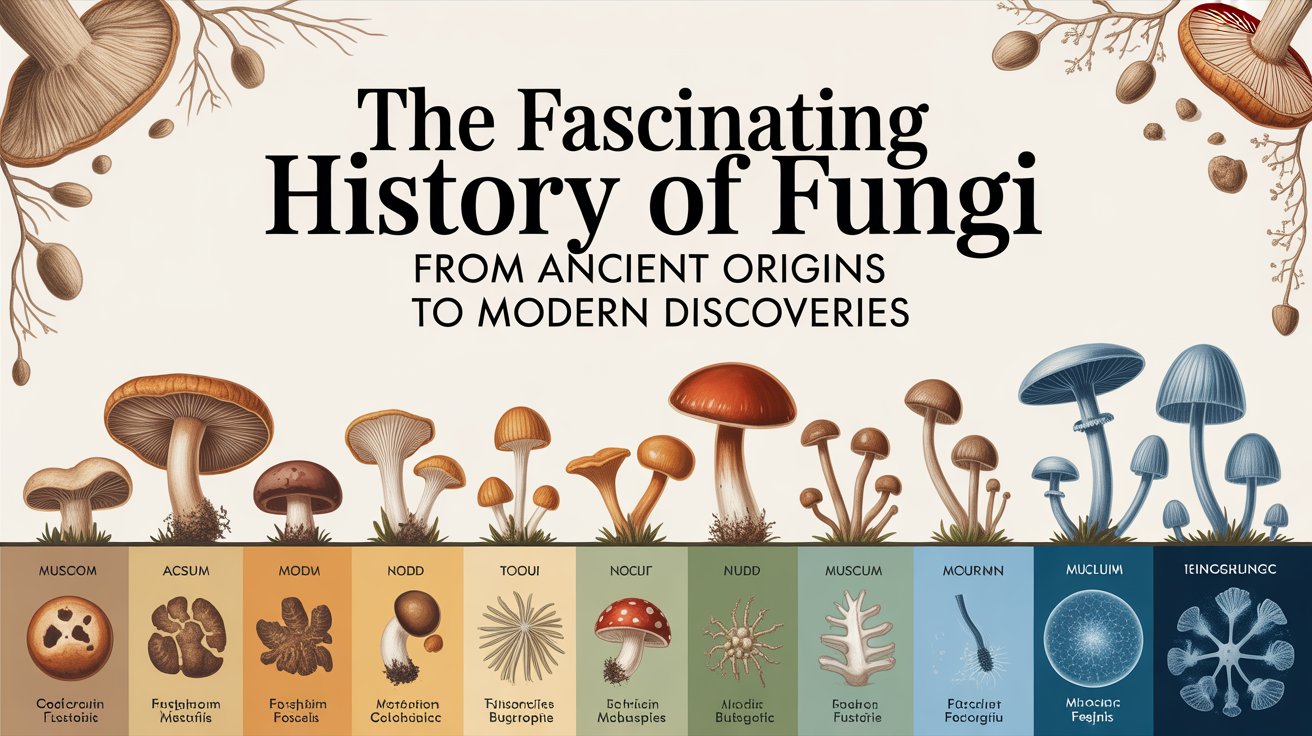
Fungi have a long evolutionary history, hundreds of millions of years, making them one of the most resilient and oldest forms of life on Earth. The evolution of fungi has influenced ecosystems and soil and plant life on Earth, going from a single-celled spore swimming through the sea to complex mushroom trees in forests.
The different types of fungi that have developed over the years—through, decomposition, to vast underground networks, and to symbiotic relationships with plants—have helped fungi to adapt to changing climates and environments and have also affected biodiversity and nutrient cycles much earlier than humans were aware of fungi's importance.
As cultures continued to evolve, humans began studying the history of fungi and found that they have important roles as agents of fermentation, medicine, and agriculture. At the same time, the fungal diseases that attack crops led to the protection measures developed to combat them with chemicals known as fungicides today.
There is a long history of fungi—from their original beginnings to important scientific breakthroughs—that shows how fungi adapt and innovate and how important it is to understand how fungi evolved if we are to effectively manage their positive and negative impacts on our world today.
Introduction: Why Exploring the History of Fungi Matters
The history of fungi is a long story of how mushrooms, yeasts, and mold have influenced ecosystems since their formation more than 500 million years ago. From early fossil records to recent laboratory discoveries, the progression of fungi has been an essential part of life on this planet. Learning where fungi have been through time provides insights into the development of ecosystems and gives us an understanding of why today fungi play such an important role in agriculture, medicine, and environmental science.
In addition to providing us with insight into how fungi have evolved, conducted through extinctions, and created productive relationships, studying fungi also helps us to better understand how researchers can create tools like fungicides to manage undesirable species.
Importance of Fungi in Earth’s History
Fungi were one of the first groups of life to emerge on land and therefore contributed a great deal to the establishment of life on land (in terrestrial systems).
Some of the main ways fungi have made history include:
- Assisting in the breakdown of rock to form early soils.
- Assisting plants in colonizing land through the formation of symbioses.
- Recycling organic materials and maintaining nutrient cycles.
- Contributing to the development of forest ecosystems.
Through evolutionary changes, fungi have become the primary decomposer in nature and hence an integral part of Earth's biological balance.

How Studying Fungi Helps Us Understand Life
Exploration of fungi will lead to a better understanding of their role in evolution, genetics and environmental balance.
Scientific benefits associated with researching fungi include:
- Creating an understanding of their symbiotic relationship with plants.
- Learning about how organisms develop adaptations to changes in the environment.
- Examining how resistance to fungicides develops.
- Finding genetic similarities between fungi, plants and animals.
Since fungi show similarities to many organisms they provide a different viewpoint on biological evolution.
The Ongoing Influence of Fungi on Science and Society
Fungi affect modern science and industry around the world.
Influence areas:
- Agriculture: protecting crops & improving soils
- Medicine: antibiotics and drugs
- Food: fermentation & preservation
- Environmental science: decomposing waste/bioremediation.
The study of the evolution of fungi is used to create new & sustainable fungicides, which can help reduce plant disease while providing protection to ecosystems.
Early Beginnings: The Origins and Evolution of Fungi
Fungi have a long history that stretches all the way back to when Earth was formed. Fungi played an important role in the establishment of ecosystems. In fact, fungi allowed early forms of life to go from living in water to living on land. Fungi were some of the first organisms to emerge during the time of large climate changes, the movement of continents, and the development of new forms of life. As a result, fungi are one of the most significant forms of life in the history of Earth.
By learning about the history of the origins of fungi, we can develop an understanding of how modern ecosystems were formed and what allows fungi to be adaptable in today’s world (through beneficial and/or harmful ways) so that they need to be managed through chemical management techniques such as fungicides).
The Evolution of Fungi on Early Earth
The Evolution of Fungi began in Fresh or Salt Water over 600 Million Years Ago
Key stages in the evolution of fungi include:
- Moving out of Water into a Habitat on Dry Land
- Making (actually developing) Chitin to create a Cell Wall (around the Cell) of the Fungi
- Creating Hyphae to absorb Nutrients
- Creating Symbiotic Relationships with Early Plants
The Evolution of Fungi , (through) these adaptations, are a major milestone (by developing an ability) in the history of the fungi.

Fossil Records and the Oldest Known Fungi
Evidence from fossil records allows us to learn more about the role of fungi in earth’s prehistoric past.
Some major examples of these findings were:
- Spore fossils of fungi that were trapped and preserved in Precambrian rock.
- Fossils of early mycelium-type networks of fungal roots preserved in soil/sediment.
- Fossil evidence of fungi growing symbiotically (in partnership) with plants in those ancient land ecosystems.
These findings demonstrate that fungi are believed to have been among the very earliest forms of life to help create conditions that permitted plants to bloom on land throughout all of fungal history and contribute to the development of ecosystems.
How Fungi Adapted and Diversified Over Time
Fungi have developed an extensive variety of methods to be able to survive and become diverse over millions of years.
Essentially, some key adaptations are:
- The manufacture of sturdy spores
- Quick changes to genetics
- The capacity to break down the most complicated organic material
- Flexible ways to reproduce
The diverseness of fungi can be seen by the many different types of fungi that exist today such as those that help decompose waste from plants and some that are pathogenic to crops and need modern chemicals called fungicides to control their growth.
The Role of Fungi in Ancient Civilizations
Ancient civilizations relied heavily on fungi for everyday needs and provided evidence of their use over time, yet they did not rationalize them scientifically until after sciences such as evolution were discovered. Ancient cultures used fungi in many ways, such as producing medicinal cures for injured soldiers, producing fermented foods such as bread and alcohol, and even producing thriving crops. The awareness of both positively and negatively influenced ancient civilizations by revealing ways to prevent the negative effects and eventually led to the creation of modern fungicides to protect crops against diseases caused by fungi.
Therefore, if one can observe the impact of how ancient societies utilized fungi and connect this understanding with their ongoing impact upon progressive development within both science and society today, you will gain a great deal of insight into what the future will hold.
Traditional and Medicinal Uses of Fungi
The ancient civilizations knew that some mushrooms/puffballs had healing abilities.
Key traditional uses involve:
- Use of medicinal mushrooms for herbal remedies;
- Treatment of infection and wound healing;
- Improved immunity and vitality by using tinctures, for example, tonics;
- Natural antibiotics (early observations prior to penicillin).
These practices helped us lay the groundwork for modern drug discovery and to expand our knowledge of the fungi's historical basis.

Fungi in Ancient Food Preservation and Fermentation
Fungus has been a significant part of our ancient food systems because of the use of fermentation throughout that time.
Here are some examples of how fungi are involved with food preservation:
- Making bread through yeast (fermentation)
- Brewing beer and wine through fermentation
- Making soy sauce and many other fermented foods
- Preserving dairy products using fungi
The above examples illustrate how funguses' evolution has strongly impacted worldwide culinary traditions. By using fermentation methods on different foods, the people of these civilizations were able to do many things; they could store food (improved storage), improve the nutritional quality of food, and also create trade routes to other civilizations.

Cultural and Spiritual Importance of Mushrooms
Mushrooms hold a great deal of symbolic/spiritual value in addition to many practical uses for humans.
Culturally Important:
- Sacred mushrooms were used in rituals.
- The classification of mushrooms is representative of transformation & rebirth.
- Due to their rapid growth, mushrooms have long been associated with mystery.
- Folklore/mythology has documented the spiritual beliefs of people regarding mushrooms.
The mysterious ways fungi reproduce have long thought to inspire awe and respect by people towards fungi. The mushroom is considered an important food source but is also used in agriculture to cause significant crop losses and therefore, protect their crops. This has resulted in some of the protective measures taken to ensure that fungi do not destroy crops, such as fungicides.
Pivotal Scientific Discoveries and Breakthroughs
Fungus has played an important role in major discoveries that changed medicine, farming and biotechnology. As scientists became aware of how fungi had developed over time scientists also began to realise how much fungi can help/hurt human beings. As a result some of these discoveries have helped improve human health; while some other discoveries led to the development of more effective ways to control fungal pathogens on crops.
From random laboratory accidents to well-organized research, fungi have changed science and industry all over the world.
Discovery of Penicillin and Its Global Impact
Penicillin was one of the most notable discoveries of fungi throughout history.
Key points.
- In 1928, Alexander Fleming discovered penicillin.
- Penicillium mold is the source of penicillin.
- Antibiotic use became a new method of treating bacteria after penicillin was discovered.
- Penicillin saved a great deal of human lives during World War II.
The discovery of penicillin demonstrated that knowing about the evolution of fungi can potentially lead to new kinds of medical discoveries.

Rise of Mycology as a Scientific Discipline
With knowledge growing, there grew an identifiable area of science associated with fungus, to include:
Mushroom classification
- Research on fungus genetics and reproduction
- Understanding the relationship between plants and fungi
- Researching the disease cycle and resistant characteristics of fungi
The increased size of the field of mycology resulted in enhanced knowledge regarding the complete history of fungi and the biological complexity of fungi.

How Fungal Research Changed Medicine and Agriculture
Globally, fungi have had a long-lasting impact on research and development of new treatments and products.
Medical:
- Development of antibiotics and anti-rejection drugs
- Production of drugs that are crucial for human survival
- Technological advances in biotechnology
Agricultural:
- Identification of crop diseases
- Development of targeted fungicides
- Implementing strategies to stop pests from harming plants.
The discoveries made in the study and application of fungi directly involve those that occurred through scientific and industrial advancement.

Cultural Impact: Myths, Legends, and Symbolism of Fungi
Fungi have been part of human culture for thousands of years and were viewed symbolically by ancient cultures before my scientific understanding was developed. Fungi grow unexpectedly, often appearing out of nowhere when it rains. These unique characteristics led to the development of myths, legends and a wide range of spiritual beliefs from every culture throughout history.
While today the study of fungi is done by examining how they can help us with agriculture and pesticides or fungicides, people in the past often saw fungi as having powers beyond this world.
Fungi in Folklore and Ancient Beliefs
Mushrooms and fungi were an important part of ancient folklore and mythologies and continue to be closely linked, especially with respect to humanity's early attempts to understand the natural world.
Some of the more common beliefs associated with fungi are:
- Mushrooms growing from lightning strikes
- Rings of mushrooms formed by fairies dancing in a circle
- Rapid growth of fungi indicative of a divine presence
- Certain types of fungi being viewed as omens of sickness or decay
Many of these stories have become an integral part of the cultural history of fungi.

Sacred and Mythical Mushrooms Across Cultures
Throughout history, some mushrooms have been held in high regard spiritually by the use of sacred mushrooms during rituals.
Cultural uses included:
- Vision quests and spiritual ceremonies
- Healing ceremonies done by shamans
- Representing transformation or rebirth
- Creating a link of connection between the Earthly realm and the heavenly or divine realm
Cultures who have used these types of fungi in this manner portray that fungi's development has played a part in the way fungi are interpreted from a spiritual standpoint long before scientific classifications were available to effectively communicate the differences between fungi.

Artistic and Literary Representations of Fungi
Fungi have played a role in both artistic and literary inspiration, leading to a creative relationship between the two.
Themes associated with the way in which fungi are represented include:
- The mystery and transformation of fungi
- The relationship between life and decay
- Fantasy landscapes and/or fairy tales
- Fungi as a symbol of hidden power in nature
Recent years have seen increasing scientific discoveries about fungi that have led to changing the way in which fungi are artistically depicted from being mystical symbols of transformation to representations of their ecological significance and also reference the challenges of growing crops with fungicides.
FAQs
Q1. What is the history of fungi?
The history of fungi traces their journey from ancient aquatic organisms to diverse land species that influence ecosystems, medicine, and agriculture.
Q2. When did fungi first appear on Earth?
Fungi first appeared over 600 million years ago, playing a key role in early soil formation and plant evolution.
Q3. Why is the discovery of penicillin important in fungal history?
The discovery of penicillin showed how fungi could produce life-saving antibiotics, transforming modern medicine.
Q4. How are fungi connected to modern agriculture?
Fungi support soil health and plant growth, while harmful species are managed using fungicides to protect crops.
Q5. Why should we study the evolution of fungi?
Studying the evolution of fungi helps us understand ecosystems, improve crop protection, and advance medical and scientific research.
Conclusion: Embracing the History—and Potential—of Fungi for a Better Tomorrow
For millions of years, fungi have played an integral role in the development of the Earth. Over time, they have evolved into a diverse group of organisms that have contributed significantly to our modern-day lives by developing new medicines, sustainable agricultural practices, and contributing to environmental sustainability. The evolution of fungi has also helped to feed our planet's population through the creation of healthy soils, their relationships to plants, and the ability to maintain a healthy ecosystem.
Fungi will continue to be an important resource for us. Their contributions to human health (such as antibiotic therapies), sustainable agriculture (through soil-building practices), and biotechnological advancements are needed now more than ever. At the same time, we can use responsible fungicide application to minimize or prevent damage caused by fungal disease, ensuring food security and adequate crop protection while maintaining ecological balance between fungicides and crops. This balance between benefits from and management of fungi demonstrates how intertwined and interconnected fungi are with human progress.
We can unlock even greater potential by continuing to learn from both past and present. Researching how fungi have evolved over time not only enhances what we know about scientific discoveries but can also help us develop sustainable practices that promote healthy ecosystems and help our planet be more secure into the future. Fungi will not just be here in the future—they will be the building blocks for a better planet.