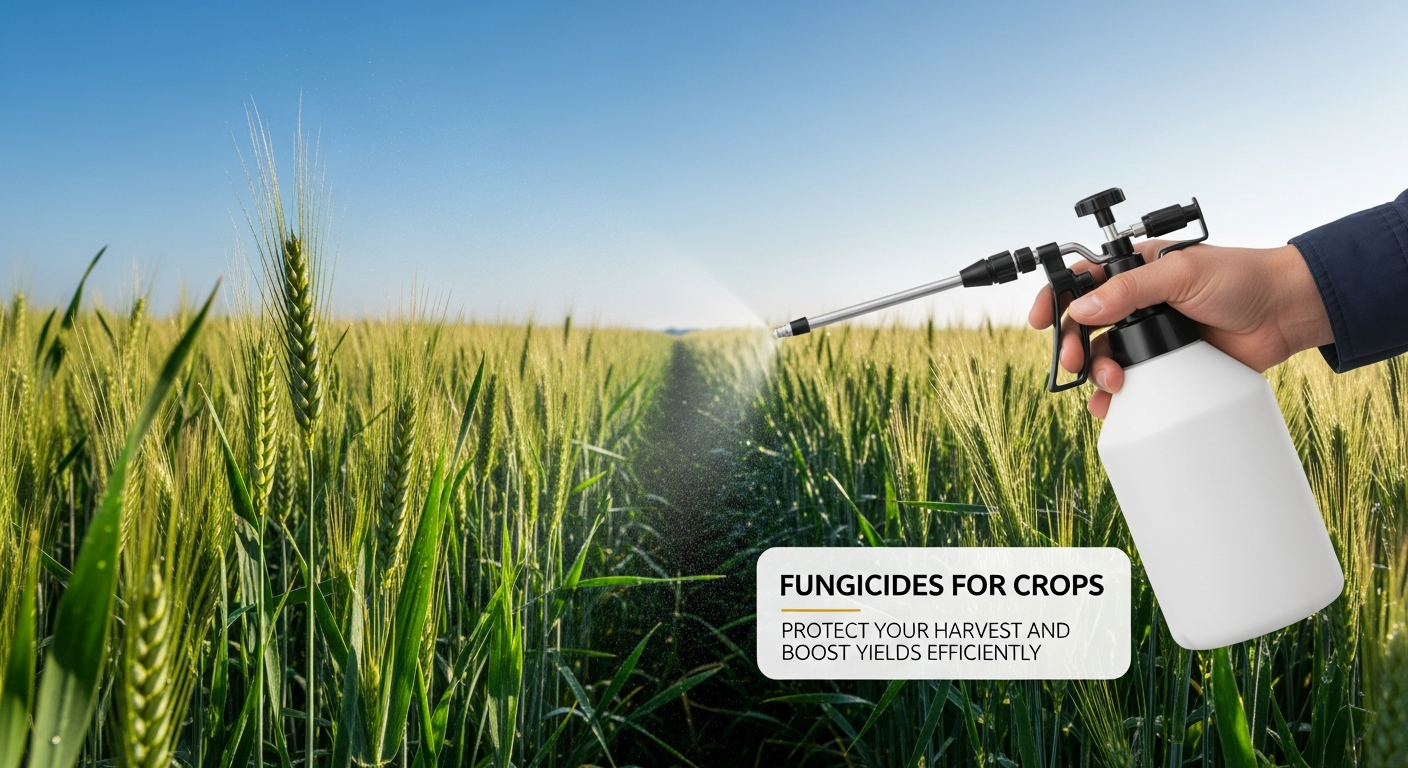
Since ancient times, farmers have relied on fungicides as an effective means of protecting crops from fungal infections. Because they can help protect your crop from fungus that would otherwise adversely affect the plant's leaf and weaken the crops, potentially causing far less yield than if the crop was healthy; fungus can also compromise the integrity of a plant. Through the prevention of early infective stages, fungicidal products support the increased strength of the crop, allowing the plant to continue healthy growth by allowing it to better utilize its nutrient supply and maintain its health from the initial growth to harvest. The numerous available types of fungicidal products—ranging from peanut plant and corn-based applications to broad-spectrum formulations covering all types of vegetables, fruits and grains—play an important role in protecting your harvest and increasing the quality of the yield.
Understanding Fungicides: What They Are and How They Work
Many different types of fungicides are used to protect crops and play an important role in maintaining the health of the plants. Fungicides can help to keep crops healthy and productive through the prevention and control of fungal diseases.
Fungicide Definition and Purpose in Agriculture
- Fungicides for agricultural crops are agents which are either chemical or biological in nature and are specifically created for the purpose of preventing or managing fungal infestation on numerous species of plants.
- The function of fungicides is to prolong the life of crops through the prevention of fungal spread, thereby enabling the crop to remain healthy during the time from when it is sown until it has matured and produced all of its harvestable crop.
- In many instances, farmers must rely on fungicides to protect their plants from diseases that are capable of reducing crop quality and yield through the effects of sickness.
How Fungicides Target Plant Pathogens
- Fungicides work by interfering with the lifecycles of pathogens that harm crops, thereby inhibiting their growth, reproduction, or entry into host crop tissue.
- Some purposely designed for contact use will remain on the surface of the host plant, while systemic fungicides are able to be taken up by the plant and therefore provide protection from the inside out.
- The mechanism for action of these fungicides is that they provide continued protection for crops, even when under a great deal of disease and adverse environmental conditions, throughout the life of the crop.
Types of Fungicides Used in Crop Protection
There are multiple categories of fungicides that are present in agriculture. Each category
has a unique benefit.
- Contact fungicides: Work externally on the surface of leaves in forming an outer layer of protection.
- Systemic fungicides: Move through the tissue of a plant to stop any disease that occurs internally.
- Preventive fungicides: These fungicides are in place before a crop disease can take hold.
- Curative fungicides: These fungicides stop the development of disease within a very short time period.

By utilizing the various types of fungicides, farmers have the ability to select the most appropriate means of protecting their crops (e.g., grapes, tomatoes, peppers, or corn).
The Importance of Fungicides in Modern Agriculture
Fungicide's Role in Modern Day Agriculture Fungicides are critical to addressing fungal diseases affecting many crops that can jeopardize crop quality and yield, which translates to future profitability. Fungicides also contribute to improved overall crop health and improved harvests, which allows for continued long-term producer viability and sustainability.
Preventing Major Fungal Diseases in Crops
- Fungicides will control a number of diseases commonly found on crops such as blights, rusts, downy mildews, and powdery mildews before they cause substantial yield loss.
- For particular crops that are sensitive to specific diseases (e.g., fungicides for pepper plants related to anthracnose, fungicides for corn related to rust or leaf spot), it is essential to control the disease right away.
- By controlling the disease sooner, the crops will begin to develop health, vigor, and productivity sooner.
Increasing Crop Yield and Quality
By controlling disease in plants, the plant will focus its energy on growing, flowering, and producing. A healthy plant will, therefore, produce more, larger and better quality fruits and vegetables than an unhealthy plant or one that is affected by diseases.
- Larger fruit and veggies;
- More weight of cereal grains;
- More marketable, attractive produce.
In summary, fungicides are an important tool for farmers in producing a high-quality harvest that will provide a profit.
Economic Advantages of Using Fungicides for Crops
If not treated early enough, fungal disease can result in a loss of 50% - 70% of the crop. Fungicides are used to decrease crop losses and improve all of the income from Farming.
Benefits to Farmers include:
- Greater Yields.
- Fewer Crop Rejections by the Market.
- Higher Quality Products will Sell for Higher Prices.
- Decreased Long-Term Production Costs.

Types of Fungicides for Crops: Contact vs. Systemic Solutions
Fungicides come in many different forms with various ways to protect crops. There are fungicides that stay on the surface of the leaf and protect the plant from the outside, while there are also systemic fungicides that penetrate the plant and control the infection from the inside. Identifying which categories of fungicides will best meet the requirements of each individual crop based on its climate, disease pressure and needs is essential for farmers.
Contact Fungicides and Their Protective Action
A contact fungicide is a type of fungicide that is applied to the outer surface of a crop and acts as a barrier against fungal spores that may settle on or germinate on the crop. Contact fungicides should be applied prior to a disease becoming visible, making them an ideal choice for humid and rainy climates where the likelihood of fungal infection is increased.
Advantages of using contact fungicides
- Provides a physical barrier on the leaves, stems, and fruit of crops
- Provides immediate protection after application
- Ideal for crops that routinely require protective applications
Applications of contact fungicides
- During early spring grower applications
- For use in humid climates with high risk of infection
- To manage surface diseases, such as fruit spot and powdery mildew, in crops.
Systemic Fungicides for Deep Plant Protection
Systemic fungicides have the ability to be taken up by plants and transported via internal plant tissue, much like how medicine travels through a Human being's System. As a result, systemic fungicides offer long-term Internal Protection to all crops that are at risk of contracting serious illnesses that begin within the deeper layers of the plant.
Why Do Farmers Like to Use Systemic Fungicides?
- Systemic fungicides Move Throughout the Plant, Making Them Perfect for Treating Diseases That Affect the Internal Areas of the Plant
- Systemic fungicides Provide a Long-Lasting Residual Effect Which Allows Farmers to Spray Crop Foliage Fewer Times Compared to Others
- Systemic fungicides are critical for crops such as Peppers, Corn, Wheat, Tomatoes.
Diseases Treated with Systematic Fungicides:
- Rusts
- Blights
- Root and Stem Rots
- Downy Molds
Crops that Benefit from Systematic Fungicides:
- Peppers - Prevention of fruit rots and leaf spots
- Corn - Prevention of gray leaf spots, rusts, and northern blight.
Preventive vs. Curative Fungicide Options
Preventative fungicides will protect crops from fungal spores before they infect them whereas curative fungicides will control the early onset/symptoms of an infection already present in the tissue. Farmers will often utilize both preventative and curative fungicides to achieve the best level of protection against disease.
Preventative Fungicides:
- Should Be Used Prior to the Development of Visible Symptoms in Crops
- Protect Crops During Disease Promoting Weather Conditions
- Prevent Spore Germination (Aka Prevent Fungi from Being Established in the Crop).
Curative Fungicides:
- Act Quickly Against Early Signs of Fungal Infection
- Control Fungal Growth Before It Has a Chance to Spread
- Should Be Used as Soon as You Notice the First Symptoms

How to Choose the Right Fungicide for Your Farm
The type of crop, disease pressure, climate, and preference for an organic or synthetic fungicide affect what product is best to use on a field of crops. Having enough information will reduce the likelihood of wasted material and increase the chance of a successful treatment.
Matching Diseases With Effective Treatments
Each fungus or disease has a different life cycle and therefore requires a specific treatment. By properly identifying the fungus, farmers can save money by using less spray.
Appropriate Fungicide for Disease:
- Uptake (of systemic fungicide) for rust diseases needs to occur through triazole-based systemic fungicides.
- Contact fungicide for powdery mildew diseases should be from either sulphur or a high-oil content type of oil.
- A combination of fungicides with both preventive and curative properties is needed to treat late blight.
- Broad-spectrum fungicides are good for use against leaf spot diseases.
Importance of Fungicides:
- Minimizing the potential for treatment failure
- Minimizing unproductive spray applications
- Improving the protection of crop yield
Choosing Fungicides for Pepper Plants, Corn & Other Crops
Different crops have different fungal threats, thus selecting the best solution for a specific crop provides maximum protection against fungus infestations.
Fungicides for Peppers
Peppers are susceptible to fruit rot, anthracnose, and Cercospora leaf spot.
Recommended Fungicides for Peppers
- Copper-based fungicides (contact fungicides).
- Azoxystrobin (systemic fungicide).
- Mancozeb (broad-spectrum fungicide).
Fungicides for Corn
- Corn is subject to rust, northern leaf blight, and grey leaf spot.
- Recommended Systemic Fungicides for Corn
- Triazole-based systemic fungicides.
- Strobilurins (fungicides that provide protection against fungal spores before they germinate).
- Combination fungicides provide broad-range protection.
Other Crops
- Tomatoes: Preventative + cure for late blights and early blights.
- Grapes: Systemic fungicides to control downy mildew and powdery mildew.
Organic vs. Synthetic Crop Protection Choices
Many farmers can choose between Organic and Synthetic Fungicides, based on their objectives (e.g., organic certifications), government regulations regarding the maximum level of chemical residues on crops, disease pressure, and how environmentally safe other products are.
ORGANIC FUNGICIDES:
- They are made from naturally occurring minerals or biological sources.
- They are designed to control mild and moderate levels of fungal infestation.
- They do not harm beneficial insects.
Examples:
- Copper
- Neem oil (extracted from the Azadirachta indica tree)
- Bacillus-based fungicides (Bacillus subtilis).

Examples:
- Triazole fungicides
- Strobilurin fungicides
- Carbendazim fungicides.
Best Practices for Applying Fungicides Effectively
Fungicides follow the same principle as the nutrition and growth of babies with the appropriate practice(s) of applying fungicides to support every growth stage of the crop. Using the correct practices when applying fungicides provides maximum disease control, enhances plant health and increases crop yields. When following the appropriate timing, dosage and spray method(s), farmers can achieve desired outcomes, while also ensuring soil and plant health are maintained over time.
Correct Timing and Dosage Guidelines for Farmers
- Fungicides should be applied at the appropriate time to provide maximum protection to the crop.
- Farmers should apply fungicides before they become severely infected. Whether as a preventative measure or at the very start of a fungal infection, farmers should apply fungicides at the earliest stage possible.
- Using the recommended dosage of fungicide prevents the damage to the crop, caused by the application of too much fungicide, or damage caused by chemical stress.
Equipment Calibration and Spray Techniques
- Calibrating an appropriate spray pattern enables sprayers to evenly apply the fungicide. The correct spray pattern allows effective distribution of the active ingredients to all parts of the crop, including any surfaces that may be hidden from view, where a fungal infection has started.
- Good spray techniques decrease the wasted amount of fungicide, allow better penetration of the fungicide into leaves, and provide better overall crop protection across the entire field.
Strategies to Minimize Fungicide Resistance in Fields
- Using the same fungicide over time causes the build-up of resistance in fungal pathogens. Rotating fungicides that use different modes of action keeps the fungicides effective from year to year.
- The combination of preventive and curative products in fungicides helps prevent the build-up of fungicide resistance with the potential for future crop health issues.

Common Crop Diseases Controlled by Fungicides (With Examples)
Fungal diseases can quickly spread and cause a loss of crop production, unless treated in a timely manner, therefore using fungicides as a crop protection tool has been shown to keep plants free of harmful fungi and promote more robust harvests. All crops rely on designed and specialized fungicides to prevent the spread of specific fungal diseases such as corn fungicides and pepper fungicides.
Fungicides for Corn: Controlling Rust, Blight & Leaf Spots
- Corn is one of the largest hosts to fungal diseases, including but not limited to, rust, leaf blight and gray leaf spot.
- The timely application of fungicides can help to reduce the potential for leaf damage, allowing for the growth of stronger stalks that will produce larger grains.
- As a result, healthy corn plants can yield greater than usual yields with greater nutritional quality throughout their growth cycle.
Fungicides for Pepper Plants: Protection Against Anthracnose & Mildew
- Pepper plants are commonly exposed to several types of fungal disease including anthracnose, powdery mildew and leaf spot.
- Fungicides provide added protection from rotting, blemishing and prematurely dropping fungi on the fruits.
- Consistently maintaining this level of protection results in the health of the pepper plants and their fruit size, as well as improving the marketability of the fruits.
Fungicide Solutions for Powdery Mildew, Downy Mildew & Late Blight
- These Three Fungal Diseases Are Often Seen On All Types Of Vegetables, Fruits And Field Crops
- Application of fungicides is used to control the spread of the white powdery patches, yellowing leaves and rotting tissue associated with blight pathogens.
- By applying an early treatment to crops, they remain green, healthy and productive as they progress through the development cycle.

The Future of Crop Protection: Innovations in Fungicidal Technology
For farmers, new and advanced fungicide technologies are changing how they manage crop diseases and protect their fields. By providing better, stronger, and safer solutions for crop protection, these innovations allow farmers to increase crop yield while using less chemical input; as a result, the future of crop protection is now more efficient and environmentally friendly than ever before. Each new and innovative crop protection solution will provide farmers with a unique set of benefits.
Biorational & Next-Generation Fungicides for Crops
- Disease-causing fungi are targeted by naturally occurring biorational-species specific fungicides that do not harm the existence of beneficial microorganisms (e.g., plants, plants' biodiversity).
- As a result of their activity, these new-generation biorational fungicides help increase plant (e.g., peppers, beans, corn) immune systems, reduce the presence/proliferation of disease-causing fungi, and provide farmers with safer alternatives to traditional agricultural chemicals.
Integration With IPM for Sustainable Farming
- The use of biorational fungicidal compounds within an IPM system reduces disease pressure on crops while decreasing chemical usage.
- This type of fungicide helps farmers establish long-term sustainable pest control through the combination of biological control agents, resistant crop varieties, various crop management practices, and precision applications of biorational fungicides.
Precision Agriculture Tools for Disease Monitoring
- The introduction of modern technologies such as drones, smart sensors, and satellite imagery allows for early identification of the presence of many diseases (e.g., fungal infections) on farmlands.
- Specifically, farmers can monitor environmental conditions (i.e., temperature, humidity, leaf wetness, etc.). In turn, precision monitoring of diseases allows for more effective and environmentally-sound applications of fungicides to crops, including pepper and corn plants.

FAQs:
Q1. What are fungicides for crops used for?
They are used to protect crops from diseases like mildew, blight, and rust—helping maintain plant health and maximize yield.
Q2. What fungicides are recommended for pepper plants?
Pepper plants respond well to fungicides that target anthracnose, powdery mildew, and leaf spot, ensuring healthy foliage and fruit development.
Q3. What fungicides are effective for corn?
Corn typically requires fungicides designed to control rust, gray leaf spot, northern corn leaf blight, and ear rot diseases.
Q4. When should farmers apply fungicides for best results?
Fungicides work best when applied preventively or at early stages of infection—especially during humid, disease-prone weather.
Q5. Can I mix different fungicides for crops?
Yes, but only according to label instructions. Proper mixing helps reduce resistance and ensures safe application across crops like corn and pepper plants.
Conclusion: Take Action to Safeguard Your Crops with Effective Fungicide Strategies Today
Farmers have available to them fungicide products as part of an Integrated Pest Management (IPM) system to help protect crops from disease, protect yield and promote long-term soil health. Through proper selection of fungicide products along with the implementation of a combination of both old and new crop monitoring/ pest control devices have set a new precedent for stronger crop disease control with less resource usage. When using fungicides sustainably, accurately, and precisely; farmers can not only benefit from improved productivity but also are sustaining the future of our soil, crops, and environment.
The opportunity for better crop protection and practices is NOW; these are the time to adopt smarter means, cutting-edge techniques and to confidently protect your crops; healthy harvests start with a solid fungal disease management program.