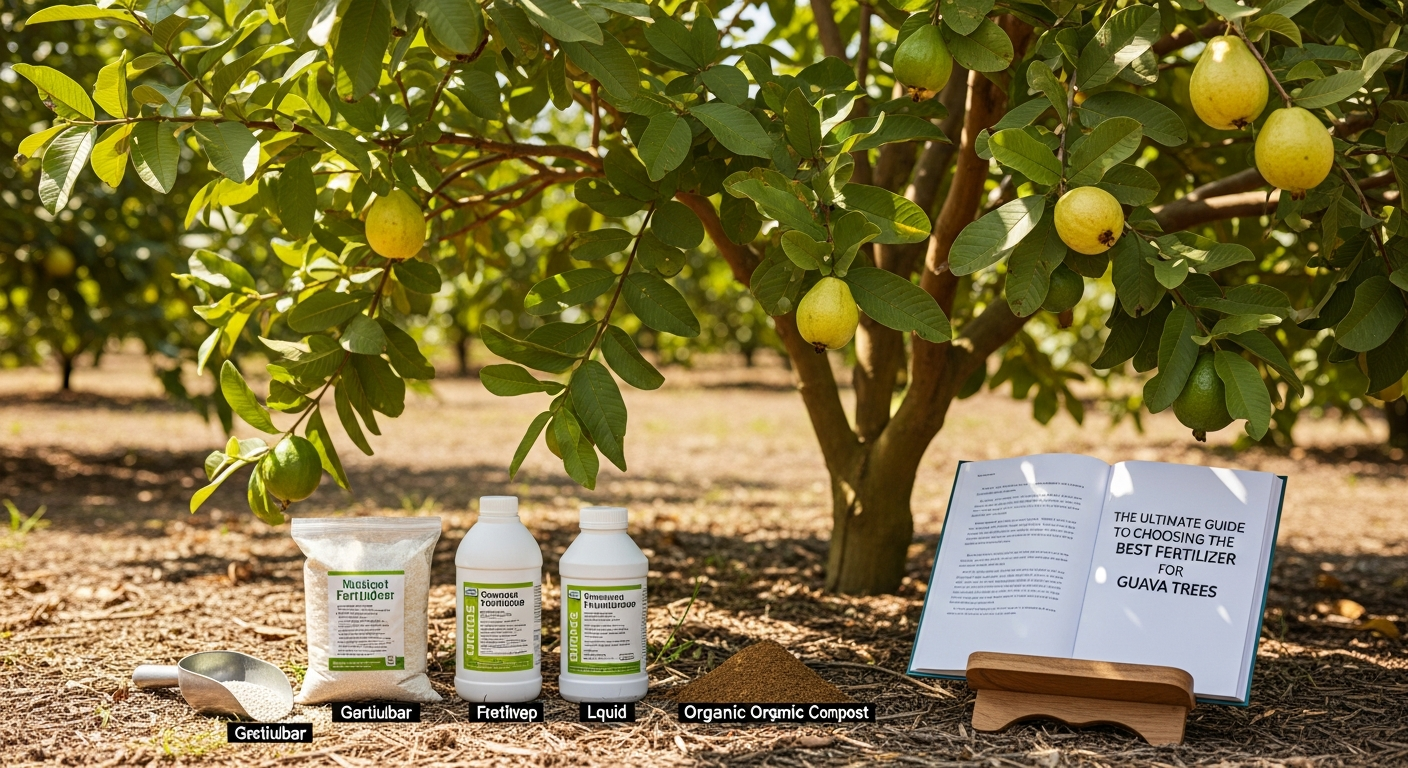
Guava trees are tough, produce good fruit, and need proper nutrition to grow well and make high-quality fruit. Choosing a good quality fertilizer will help guava trees develop strong vegetative growth, produce a good root system, and produce consistent amounts of fruit. Proper management of nutrients will help optimize fruit yield and quality from the same root system growing in different climatic areas.
All fertilizers for growing guava trees should contain three key nutrients – nitrogen, phosphorus and potassium to supply nutrients to the tree. Nitrogen enhances foliage and branch growth, phosphorus develops roots and flowers, while potassium increases fruit size, sweetness, and disease resistance. A balanced nutrient supply can also assist the tree in withstanding stress caused by drought, pests and changes in weather.
A good fertilizer to use on guava trees is one that will give nutrients at a steady rate and be formulated according to the growth stages of the tree (early establishment, flowering and fruiting). Fertilizer that is easy for the tree to absorb and that will not harm or degrade the quality of the soil will also promote long-term health of the soil and provide optimal nutrient uptake through the root system.
Using the right fertilizer for guava trees can greatly improve flowering, fruit set, taste, and shelf-life of the fruit.
Understanding the Nutritional Needs of Guava Trees
Guava trees provide fast growth and high yields therefore they need to receive a stable supply of nutrients on a regular basis throughout the year in order to support healthy vigor, timely bloom, and quality fruit. Because they are usually produced in varying soil types, knowing your guava tree’s nutritional needs can assist you in determining the proper fertilizer for guava trees to apply and to successfully apply it.
A balanced nutrition plan for your guava tree will promote higher yields; also it will contribute to the long term durability of your guava tree against insects, disease, and environmental stress. Careful planning of the application of fertilizer for guava will promote the longevity of your orchard.
Essential Nutrients for Healthy Guava Growth
Guava trees require both macro- and micro-nutrients for their complete development and production of fruit. An adequate fertilization program for guava trees should provide the necessary nutrients in the proper ratio.
Major Nutrients and Their Functions:
- Nitrogen (N): Promotes foliage and canopy development.
- Phosphorus (P): Strengthens roots and enhances flowering.
- Potassium (K): Increases size and sweetness of fruit and enhances disease resistance.
- Calcium & Magnesium: Increase cellular integrity and promote foliage health.
- Zinc & Iron: Assist in the production of chlorophyll and the activity of enzymes.

NPK Ratio and Soil Requirements for Guavas
NPK Ratio and Soil Requirements for Guava Trees
Fertilizer for Guava Trees is very dependent on the soil type and nutrient balance of the tree; therefore, fertilization of guava requires consideration of moderate levels of NPK as determined by the age of the tree and its growth stage.
Therefore, the following NPK ratios are recommended for Fertilizers for Guava as follows:
- Young Trees—10:10:10 - Balanced Early Growth
- Bearing Trees—15:15:15 or 12:12:18 - Fruit Production
- Fruiting Stage- Higher Potassium for Fruit Quality
Soil Requirements:
- Well-Drained Loamy or Sandy Loam Soil
- Soil pH of 6.0 to 7.5
- Adequate Organic Matter to Retain Moisture
Testing Soil will help you determine the best fertilizer to grow Guava and the potential for nutrient imbalances.
Identifying Nutrient Deficiencies in Guava Trees
Nutrient deficiencies can reduce flowering, fruit set, and overall yield. Early identification helps correct issues with the right fertilizer for guava trees.

Types of Fertilizers Suitable for Guava Trees
It is important to use the appropriate fertilizer for guava trees to ensure they will develop normally, flower well, and produce high-quality fruit. Depending on the type of soil where the guava tree grows, its age, and its needs for nutrients; different fertilizers may be effective for growing a guava tree. By learning more about the different types of fertilizers available to guava growers, you can decide which type of fertilizer will provide your tree with the best chance for success and develop a fertilization program that contains only one type of fertilizer.
Both synthetic and organic fertilizers are available in both soluble and slow-release forms and if applied in the proper manner and at the appropriate rate; will effectively fertilize guava trees as well.
Organic Fertilizer for Guavas
Using organic fertilizers for guava trees can improve soil structure and provide long-term benefits for tree health by supplying nutrients over time.
Organic fertilizers benefit guava trees in the following ways:
- encourage the growth of beneficial soil microbes,
- help retain moisture and supply better air to the roots,
- reduce the chance of burning the roots with excess fertilizer, and
- support long-term fruit production.
Commonly-used organic fertilizers for guavas include:
- farmyard manure
- vermicompost
- compost and green manure, and
- neem cake and some biofertilizers.
Organic fertilizers create a good foundation for tree growth; however, supplemental nutrients must also be supplied from time to time.
Synthetic Fertilizers for Quick Nutrient Boost
Synthetic fertilizers immediately deliver nutrients to guava trees when signs of a nutrient deficiency or in demanding situations such as the flowering and fruiting stages.
Advantages of Synthetic Fertilizers To Guava Trees
- Nutrients are readily available and quickly absorbed by the tree
- Provides precise application of the nutrients the tree can use
- Will result in accelerated vegetative and reproductive growth

Slow-Release Fertilizers for Consistent Feeding
Slow-release fertilizers can supply crops with nutrients for an extended time in a consistent manner, making slow-release fertilizers the best choice for growing guava trees over a long period.
Some advantages of using slow-release fertilizers on guava trees:
- Decreases the likelihood of nutrients leaching away
- Increases the availability of nutrients consistently over time
- Fewer applications needed throughout the crop life
- Increases nutrient use efficiency
Slow-release fertilizers are particularly suitable when managing young guava trees and fruit orchards because it is difficult to conduct regular maintenance of both young and mature trees. In addition, by combining slow-release fertilizer products with organic matter, both nutrients will be provided in balance and sustain system productivity.
When and How to Apply Fertilizer to Your Guava Tree
Properly timing and applying fertilizer is crucial, just like knowing what type of fertilizer is best for guava. Guava trees grow continuously, and if they are not fertilized at the right time or in a uniform manner, they will not flower properly, drop fruit or develop weakly. A good fertilization schedule guarantees that there will be the proper amount of nutrients available to the tree at the time it needs them most.
Knowing when to apply the proper amount of nutrients through an application method will enable you to increase nutrient uptake by the tree and to promote overall health of the tree over time.
Fertilizing Schedule for Guavas
Guava trees are in need of a regular feeding programme throughout the entire year (where they will need feeding particularly during active growth and fruiting phases).
The general program for fertilisation of guava trees is as follows:
- For young trees (1 - 2 years old): Light fertilisations every 2 to 3 months.
- For mature trees: 3 - 4 applications per year.
- Pre-flowering period: A balanced fertilizer should be used for guavas, in order to support the formation of buds.
- Fruit development: A fertilizer high in potassium should be applied during fruit development to attain larger and better tasting fruits.

Application Methods for Guava Fertilizer
The way in which you apply your guava fertilizer influences the ability of roots to utilise nutrients.
Some of the common techniques for fertilising guava trees include:
- Soil applications - The fertiliser should be fertilised evenly around the base of the tree and mixed lightly into the soil.
- Ring method - The fertilizer is applied in a ring-shaped trench around the base of the tree.
- Foliar sprays - Useful for quickly correcting deficiencies in micronutrients.
- Fertigation - Efficient means of delivering fertiliser through an irrigation system.
Soil applications with organic materials improve the effectiveness of the best fertiliser for guava.
Timing and Dosage for Fertilizing Guava Trees
Correct timing and dosage will lead to more efficient absorption and less stress to the tree.
Best practices for fertilizing guava trees are:
- Apply fertilizer following an irrigated area as this will facilitate the absorption of nutrients.
- Do not apply excessive amounts of fertilizer to the plants in very hot or dry weather.
- Gradually increase the amount of fertilizer that is applied as the tree continues to grow.
- Reduce the amount of nitrogen applied once fruit has set, to limit excessive vegetative growth.

Avoiding Common Mistakes When Using Guava Fertilizer
To get the fullest growth from guava trees and produce the most amount of fruit, fertilization should take place with the best nutrients for guava. Incorrect application of nutrients in guava orchards can lead to issues due to the over-fertilization, under-fertilization and/or failures to perform fertilization in a timely manner. The type, amount, timing and method of a fertilization can lead to decreased flowering ability, fruit drop and poor health of the trees.
The main thing that growers can do to avoid these types of long-term damage and loss of guava production is to create and keep a balanced nutrient program and observe their trees closely.
Over-Fertilizing Symptoms in Guava Trees
Applying excessive amounts of fertilizer to guava trees (especially fertilizers with high levels of nitrogen) may inhibit their growth and decrease their quality.
Common signs of over-fertilizing:
- Excessive leaf production with fewer flowers.
- Dark green, soft leaves.
- Delayed fruiting and/or poor-quality fruit.
- Weak branches that could cause them to break easily.

Signs of Under-Fertilized Guava Trees
Being underfed (nutritionally) will affect the growth and fruit production of guava trees. The following are signs that guava trees have been under-nutritional stress:
The following signs of nutrient-deficient guava tree fertilizer programs include:
- yellowed/pale coloration on leaves (particularly those closest to trunk and along branch edges)
- slow growth rate with poorly-developed canopy
- fruit sizes are small; some are distorted/misshapen
- early leaf drop off

Fertilizer Burn and How to Correct It
When salts in excess amounts of fertilizer or applied incorrectly damage the roots and leaves of matured trees.
Symptoms of fertilizer burn include:
- Browning or scorching of leaf tips
- Shedding of leaves overnight
- Dry soil around the tree.
How do I fix fertilizer burn?
- Soak the soil through irrigation.
- Remove any excess fertilizer from the top of the soil around the base of the tree.
- Lower your dosage when applying fertilizer in the future.
- Add organic matter to dilute the salt content in the soil around the tree.
Using the proper type of guava fertilizer at the correct rate and time will prevent fertility burns and promote the long-term health of the trees. Smart management of guava fertilizers will promote vigorous growth, enhance fruit quality, and produce guavas for your family or business for many years to come!
The Benefits of Using the Right Fertilizer: Healthier Trees and Bigger Harvests
Fertilization of the guava tree is important in unlocking its maximum growth potential at every stage of tree development. Healthy trees depend on adequate nutrients to support them through root establishment, through flowering and until fruit is very mature. Using appropriate types and quantities of fertilizers at appropriate times for guava trees leads to healthy, constantly reproducing, high yielding trees with long-term production potential. Using a balance of fertilizer will also improve both soil quality and plant nutrient efficiency.
As a direct result of proper management of fertilization; a nutritionally healthy guava tree will equal an efficient, high producing and most profitable result for the grower.
Increase Fruit Yield in Guavas with Proper Fertilization
Guava fruit production can be greatly improved by using proper fertilization. Successful flowering and fruit set will lead to greater overall fruit production when sufficient fertilization is applied in a timely manner.
How proper fertilization helps boost fruit yield:
- Provides uniform flowering and greater flowering and fruit set.
- Provides for more uniform development of fruit.
- Helps to minimize fruit drop before harvest time.
- Increases fruit size and weight.

Disease Resistance and Improved Tree Health
Nutrients support the natural defenses of guava trees. Proper nutrition will add strength to the plant’s tissues, allowing for increased resistance to insects and disease.
Benefits of better tree health include:
- Increased strength of cell walls allowing for limited entry of diseases
- Improved root structure resulting in greater uptake of water and nutrients
- Provides better nutrition (more balanced) and less stress associated with heat/droughts
Better Tasting Fruit with the Right Nutrition
The right nutrition plays a key role in the taste of your fruit! The quality of fruit is directly related to the nutrition of the tree. Using the correct fertilizer can improve the aroma, taste and shelf life of fruit, including guava.

Fruits that come from well-fed trees are larger, sweeter, and more valuable on the market than those from trees that are not fed properly. By selecting the correct fertilizer for your guava trees and applying it properly, you will produce better-quality guava fruit season after season from your healthy trees, which will mean larger harvests.
FAQs
Q1. What is the best fertilizer for guava trees?
The best fertilizer for guava is a balanced NPK fertilizer with added potassium during fruiting, along with essential micronutrients.
Q2. How often should I fertilize guava trees?
Fertilizer for guava trees should be applied every 2–3 months for young trees and 3–4 times a year for mature, fruit-bearing trees.
Q3. Can organic fertilizer replace chemical fertilizer for guavas?
Yes, organic fertilizer for guava can support healthy growth, but combining it with targeted nutrients often gives better yields.
Q4. Why are my guava tree leaves turning yellow?
Yellowing leaves usually indicate nitrogen or iron deficiency, poor drainage, or imbalance in fertilizer for guava trees.
Q5. Can over-fertilizing guava trees harm the plants?
Yes, excessive fertilizer for guava can cause leaf burn, excessive foliage, poor fruiting, and root damage.
Conclusion: Give Your Guava Trees the Nutrition They Deserve—Choose the Perfect Fertilizer Today!
Nutrition that is appropriate to the needs of guava trees is the primary component of healthy and productive guava trees. Choosing the correct fertilizer for guava trees will provide the fundamentals for balanced growth, strong root systems and regular flowering and fruiting. A well-balanced fertilizer for growing guava trees program supports tree growth at every stage of development; enabling the ability of guava trees to efficiently use nutrients, while protecting the health of soils over the long term.
Whether you prefer to use either organic inputs or synthetic fertilizers or a combination of both, by performing the necessary soil tests and assessing your trees’ specific needs, you can apply the fertilizer for guava trees in the most effective manner. Adequate timing and accurate amounts of application will help reduce the amount of nutrients lost and also reduce stress on your plants, thus creating a greater overall performance of your orchards. A balanced fertilizer program will produce larger fruit, increased sweetness of fruit and improved shelf life of fruit.
Continually monitor your trees’ health and be prepared to adjust your fertilizer for guava trees program accordingly so that you will achieve greater volumes of healthy fruit and maintain healthy orchards for many years to come. Make your move today and choose the best fertilizer for guava trees because healthy trees will reward you with a bountiful harvest and quality fruit.