
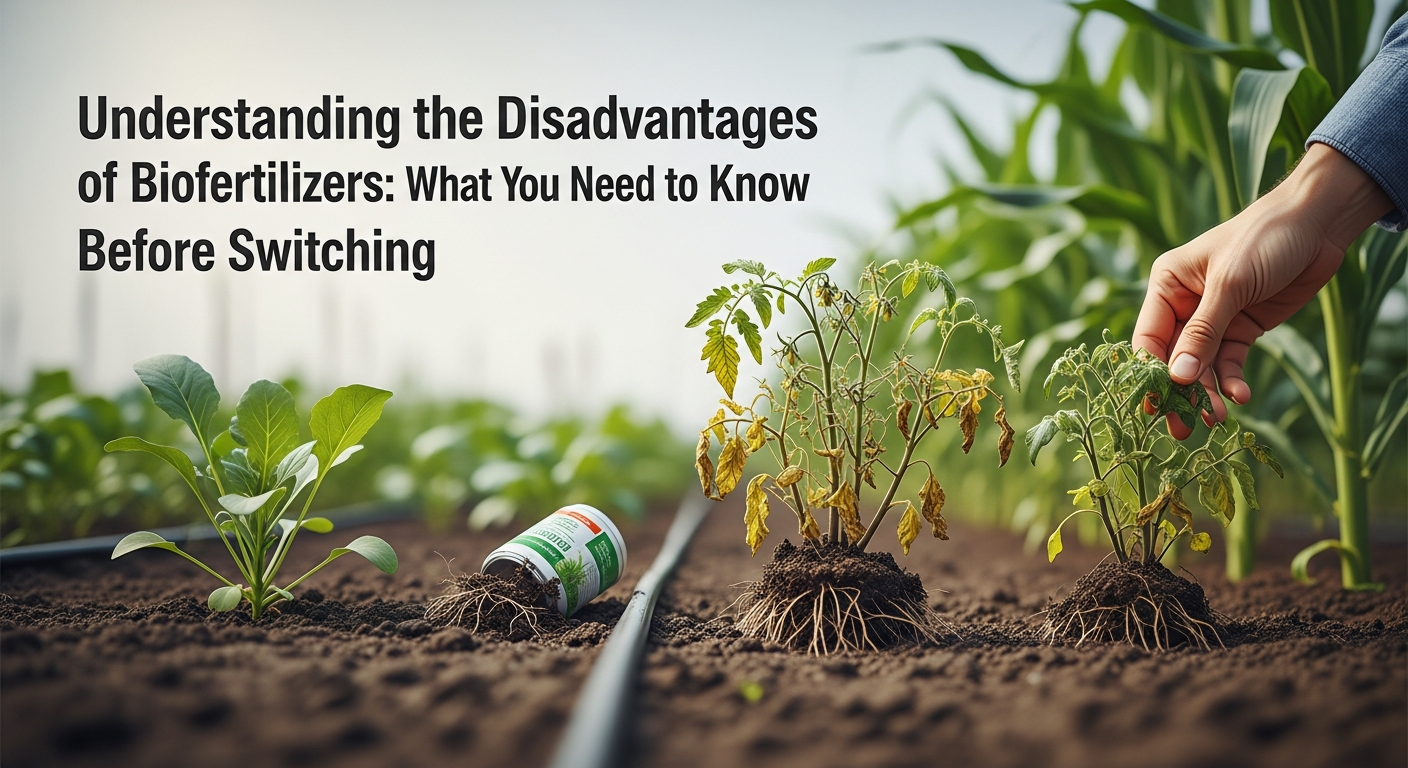
Sustainable agriculture practices have relied on biofertilizers as an environmentally safe and natural alternative for chemically based fertilizers for many years. The advantages of biofertilizers include improved fertility of soils and increased microbial activity that supports plant development; however, there are disadvantages associated with their use that farmers must know prior to switching from chemical fertilizers to biofertilizers. Disadvantages include the delay in nutrient release, sensitivity to environmental conditions, and shorter shelf life than commercial fertilizer products, which can negatively impact crop yield if not properly managed.
Different types of biofertilizer (e.g., nitrogen-fixing microorganisms, phosphate-solubilizing bacteria, mycorrhizae) have different advantages; growers will need to consider potential challenges associated with each type of biofertilizer in order to utilize these products effectively.
Introduction: The Rise of Biofertilizers in Modern Agriculture
Bio-fertilizers are becoming increasingly popular for the health of the soil and reduce the amount of chemical fertilizers that are used. They have also been shown to help develop beneficial microbial relationships in plants during agricultural production. However, there are limitations and challenges associated with bio-fertilizers, therefore, farmers should be aware of these limitations as well as the benefits of using bio-fertilizers. Since there is a growing number of different types of bio-fertilizers, farmers should be familiar with both the positive aspects and limitations of these products before making their decision as to whether or not to use bio-fertilizers in their farming operations..
Currently, bio-fertilizers have gained a place within the field of agricultural production (organic farming, horticulture, and greenhouse production) as well as for agricultural production at the field crop level. Due to the ecological benefits of being an environmentally friendly alternative to the use of chemical fertilizers, bio-fertilizers are popular; however, there are conditions of environment and soil that strongly influence the performance of bio-fertilizers. Agricultural producers must understand how to correctly utilise bio-fertilizers to minimise potential yields and maximise outcomes.
Thus, this article will explore important features of the bio-fertilizers that contributed to their emergence as a viable alternative to chemical fertilisers, the uses of the product in various forms of agricultural production, and the importance to an agricultural producer of having knowledge about the negative characteristics of the bio-fertilizers prior to using them exclusively.
Why Biofertilizers Became Popular
Because biofertilizer introduces Bacillus strains, it is considered a natural and environmentally safe method to improve soil fertility using naturally occurring beneficial bacteria.
- They are an effective alternative to chemical fertilizers, which they supplement by improving the cost-effectiveness of farming in the long run.
- Many farmers prefer biofertilizer because it supports the natural formation of healthy soils and encourages sustainable farming practices.
Biofertilizer is completely non-toxic (i.e., safe to humans) and is also seed-to-soil compatible, meaning it is absorbed directly into the plant roots after they germinate.
Where Biofertilizers Are Commonly Used
The use of biofertilizers varies widely—from organic farms to vegetable growing operations, rice paddies, fruit orchards, and greenhouse nurseries.
- While there are many varieties of biofertilizers, they have proven to be most beneficial when used in soils with low levels of microbial activity due to the need for an increased level of biological support.
- Some biofertilizers are chosen specifically for their ability to fix nitrogen or solubilise phosphates, depending on the needs of a crop.
Why Understanding Their Limitations Is Important
While biofertilizers have many benefits, they may not be right for every farmer. Farmers using biofertilizers may experience decreased yield, malnourished crops, decreased nutrient availability and other problems due to
- The lack of effective biofertilizer performance in extreme temperatures, degrading soil conditions, poor storage conditions.
- The over-dependence on biofertilizers without appropriate knowledge can lead to decreased crop yields and malnourished crops.
Farmers should be aware of the limitations of biofertilizers in order to utilize the best practices to improve crop production through more effective and efficient use of biofertilizers.

Limited Nutrient Supply and Effectiveness Compared to Chemical Fertilizers
Biofertilizers have limitations associated with the amounts and rates at which nutrients are delivered to crops. Unlike their chemical fertilizer counterparts that supply immediate, large doses of nutrients, biofertilizers supply nutrients at much slower rates and rely heavily on the characteristics of the soil for nutrient availability. This means that some crops may benefit from using a chemical fertilizer more than a biofertilizer, especially crops that require additional nutrients or greater amounts of nutrients in an extremely short period of time.
Slow Nutrient Release Rate
Due to the fact that Biofertilizers are based on living Microorganisms, they will provide a gradual rather than an instant release of nutrients.
- Nutrient availability depends on Temperature, Moisture and Soil Biology.
- Crops may exhibit delayed growth responses after the application of biofertilizers.
- Biofertilizers aren't well suited for immediate Nutrient requirements of crops.
Lower Nutrient Concentration Than Chemicals
When compared to Chemical fertilisers, Bio-fertilisers are comparatively lower in nutrient content.
- Bio-fertilisers cannot offer the same high levels of NPK (nitrogen, phosphorus, potassium) as Chemical formulations
- Bio-fertilisers are typically used as an addition or supplement to the Nutrition supplied by other sources of fertiliser.
- Bio-fertilisers often need to be used in conjunction with organic matter or compost to improve their effectiveness.
Bio-fertilisers will not have the high concentrations required to effectively nourish crops that require high density of nutrition, but their gentle nature makes them safe for use.
Not Suitable for Fast-Growing or Heavy-Feeding Crops
Some crops require nutrients quickly and in higher quantities than others. For example, commercial vegetables, bananas, sugar cane, and maize.
- Biofertilizers can meet some but not all of the crop's high-nutrient requirements.
- If only biofertilizers are used, the yield potential can be reduced.
- The best approach is to use biofertilizers with chemical fertilizers to create a balanced nutrient supply.

Sensitivity to Environmental Conditions and Application Challenges
Biofertilizers, while generally advantageous on their own merits, are primarily fragile and living. Their viability and efficacy ultimately hinge upon the right mix of various environmental and soil conditions as well as correct method of biofertilizer application. When these environmental conditions do not provide the right temperature, moisture, and other environmental conditions, the farmer is likely not going to have the expected benefits from their use, thus creating another layer to the challenge of consistency with biofertilizers.
Temperature and Moisture Dependence
Biofertilizers consist of live bacteria and other types of organisms (i.e. Fungus) that can only survive under specific ranges of temperature and humidity.
- High temperatures can kill beneficial microorganisms in biofertilizers before reaching the field.
- Excessive dryness decreases the number of microbes in biofertilizers and hence their ability to release nutrients to the plants.
- Conversely, When the soil becomes too wet, oxygen levels drop and microbes in biofertilizers die.
Just as a number of foods will provide their benefits when stored properly (and not stored in poor conditions), a biofertilizer will provide the same benefits when it has the right balance of temperature and moisture (hence, the more difficult climate zones to attempt to apply biofertilizers in).
Soil pH and Microbial Survival Limitations
The effectiveness of biofertilizers, and in particular their microbial component, is determined by the pH level of the soil in which it is used.
- Microbial survival is significantly hindered in soils that are highly acidic or alkaline.
- When pH of soil is not to any degree optimal, microbes are unable to reproduce or fix nitrogen and other nutrients.
- Soil amendments may need to be added by the farmer prior to biofertilizer applications.
Application Timing Can Be Tricky
- Incorrectly applying biofertilizers during times of extreme heat will decrease survivability.
- The use of improper coating techniques when coating seed, or improper mixing of liquid microbes with seed, will result in damage to the microbial cultures.
- Immediately following application to seed, rain may wash away microbes from the seed.

Farmers need to observe the correct placement, method of application, and specific environmental conditions, in addition to other considerations, to maximise the effectiveness of biofertilizers, thus giving the handling and placement of biofertilizers greater skills than when using chemical fertiliser
Short Shelf Life and Storage Concerns Affecting Practicality
Bio-fertilisers have live micro-organisms as a key feature; therefore, they enhance soil health. They are considerably more dependent on how they have been stored than chemical fertilisers. Chemical fertilisers remain stable in storage for many years; however, bio-fertilisers deteriorate very quickly when exposed to high temperatures, moisture, or sunlight. In addition to their relatively short shelf-life, proper handling and storage are also very important for achieving quality outputs in the field with bio-fertilisers.
Microbes Die if Stored Incorrectly
Biofertilizers should be kept in a cool, dry environment; just a small change in temperature or humidity has the potential to kill off beneficial microorganisms.
- Microbial Survival Decreases with Exposure to Heat
- Moisture Leads to Clumping and Decomposing of Microorganisms
- The Direct Effects of Sunlight Are Destructive to Living Organisms.
When a microorganism dies, the biofertilizer will no longer be effective, and hence, will not provide nutrients to plants.
Short Shelf Life Compared to Chemical Fertilizers
While chemical fertilizers can last for many years after they have been purchased, the average effectiveness of bio-fertilizers has been only 6 to 12 months following purchase
- There is decreased efficacy with time.
- Must be used quickly after being purchased.
- Not suitable for long-term storage at farms.
Because of these limitations, it can be difficult for farmers who purchase large amounts of fertilizer or store seasonally to realise their full potential benefit.
Higher Risk of Contamination During Storage
Poor storage of biofertilizers creates easy opportunities for contamination by undesired organisms such as bacteria, fungi, and moisture.
- Using a product that contains contaminants can lead to crop damage.
- The effectiveness of the product will be reduced because of an unbalanced microbial community.
Poor Performance in Unfavorable Soils or Harsh Environments
While biofertilizers have positive effects on plants, they are also very sensitive to the soil. In challenging soils or soils that don't provide adequate nutrients, the amount of microbial activity associated with biofertilizers decreases dramatically, resulting in poor plant response
Low Efficiency in Sandy or Highly Saline Soils
The low water-holding capacity of sandy soils results in a very quick drying out of the beneficial microorganisms contained in biofertilizers.
- Under these conditions the microbial colonies will not have an opportunity to establish successfully
- Nutrient release will be slow and erratic
- Delays in plant growth or plants showing signs of nutrient deficiencies

High salinity soil creates osmotic stress on beneficial microorganisms and as a result, biofertilizers have low conversion rates to nutrients which result in a significant reduction of the performance of a given crop.
The above-mentioned conditions render biofertilizers unreliable unless soil amendments have been added beforehand.
Limited Results in Very Acidic or Alkaline Soils
Bio fertiliser is designed to work in soils that are neutral to slightly acidic. When the soil has too high or too low of a pH, the following occurs.
- Microbial cell walls are damaged by extreme pH levels.
- Nitrogen-fixing bacteria can only survive for a limited period of time.
- Phosphate-solubilising bacteria have lost the ability to function properly.
Aluminium's toxic effects on roots prohibit desirable microbial colonisation of the root systems, and Phosphorus will become unavailable (by being held) in the alkaline or calcareous soils, limiting the potential for effective microbial fertilisation.
High Soil Degradation Slows Biofertilizer Action
Biofertilizers will Work Much Better in soils that have Good Health. Soil that is Compacted or Deplete of Nutrients, and has Chemical Damage can greatly affect the use of Biofertilizers.
- Soils that are too low in Organic Matter to provide Microbes with a Food Source.
- Compact or Crusty Surface - Hard to get Oxygen to Microbes.
- Chemical Residues kill Good Bacteria.
When Infected with Major Soil Disease, bio-fertilizer-bound microorganisms will take a Longer Time to produce beneficial results than in healthy soils. Microorganisms do Not Breach Rapidly, and Nutrients do Not Break Down as Fast in Soil that is Severely Diseased.
Lack of Immediate Results Compared to Synthetic Alternatives
Bio fertilizers take time to become effective because they utilize live organism activity to help free up soil nutrients over time. Bio fertilizers are slow acting compared to chemical fertilizers. The delay in bio fertilizer activity delays the time before you see improvement in the growth of your plants and crop yield. Chemical fertilizers will deliver instantaneous nutrient availability, while bio fertilizers focus on providing nutrients for the long term and, therefore, are not very suitable for situations requiring immediate results. Listed below are some challenges that farmers may experience as a result of the delayed action of bio fertilizers.
Delayed Visible Plant Response
To establish a beneficial microbial life in the soil, biofertilizers require a period of time to be able to replenish the nutrients to be able to transfer those nutrients into plant uptake.
- The time frame between applying biofertilizer and plant response (growth improvement) can often be measured in weeks.
- Compared to chemical fertilizers, biofertilizers will typically produce a delayed greening, flowering, and root growth response.
- A large portion of how quickly biofertilizers can deliver nutrients to the plant will depend on the amount of soil moisture and soil temperature. This may be frustrating to farmers who are accustomed to the quick turning around of vines or plants and who are dependent on the write times for performance of biofertilizers
Farmer Expectations vs Reality
Farmers may think that because they transitioned from chemicals to biofertilizers that they could expect the same quick turnaround from their crops.

- The growth of crops from the use of biofertilizers will be progressive as opposed to immediate.
- As a result, biofertilizers were not meant or designed to produce fruits and vegetables using the high-intensity or high-response farm methods.
- Having a better understanding of the timing of how long biofertilizers will be useful for farmers will help alleviate any misalignment of expectations and enable them to effectively utilize biofertilizers as a source of natural nutrients for the long haul.
Not Ideal for Urgent Nutrient Correction
Because biofertilizers are not able to provide nutrients to plants right after they show signs of deficiency, they need time for microbial populations to build up before additional nutrients will be available.
- In addition, during this time, plant leaves will remain pale or stunted until sufficient numbers of microorganisms are present to support growth.
- This is why many farmers use synthetic fertilizers in an emergency situation to address nutrient deficiency.
These limitations make biofertilizers ill-suited during times of nutrient stress, during rapid plant growth, and/or during a time-sensitive growing cycle.
Possible Introduction of Harmful Microorganisms or Contaminants
Some foods become unsafe due to improper processing, and the same is true regarding biofertilizers; because of inappropriate production/storage conditions, biofertilizers can become contaminated. Contaminants may be detrimental to crops, adversely affect the health of the soil, and ultimately place limits on farm efficiency. Potential risks associated with improper handling and/or quality checks for biofertilizers are listed below.
Risk of Pathogens in Poor-Quality Products
- Low quality biofertilizers may contain harmful bacteria, fungi, and other unwanted microbes that compete with beneficial ones, and can also be pathogens capable of infecting a plant's roots and/or slowing the development of that plant, thus causing disease in crops.
- Farmers rely heavily on contaminated products to enhance the quality and nutrient levels of their soil.
Production Without Proper QC Standards
- If manufacturers of biofertilizer do not use strict QC practices, they may produce a final product that does not meet established safety standards or is unstable.
- A complete absence of sterilization procedures, poor hygiene during product development, and failure to regulate procedures can lead to an increased likelihood of contamination.
- Contamination will reduce the effectiveness of the biofertilizer and result in crop performance that is variable at best.
Improper Fermentation Leads to Harmful Microbes
- Biofertilizers take advantage of the fermentation process to create a population of beneficial microorganisms but an improper fermentation process may inadvertently result in the growth of dangerous microorganisms instead of beneficial ones.
- Improper conditions(i.e., temp, air flow, contamination during manufacturing, etc.) during the fermentation period of the biofertilizer will cause the growth of harmful microorganisms.
- If a biofertilizer does not undergo proper fermentation, it will not be as effective in soil and can negatively impact the growth of plants grown in that soil.

The Cost Factor: Higher Initial Investment and Variable Returns
Biofertilizers have many ecologically beneficial attributes over the long run; however, from an economic yield perspective, numerous cost-related considerations may create short-term difficulties. These considerations will ultimately affect the farmer's decisions to use these biofertilizers, particularly for farmers working with large scale and/or highly intensive agriculture systems.
Higher Production Cost Than Chemicals
- Biofertilizers are more expensive than chemical fertilizers to produce because they typically require highly sophisticated ways of producing microbes, as well as controlled environments and special types of storage.
- The shorter shelf life of biofertilizers necessitates that they are handled with care and adds to the logistics and distribution costs, creating additional upfront costs for most farmers relative to the low price and availability of conventional fertilizers.
Unpredictable Yield Increase
- Soil Temperature, Moisture Level and Microbial Activity Affect Biofertilizer Effectiveness.
- Differences in effectiveness of Biofertilizers are attributed to these factors that influence the ability of the organism to grow and multiply.
- Biofertilizers' Yield Improvements Are Less Predictable and Faster Than Chemical Fertilizers' Yields Because They Are Affected By The Conditions Required For The Organism To Thrive.
Not Always Viable for High-Intensity Farming
High-intensity farming or commercial farming is often characterized by the rapid delivery of nutrients and the fast response of the crops. It is with these types of farming that the use of biofertilizers may not meet the needs of the growers.
- The slow release of nutrients with biofertilizers can hinder the crop's performance when heavy and immediate nutrition requirements are needed.
- Many larger farms use chemical fertilizers to achieve a consistent yield rather than relying on biofertilizers as the primary source of nutrition but instead rely on them as a supplement.

Lack of Awareness & Technical Knowledge Among Farmers
Bio-fertilizers, which provide numerous advantages to agriculture when used properly; however, many farmers in many regions, particularly rural areas, do not have adequate knowledge of bio-fertilizer application and function. The gap in farmer education about bio-fertilizers can reduce the efficacy of bio-fertilizer products in producing healthy and profitable crops and consequently result in less=r market acceptance of these products by farmers who want to be sustainable.
Poor Understanding of Application Methods
The majority of farmers lack knowledge and experience in the proper ways of applying biofertilizer.
- Mistakes made by applying biofertilizers at incorrect rates
- Using biofertilizers at inappropriate times in a crop's life cycle
- Mixing biofertilizers with other substances or materials
Since biofertilizers contain living organisms, any mistake, no matter how minor (e.g., exposure to sunlight, chemical contamination, overdiluting), will decrease the effectiveness of the biofertilizer. Therefore, just as newborn children must be given proper food and vitamins at the appropriate age, crops must be handled properly with the correct biofertilizer to achieve the greatest benefit.
Need for Training and Support
Guidance on effective use of biofertilizers is lacking in the farming community
- limited availability for training programs
- limited number of demonstration farms
- limited outreach of technical specialists in remote areas
With proper training, farmers are able to learn how to store, time application, and be aware of other inputs that may be used together with biofertilizers. When farmers are given support they develop confidence in using the product and therefore improve the health of the soil, and thus will improve the yield potential.
Adoption Barriers in Rural Areas
There are many barriers in rural areas that impede the adoption of biofertilizers:
- Access to high-quality products is limited
- Distribution systems are insufficient
- Farmers rely heavily on established farming methods
- Farmers' hesitancy to try out new fertilizers

Farmers are thus challenged in making the transition from chemical fertilizers to biofertilizers, even when they understand the long-term advantages of using biofertilizers.
FAQ:
Q1. What are the main disadvantages of biofertilizers?
They are slower performers, more vulnerable to environmental influence, and they ultimately are short-lived.
Q2. Do biofertilizers work in all types of soil?
No, their effectiveness will lessen in soils that are acidic, saline, or lacking in nutrients.
Q3. Why does liquid biofertilizer fail sometimes?
Storage conditions (including temperature) will negatively affect their ability to survive as a viable microorganism and therefore their efficacy.
Q4. Are biofertilizers as effective as chemical fertilizers?
While they provide long-term benefits (gentler and slower), immediate results will not be present.
Q5. Can biofertilizers introduce harmful microbes?
Yes, if they were exposed to contamination or mishandled during the manufacturing process.
Conclusion: Weighing the Disadvantages of Biofertilizers Before Making the Switch – An Informed Decision is Key!
Biofertilizers provide many long-term benefits to soil health and sustainability; however, to effectively incorporate them into your farming system, it is critical to be aware of their limitations. A major limitation to using biofertilizers is that they rely heavily on environmental factors for efficacy. Other limitations include the slower rate at which they release nutrients into your crops, their reduced shelf life compared to conventional fertilizers, and their lower efficacy when used in combination with non-biofertilizer products in harsh conditions (poor soils, drought-prone areas, etc.).
Evaluating these shortcomings, along with the unique demands of your crop(s) and soil type(s), and the climate in your farming area, will help you determine whether the application of biofertilizers alone would provide adequate crop production, or whether it would be more advantageous to incorporate chemical fertilizers with the use of biofertilizers. By making an educated choice on how to apply biofertilizers, you will ensure that not only are your plants healthy, but you will be applying a balanced, efficient and sustainable nutrient management strategy for the future.