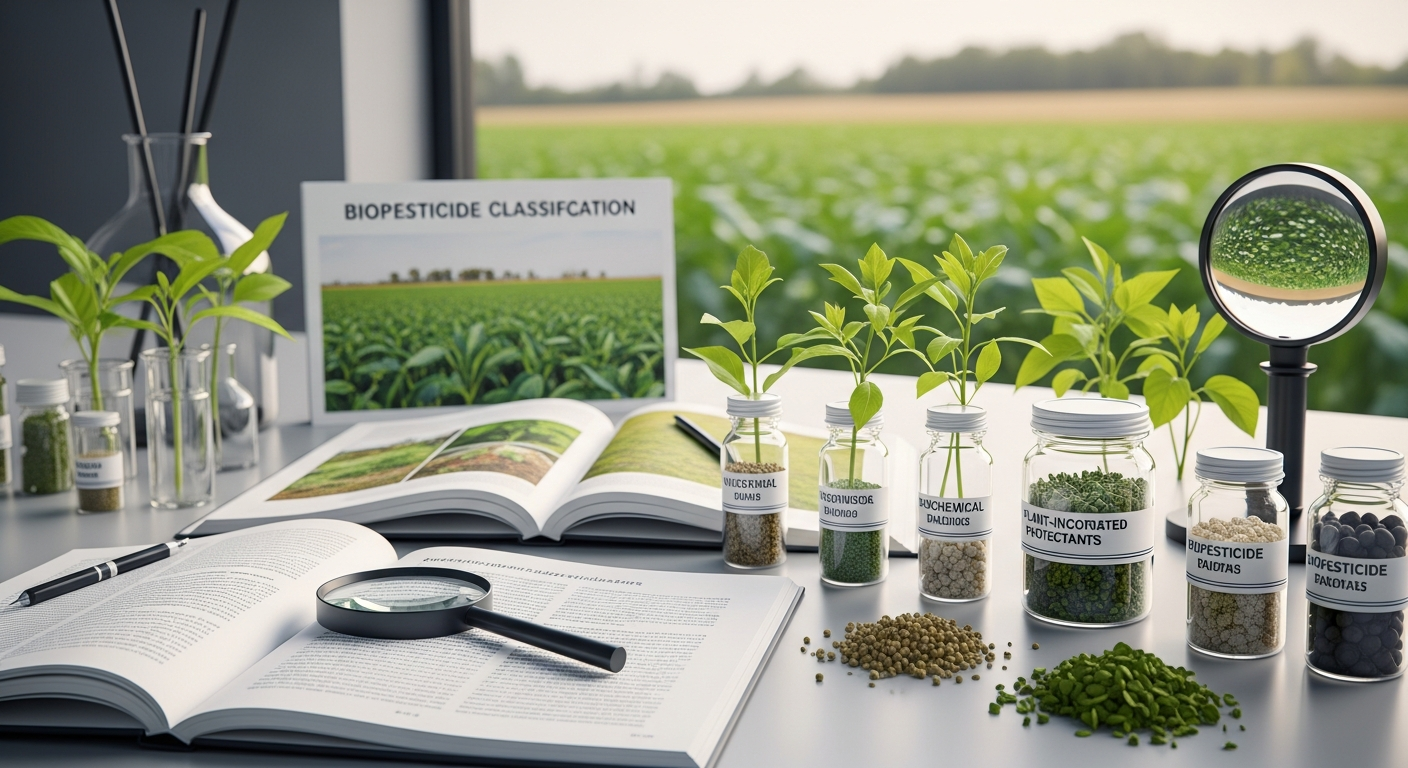
For many years, farmers have utilized bio-based pesticides to safely control pests, protect crops and minimize environmental harm through the wise selection and application of these natural alternatives. There are several ways to classify these biopesticides, derived from beneficial microorganisms, plants, and natural substances. They compliment rather than contradict the natural order of things. Therefore, understanding the classification of pesticides will help the farmer determine how best to utilize biopesticides on specific types of crops, while also considering the level of pest pressure and environmental conditions for optimal results.
Generally, biopesticides can be classified as microbial biopesticide products and biochemical Biopesticides and plant incorporated protectants; all three groups of biopesticides have a unique role in sustainable agricultural practices. Microbial agents, such as Bacillus thuringiensis (Bt) are effective in controlling insect pests, while botanical extracts such as neem, serve as natural insect repellent systems (also known as botanical oils). PIPs, (Plant Incorporated Protectants) provide inbuilt pest resistance associated with the plant formation process itself. This method of classifying biopesticides will assist farmers in determining the best solutions available to them.
Farmers who utilize bio-pesticides versus synthetic chemical pesticides, enhance soil health, protect beneficial insects, and greatly reduce harmful residue found on food crops. The use of bio-pesticides leads to higher yields and sustainable operations, when applied to a variety of crop types including, cereals, vegetables, fruits and pulses. When used in combination with sound agronomic practices, bio-pesticides further improve the agricultural ecosystem, making farming safer, more productive and ready for the future!
Introduction: The Rising Importance of Bio Pesticides in Sustainable Agriculture
Today’s agricultural industry is experiencing a dramatic increase in the challenge from critical agricultural concerns such as the development of resistance (to pesticides) by insect pests, soil degradation due to nutrient run-off from agricultural land, and contamination caused by excessive application of chemical pesticides. Farmers around the globe are working to find safer, more sustainable approaches to agriculture through the use of biopesticides. Biopesticides have emerged as an essential cornerstone of today's agriculture because they provide effective control of insect pests while maintaining the health of the soil, supporting biodiversity and providing a safe food supply.
As biopesticides are now gaining popularity among farmers, there is a strong correlation between the increasing use of this technology and the increasing demand of consumers for longer-term sustainability in farming systems. In addition to eliminating the need for excessive use of synthetic chemicals, biopesticides offer farmers an alternative approach to managing insect pest infestations. In addition to potentially decreasing the total amount of pesticides needed to manage a given insect pest, biopesticides also promote development of a more sustainable eco-friendly agricultural system that will produce, protect and preserve the environment, as well as provide for the production of environmentally harmful pesticide residues.
Why Farmers Are Shifting Toward Natural Pest Control
Eco-based products are becoming the product of choice among farmers due to numerous reasons for their benefit to Farmers physically (economic), Environmentally and their Health.
The following are the reasons for this increase in the use of environmentally-friendly products
instead of Chemical Pesticides. :
1. More Resistance from Pesticides to Farmers.
2. A greater awareness of Soil Health and Ecological Health in relation to their crops
3. Growers want to market their products as residue-free.
4. An increase in the number of State and Federal Regulations on the use of pesticides
Bio-Pesticides do not utilize Chemicals and instead work with nature to produce the desired outcome. They will only target the "bad" pests and do not harm any of the positive creatures (Bugs and Microorganisms) that help us maintain a healthy environment.
Therefore, Farmers are able to produce Healthy Crops,Improve Soil Fertility and Decrease Cost of Inputs.
Overview of Bio Pesticides and Their Role in Agriculture
- Bio-pesticides are products made from naturally occurring organisms such as bacteria or fungi, or made from compounds or extracts obtained from these organisms or plants.
- Bio-pesticides can be used to help farmers manage insect pests, diseases in crops and nematodes (a type of roundworm).
- They may also help improve the general health of plants and crops and will help farmers with pest control and management programs.
Types of Bio-pesticides:
There are three main bio pesticide types: microbial pesticides, biochemical pesticides, and plant incorporated protectants (PIPs). Each of these types has different uses, which allow farmers the ability to find a wide variety of bio pesticides based on the crop they are producing, the seriousness of the pest problems they face, and their farm's environmental conditions. As a result of this diversity, bio pesticides have been shown to be effective for cereals, vegetables, fruits, pulses and plantation crops.
Need for Eco-Friendly Alternatives to Chemical Pesticides
The urgency of finding alternatives to chemical pesticides has grown exponentially in recent years due to their negative effects on the environment.
Chemical pesticides are associated with many negative outcomes, such as:
- Contaminating soil and water resources
- Harming bees and other beneficial insects
- Accumulating in the food crops we eat
- Causing health problems for farmers in the long term
Explanation in Detail:
Using biodegradable bio pesticides can significantly decrease most of these health and safety concerns. Bio pesticides influence all areas of sustainable agriculture and the environment by naturally degrading over time and leaving little or no residue on crops, the environment, or humans. Selecting EPA registered bio pesticides for use will keep farmers compliant with all Federal and State pesticide regulations, protect the environment, and promote safe food production without sacrificing crop yield.

What Are Bio Pesticides? Definition and Key Features
The use of biopesticides is a way to manage pests (insects, disease, etc.) and weeds in Agriculture using products from Mother Nature instead of synthetic chemicals. Biopesticides are based on the principles of nature's biological processes which provide more safety for the plant, farmer, consumer, and the ecosystem compared to synthetic chemicals; therefore, biopesticides are an important factor for the continuation of sustainable agriculture worldwide.
To understand how to classify biopesticides it is critical to first understand what biopesticides are and how they work. Biopesticides are produced using living microorganisms (bacteria, fungi, protozoans, etc.) and/or from plant extracts or naturally occurring compounds and they are used for controlling specific insect or plant pathogens. Biopesticides target specific pests, and therefore they can provide the same level of pest control as synthetic chemicals without killing off many of the natural pest predators in the environment, thereby preserving the ecological balance.
Definition of Bio Pesticides in Agriculture
Bio pesticides are generally derived from naturally occurring materials including bacteria, fungi, viruses, plants and minerals, and they safely manage pests that occur in agriculture.
Explanation of the Critical Components:
- The method by which they (Bio Pesticides) kill is Biological Action as appose to chemical toxicity.
- Bio Pesticides only affect particular species of pests, therefore, they have less negative impact on beneficial insects; e.g., bees and ladybugs.
- Bio Pesticides break down naturally leaving little or no residues on crops.
Agriculturally Bio Pesticides are being assessed through extensive field trials on a variety of crops such as rice, cotton, vegetables, fruits and pulses as being a foundation for Sustainable Pest Management Systems as well as for Integrated Pest Management (IPM) Programs.
Key Characteristics of Effective Natural Pest Control Agents
Effective bio pesticides meet some basic criteria which are important when using these pesticides on agricultural crops grown using current conventional farming methods.
Fundamental properties of Effective Bio Pesticides:
- Target Specificity - Effectively attacks only those pests harmful to crops.
- Poison Safety - Low toxic to humans, animals and beneficial insect pollinators.
- Biodegradability - Bio pesticides decompose naturally into harmless components of soil and water.
- Resistance Management - Effective Bio Pesticides help to develop the mitigation of developing pest resistance as the crops are attacked by the pest over time.
Due to the above characteristics of effective bio pesticide products; farmers utilize these bio pesticides over the use of synthetic pesticide products; particularly for their use within the culture of organic products as well as for the production of organic residue.
How Bio Pesticides Support Soil and Ecosystem Health
Bio pesticides have many ecological benefits. They help keep healthy soil microbial populations intact. Without the use of pesticides, nutrients cycle freely in the soil, resulting in rich soil fertility.
- They protect pollinators such as bees and butterflies.
- They reduce the amount of pollutants that enter into water sources.
- Using biopesticides will create an environment in the soil that is capable of suppressing pests and diseases naturally.
- The end result will be stronger crops, lower inputs, and long-term viability to agricultural systems through the use of environmentally friendly products.

Main Classification of Bio Pesticides: Broad Categories Explained
As bio-pesticides are classified into different groups according to how they were produced or developed, how they work, and how they are used in agriculture, it is helpful for farmers, agronomists and all other types of agricultural professionals to understand the classification system in order to choose the appropriate biopesticide for proper pest management while protecting soil and the environment. Each classification category has a specific role in sustainable crop protection and reducing reliance on synthetic chemical pesticides.
There are three primary classifications for bio-pesticides: microbial, biochemical and plant incorporated protectants (PIPs). These represent the basis of today's biological pest management solutions and represent an extensive range of biopesticides available for use in cereal, vegetable, fruit, pulse and plantation crop production.
Microbial Bio Pesticides
Microbial bio insecticides are made from biological organisms (i.e., microbes) which include bacteria (e.g., Bacillus thuringiensis (Bt)), fungi (e.g., Trichoderma and Beauveria) and viruses (e.g., NPVs). Microbial bio insecticides have similar effects to conventional pesticides, but they do not adversely affect plants or beneficial organisms.
Unique Features / Benefits:
- Microbial bio insecticides offer target specificity for individual insect pests; the result is that they cause fewer non-target insect pests to be killed or harmed.
- They also promote increased activity of the microbes present in the soil, improve the health of the plants through improved immunity, and increase soil fertility.
- Microbial bio insecticides are an important component of Integrated Pest Management (IPM) practices.
Agricultural Importance:
Due to their effectiveness against insect larvae, disease-causing fungi and soilborne diseases, microbial bio insecticide products are well-suited for use in organic and sustainable agricultural production systems.
Biochemical Bio Pesticides (Plant-Derived & Natural Compounds)
Biochemical biopesticides are substances naturally occurring that control insect pests predominantly via non-toxic methods (repelling, mating disruption, growth inhibition). Rather than directly killing an insect pest, it will affect an insect pest's behavior and/or life cycle.
Included in this category are:
- Plant extracts (e.g., neem oil, garlic, hot pepper, and essential oil).
- Pheromones applied for monitoring and disrupting insect pest mating.
- Insect growth regulators (IGRs), chemicals that keep insect pests from developing.
Use of these products is agriculturally relevant because they have minimal residue, are safe to honey bees, and maintain control of insect pest populations without creating resistance. This is particularly true for those fruits, vegetables, and high-value
Plant-Incorporated Protectants (PIPs)
PIPs: (Plant-Incorporated Protectants) are plant-created pest control products generated by altering the plant’s genetic make-up. Plants containing genes for these types of proteins enable them to generate proteins toxic to certain types of pests.
Characteristics of PIPs:
- Examples include Bt Cotton and Bt Maize
- Provide 24/7 Automatic Pest Protection
- Eliminate External Pesticide Applications
- Most productive against one or two targeted insect pests
Importance to Agriculture:
'PIPs are an advanced segment of the classification of Biopesticides and are produced by using modern biotechnological methods combined with conventional pest control techniques. If applied correctly, PIPs offer an increase in crop yields and reduced chemical pesticide application.'

Microbial Bio Pesticides: Harnessing Beneficial Microorganisms
One of the largest categories of biopesticides is microbial biopesticides because it makes use of naturally-occurring microorganisms to manage harmful insects or pests without using chemicals in a harmful manner. The use of microbial agents is beneficial to the planet and therefore supports more sustainable forms of agriculture. Rather than searching for ways to kill off insects through chemicals, the idea behind the use of microorganisms as an insecticide is to infect the insect, inhibit its growth, or compete for food or shelter with the insect, thereby working against the insects in a sustainable manner.
Microbial biopesticides are also used for a variety of crops including fruits, vegetables, cereals, and pulses; they are effective, residue-free, and can be used in conjunction with organic and integrated pest management (IPM). These products reduce the reliance on chemicals but still allow for the successful production of food and maintenance of a healthy and productive soil.
Bacterial Bio Pesticides – Bt and Other Important Species
Bio pesticides are a type of pesticide derived from microorganisms—specifically bacteria—widely used for pest control in agriculture.
Bio pesticides work through the action of toxins or enzymes produced by the bacterium that will be harmful to only the targeted insect pests.
Characteristics/advantages:
- The most widely used and best known bacterial bio pesticide is Bacillus thuringiensis (Bt).
- Some of the major advantages of Bt include its ability to create specific proteins (called crystal proteins) that disrupt the digestive processes of caterpillars.
- The broad-spectrum nature of Bt makes it a safer alternative than traditional insecticides on both beneficial insects and pollinators,
- while also providing a safer and more effective product for humans, animals, and the environment.
Agricultural Uses:
Bt is used for pest control in a variety of agricultural crops including cotton, maize, vegetables, and pulses; to control a range of insects, including caterpillars, borers, and leaf-eating insects. Its specific mode of action targets a specific insect pest is one of the reasons why it is considered by both growers and ag companies to be a preferred type of bio pesticide.
Fungal Bio Pesticides – Trichoderma and Its Agricultural Benefits
Fungal bio-pesticides use natural processes of infecting and adversely affecting other organisms’ growth through competition, thus providing biological protection from harmful pests. They are a useful method of managing problems associated with soil-borne pathogens.
Primary characteristics/advantages:
- Trichoderma spp utilizes competition for nutrient absorption and space to help prevent/limit damage to plant roots when grown in healthy soils.
- Increase root systems’ growth and improve defence mechanisms inherent to their host.
- Are able to reduce the occurrence of root rot, wilting and damping off.
- Encourage growth and support microbial diversity in the soil.
Agricultural application:
Fungal bio-pesticides are typically used either as seed treatments or applied to the soil of vegetables, fruits, and plantation crops for their potential to provide biological control of pests and act as growth stimulators.
Viral Bio Pesticides – NPVs for Targeted Insect Control
Viral biopesticides can specifically target insect pests as larvae and are considered the safest types of biopesticides.
Viral biopesticide benefits and characteristics:
- Viral biopesticide, nucleopolyhedroviral (NPV) targets a specific insect pest species only.
- Will kill pest populations during a time of pest population outbreak without affecting other organisms.
- They are extremely safe for beneficial insect populations, livestock and humans.
- They are a great way to manage resistance to current products on the market.
Agricultural usage of NPVs are growing in several crops including cotton, soybean and vegetable crops where they are successfully used to combat pest species including Helicoverpa and Spodoptera; their uniqueness in targeting pest species has created a new category of biopesticides in this area.

Biochemical Bio Pesticides: Leveraging Natural Substances for Pest Control
Biochemical bio pesticides fall into the classification of bio pesticides where their purpose is to use natural products that manage pests without using live organisms. Biochemical bio pesticides differ from Registered Products in that they do not kill pests immediately, but rather alter the pest's behavior, growth, or reproduction. Due to this unique approach, they are very useful in sustainable farming systems, as they do not pose any threat to crops, soil, beneficial insects or people.
Biochemical bio pesticides have many applications. Several major crop production areas use these types of biopesticides on crops such as fruits, vegetables, oilseeds and horticulture crops; thus allowing farmers to eliminate or reduce synthetic pesticide dependence while still providing effective crop protection. Many of the biopesticide products listed below are based on neem-based formulations, pheromone traps and insect growth regulators (IGR) which are classified as biochemical bio pesticides, and also can be applied under eco-friendly and IPM programs
Plant Extracts and Oils Used as Bio Pesticides
Biopesticides, or biochemicals derived from plants, are some of the most commonly used and best-known biopesticidal products currently available. Extracts include those from seeds, leaves, bark, and flowers of plants that possess certain natural pest-repellent or insecticidal qualities.
Primary characteristics and benefits:
- Azadirachtin (from the neem tree) inhibits chewing, feeding, and reproduction by insect pests
- Garlic, hot pepper, and citrus oil are potent insect repellents
- Plant extracts break down quickly in nature and leave behind no residual toxins
- Plant extracts are non-poisonous to beneficial insects and microorganisms in the soil
Plant uses and benefits:
Plant extracts are applied as foliar sprays to various types of crops: vegetables, pulses, fruits, and plantation crops. They are especially successful in controlling sucking insect pests including aphids, whiteflies, thrips, and spider mites.
Pheromones for Mating Disruption in Pests
Pheromone-based Biopesticides: How do they work, and what are the benefits of using them for pest management?
Synthetic pheromones are used to affect pest mating cycles by affecting how the pheromones communicated between males. This prevents males from finding females, and as a result, leads to a gradual reduction in pest populations over time, while also reducing resistance.
Uses of pheromone-based Biopesticides for agriculture include the following:
- Fruit Crops: (mango, apple, grapes)
- Vegetable Crops: (tomato, brinjal)
- Storage of Grain Pest Management.
Advantages to using pheromones in pest management:
- Very Specificity to Each Species of Pest.
- No Residues to Remain on Crop.
- A Long Term Solution to Integrated Pest Management (IPM).
- A Safe and Effective Method to Control Pests in Bio-Pesticide Classifications.
Insect Growth Regulators (IGRs) for Safe Pest Management
IGRs (Insect Growth Regulators) are pesticides that disrupt the natural growth process of insects, rather than killing them instantly. The IGRs have an impact on the ability of larvae to molt, hatch from eggs or become an adult through metamorphosis.
1. Mode of Action:
- Prevent larvae from developing into adults.
- Reduce reproductive potential and population growth.
- Slow acting but provide long term management.
2. Examples of IGRs include:
- Juvenile Hormone Analogues
- Chitin Synthesis Inhibitors
3. Benefits to Agriculture:
- Low Toxicity to People and Animals
- Minimal effects on Beneficial Insects
- Can be used as part of Resistance Management Programs
IGRs have been used in cotton, vegetable and orchard crops, where the continued use of chemical treatments has created pest resistance.

Plant-Incorporated Protectants (PIPs): Built-In Pest Resistance
Pest control is now happening inside the plant with increased usage of Plant-Incorporated Protectants (PIPs), which have become one of the largest innovations in bio pesticide classification. With the introduction of genomically-modified plants, farmers no longer have to spray pesticides on their crops. Instead, the plants themselves can protect themselves from specific pests. This type of pest management supports sustainable agricultural production by reducing the amount of crop loss and the total amount of chemical pesticides used on each crop.
Through modern agricultural systems, PIPs enhance the ability of agriculturalists to protect their crops, while providing a balance between agricultural production and the environment. PIPs are extensively used in the agriculture of large plantations, such as maize and cotton (and many other staple crops), allowing farmers to enjoy stable yields with lower amounts of chemical input. PIPs also demonstrate the interrelationship of biotechnology with nature, through the continual use of biopesticides as a method of protecting crops.
What Are PIPs? Definition and Examples in Agriculture
The plant itself produces plant incorporated protectants (PIPs) after the plant incorporates certain genes specifically developed to create pest control proteins in the plant.
Key Points:
- PIPs originate from naturally existing living organisms (bacteria).
- The pest control protein is produced by the plant internally.
- The pest protection provided through this method continues to protect against pests for the entire period during which the crop grows.
Detailed Explanation:
Conventional means of applying bio pesticides spray crops, whereas PIPs are created inside the plant itself. As an example, PIPs are created by inserting the gene from the Bacillus thuringiensis (Bt) bacterium into the plant so that it produces proteins that are toxic to certain insect pests. With PIPs, plants receive protection against those insect pests, constantly. Therefore, this method of plant pest protection allows for the application of these kinds of pesticides less often in the field compared to applying conventional methods of pesticide application and therefore is a very effective way of providing plant pest protection.
GM Crops Equipped With Pest-Resistance Genes (e.g., Bt Cotton, Bt Corn)
GM crops that have developed resistance genes to pests are the most common PIPs used within agriculture today.
Examples would be:
- Bt Cotton - A pest resistant cotton variety.
- Bt Corn (Maize) - A pest resistant corn variety.
- Bt Brinjal - A pest resistant brinjal variety.
Overview:
These crops have been modified using recombinant DNA technology to create Bt protein, which only kills the specific type of harmful insect that they are designed for. These crops can be classified as bio-pesticides. The use of these bio-pesticides in commercial agriculture has significantly reduced the number of chemicals sprayed onto fields and has lowered the costs associated with growing these crops while increasing the stability and yield of the crops.
Biotechnology’s Role in Strengthening Crop Immunity
Biotechnology allows crops to have more resistant strains to insects and other pests, while at the same time ensuring crop safety and productivity.
Benefits of Biotechnology:
- The introduction of pest-specific resistance genes
- Increasing the tolerance of crops to stresses without causing damage to the soil
- Developing long-term pest management practices
Additional Information:
Through advanced genetic engineering techniques, the biotechnology process generates a plant's defense mechanisms rather than depending on costly chemical agents. Biotechnology will support sustainable agricultural practices and provide increased efficiency for bio pesticides, allowing for more targeted and controlled approaches in pest management for the protection of our environment and the security of our food supply.

Comparative Advantages and Limitations of Different Bio Pesticide Classes
Biopesticides are helpful for farmers to know how the different types of biopesticides develop in actual use. The three classes of biopesticides (microbial, biochemical and plant-derived) all have unique capabilities, and also possess unique limitations. By understanding these differences, farmers can choose the most appropriate biopesticide for their situation based on several factors such as the type of crop they are growing, pest pressures they are facing, the climate in which they grow, and any regulations in place.
Although biopesticides are considered to be safer and more sustainable than chemical pesticides, the degree to which a biopesticide is effective will depend on a variety of factors including environmental factors, application method, and the biology of the pest(s) being managed. A comprehensive comparison of the safety, effectiveness and barriers to adoption of biopesticides will result in more informed decision-making and thus better long-term agricultural outcome.
Safety and Environmental Impact Comparison
Bio pesticides provide many benefits to human health and safety as well as for the environment across all classes, although their level of environmental impact will vary by class.
Three key points to be aware of are as follows:
- Microbial bio pesticides are usually considered to be very specific to the target organism and safe for beneficial insects, soil microorganisms (including fungi and bacteria), and pollinators;
- Biochemical bio pesticides typically decompose shortly after application, resulting in little or no residual chemical in the environment; and
- Plant-Incorporated Protectants (PIPs) minimize the need for external pesticide applications but raise the potential for genetic modification issues.
Efficacy Differences – Microbial vs. Biochemical Agents
The bio pesticide's success relies heavily on the way it interacts with pests.
Important Points:
- Biological methods to kill or stop the life cycle of pests, called Microbial Bio Pesticides.
- Biochemical methods for repelling and/or attracting pests, as well as those that prevent pest development.
- Microbial Bio Pesticides have better efficacy against high pest populations, whereas Biochemical Bio Pesticides work best as an integrated pest management method.
A Brief Description of Each Type of Bio Pesticide:
Microbial Bio Pesticides, such as Bacillus thuringiensis and Trichoderma, are most effective against heavy pest pressure, but they must be used correctly and in proper environmental conditions. Biochemical Bio Pesticides are less toxic and much safer than Microbial Bio Pesticides and may require multiple applications. Selecting the correct type of Bio Pesticide classes provides a balanced approach that protects both crops and the environment.
Regulations, Approvals, and Farmer Adoption Challenges
Bio pesticides are an important part of sustainable agriculture; however, they face several challenges, both from practical to regulatory.
Proposed Solutions:
- The approval timeline for registering a product and the status of those products for regional and crop categories are not consistent from region to region or between crop categories.
- Although microbial and biochemical-based Bio Pesticides (BioP) can be approved faster than plants that are genetically engineered through genetic engineering (Genetically Engineered Plants - PIPs)
- The benefits of using bio pesticides are not widely known or understood by many farmers.
- This makes it difficult for small and marginal farmers to fully appreciate the benefits of bio pesticides and is a major barrier to the adoption of bio pesticides.
By providing farmers with proper training and support on bio pesticides, together with providing them with a label that outlines what bio pesticides are, it will help to greatly increase the amount of bio pesticides used in agriculture.

The Future Outlook: Innovations Driving the Development of Bio Pesticides
As the agricultural sector transitions to safer and more sustainable methods of crop protection, the use of biopesticides is becoming increasingly important to this change. Farmers are aware of the importance of environmental safety, food quality, and soil health; therefore, they are beginning to move away from conventional chemical usage in favor of biological solutions. With the growth of new technology comes the need for farmers to understand how the biopesticides are classified so that they know how to select the correct biopesticide for their individual crops and pest issues.
Biopesticides are becoming easier to use due to advancements in technology. The use of microbes and digital technology has enabled farmers to achieve larger crop yields with less reliance on synthetic agrochemicals. Below you will find a summary of the major advances being made in the field of biopesticide technology.
Next-Generation Microbial & Nano-Formulated Bio Pesticides
The newly developed microbial bio pesticides are more effective than previously available products because they are produced using more advanced strains of bacteria, fungi, and viruses that allow for greater effectiveness for longer periods against pests.
- The two recent developments, namely the improved strains of Bacillus thuringiensis, Trichoderma, and Beauveria will allow for better targeting of the pests being treated.
- The use of nano-formulations protects the active ingredients from heat and ultraviolet light and also protects them from moisture damage.
- Lower dosages of the product with higher effectiveness in the field will be achieved through this technology.
The detailed paragraph is as follows: "The use of improved microbial and nano-formulated bio pesticide technology is similar to the use of improved seed varieties that enhance crops' productivity. These technologies improve pest control due to their higher susceptibility to harmful elements such as heat, ultraviolet light, and moisture, thus improving the longevity of biopesticides .
Advances in Organic Farming Inputs and Bio-Control Technologies
Bio-control advancements continue to drive the development of innovative organic and/or natural farming systems.
- Improved plant-derived extracts such as neem, karanj and essential oils
- The introduction of beneficial insects and microbial consortia
- Multi-purpose products that may contain insecticides, fungicides, nematicides and provide pest control for multiple pests
As the demand for organic agricultural inputs grows, so does the growth of organicactive bio-pesticides. Through the development of new methods to deliver biological controls, the grower has more options available to make environmentally responsible crop production decisions, including selecting the appropriate biopesticide to lower pest damage to their crops; thus, they can continue to operate in compliance with organic production practices.
Integration of Bio Pesticides into Smart & Digital Farming Systems
The advent of smart farming systems is changing the way that bio insecticides are used by farmers, and the best time to use them, as well as the best amount of insecticide to use with the greatest accuracy.
- Smart farming systems utilise advanced technologies that help to reduce the amount of bio insecticide that is wasted, while simultaneously improving the level of control that growers experience when using bio insecticides, compared to purchasing and applying chemical insecticides.
- Smart farming systems enable farmers to use data-driven pest management practices, which are exceptionally profitable and sustainable when they align with digital insecticide classifications and digital insecticide management systems.

FAQs
Q1. What is the classification of bio pesticides?
Bio pesticides are classified into microbial bio pesticides, biochemical bio pesticides, and plant-incorporated protectants (PIPs).
Q2. What is included in the list of biopesticides?
The list of biopesticides includes Bt, Trichoderma, Beauveria, NPVs, neem extracts, pheromones, and botanical oils.
Q3. Why are bio pesticides preferred in modern agriculture?
They are eco-friendly, safe for beneficial organisms, and reduce chemical residues in crops and soil.
Q4. Are microbial bio pesticides more effective than chemical pesticides?
They are highly effective for targeted pest control and offer long-term soil and environmental benefits.
Q5. What are PIPs in agriculture?
Plant-Incorporated Protectants (PIPs) are genetically modified crops that produce their own pest-resistant proteins.
Conclusion: Why Understanding the Classification of Bio Pesticides Empowers Better Choices for Farmers and the Environment
When farmers know what types of bio pesticides exist, they have all the information necessary to choose the most appropriate, environmentally-friendly pest management products for their particular crops. Each type of bio pesticide (microbial, biochemical, and plant incorporated protectants) functions differently and is best suited for specific crops and pest populations. Knowing the differences between the various types of biopesticides allows farmers to select among a growing list of possible bio pesticide options that will control pests effectively while also preserving soil fertility and crop health.
On an environmental level, using bio pesticides in an informed manner can help decrease levels of chemical residues in the environment; provide protection for beneficial insects; and ensure that agricultural ecosystems maintain the biodiversity that is so important to both agriculture and the environment. The use of natural pest control methods by farmers contributes to the balanced functioning of a sustainable agricultural system in harmony with the natural systems around it. This results in healthier soils, cleaner drinking water and safer food for the general public. These outcomes are critical for agricultural sustainability over the long term.
Overall, understanding the classification of bio pesticides enables farmers to implement environmentally responsible agricultural practices that increase farm productivity without creating any damage to the environment. Through the integration of bio pesticides into their crop management programs, farmers will build an agricultural system that is financially viable for them now and will help protect our environment for the next generation