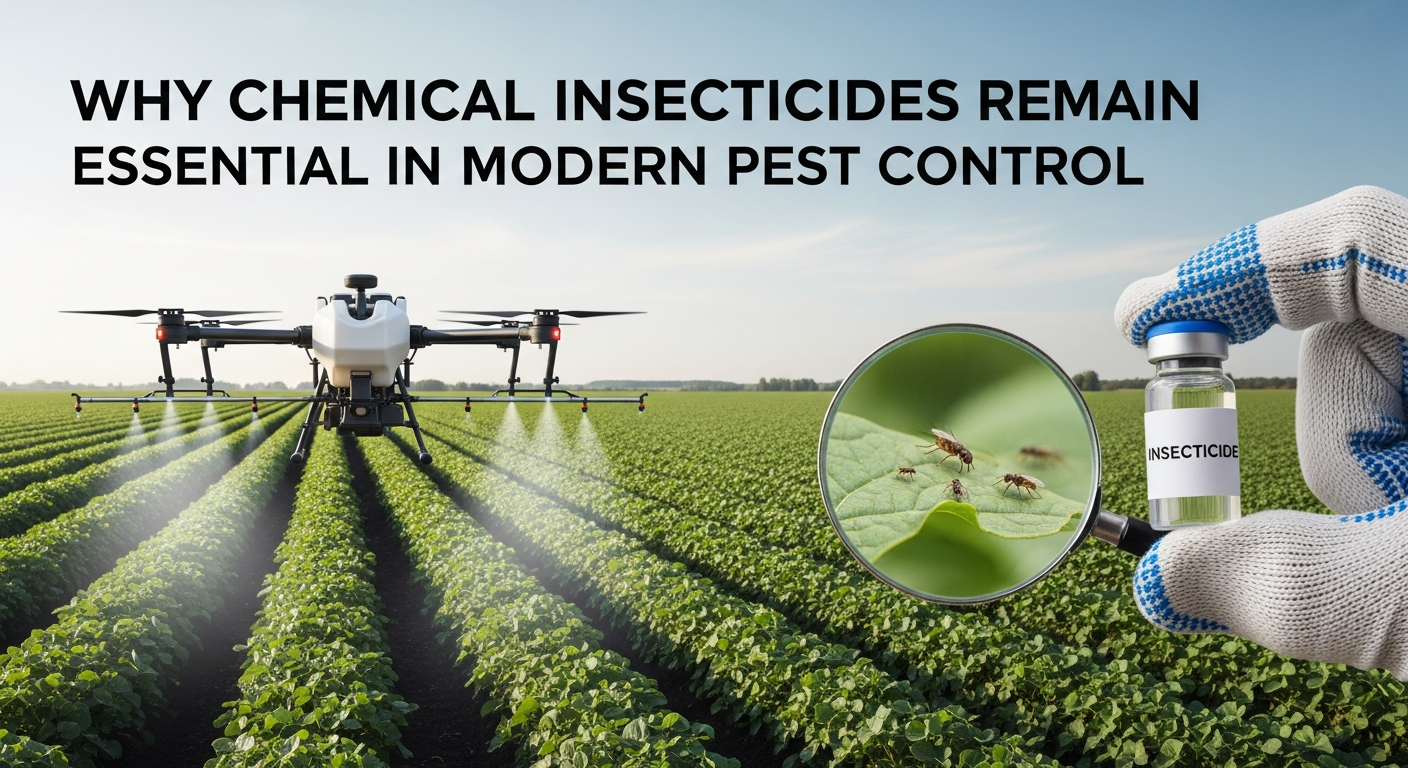
Chemical insecticides are an important part of modern pest control. They provide an effective way to control a number of different types of pests that can damage crops, homes, and the public’s health. By using chemical insecticides, farmers and home gardeners have the ability to control and prevent infestations of harmful insects and to maintain crops without losing productivity due to damage from pest infestations. The use of chemical insecticides on food crops or ornamental plants minimizes damage to those products that are produced by local farms and growers and produces higher yields with more uniform quality. Additionally, chemical insecticides are essential in the control of vector pests, such as mosquitoes, that transmit diseases that can cause serious illness or death, such as malaria and dengue.
There are alternative products to the use of chemical insecticides (organic and biological pest control methods); however, as of today, chemical insecticides have advantages of being more effective, quicker acting, and not subject to the same limitations as organic or biological products.
Examples of commonly used chemical insecticide products include pyrethroids, neonicotinoids, and organophosphates. Chemical insecticides disrupt the normal function of the insect’s nervous system, which makes them extremely effective for controlling pests at all life stages. Even with the concerns regarding environmental and resistance issues, chemical insecticides continue to be one of the primary and most important methods of pest control, provided that they are used prudently and as part of an integrated pest management (IPM) program.
Understanding Chemical Insecticides: What They Are and How They Work
Chemical insecticides are products designed specifically for the control, repulsion or destruction of pest insects that can cause damage to crops, stored goods, homes and diseases spread by insects. Chemical insecticides are the main component of many agricultural and pest control programs due to their quick action, effectiveness and benefits to crop yield protection as well as prevention of the transfer of diseases from pest insects to humans and domesticated animals. Chemical insecticides help to increase agricultural productivity by attacking pest insects at various stages of development.
Definition of Chemical Insecticides
Chemical insecticides
- (synthetic or naturally derived) are pesticides that will kill or control pest insects by using chemical compounds.
- They target specific insect systems (nervous, muscular, developmental, or respiratory).
- Thus protecting crops, food stored, livestock, and humans from pest infestation.
Types of Chemical Insecticides
- Contact insecticides - Kills the insect by coming into contact with it (e.g., pyrethroids).
- Systemic insecticides - Are absorbed by plants, killing the insect as it feeds on the treated plant (e.g., neonicotinoids).
- Stomach insecticides - Kills the insect when it eats the chemical while being fed (e.g., carbamates).
- Fumigants - Gaseous insecticides, controlling insects in enclosed spaces, warehouses, or soil.

How Chemical Insecticides Work
- Chemical insecticides work by disrupting the insect's nerve system, causing paralysis and eventual death.
- Certain chemical insecticides actually stop insect growth by interrupting their development and molting cycle, which will also keep them from reproducing.
- Some insecticides interfere with the way an insect breathes and creates energy, causing the insect to die.
When used properly and responsibly, chemical insecticides are a very effective, targeted, and scalable means of pest control, making them a very important part of agriculture and public health and part of an Integrated Pest Management (IPM) program.
Common Types of Chemical Insecticides and Their Applications
The classification of chemical insecticides is based on chemical structure, and how the chemical acts on insects. Each of these groups serves a different function, which makes them useful for the control of agricultural, pest management, and sanitary insects in our homes. By knowing about the types of chemical insecticides, farmers and pest managers can determine which insecticide will best suit their needs for the effective control of insects, with the least amount of damage to crops, and to limit the development of resistance to these chemicals. Chemical insecticides, from ancient history to today’s modern uses, support agriculture for food production and the global need for food security.
Organochlorines, Organophosphates, and Carbamates
- Organochlorines:Persistent insecticides that disrupt the nerve function of insects and cause paralysis. Many of these insecticides, such as DDT, have now been restricted for environmental reasons.
- Organophosphates:The broad-spectrum insecticides inhibit the enzyme acetylcholinesterase resulting in the failure of the nervous system to function.
- Carbamates:Carbamates are insecticides that reversibly inhibit the enzyme acetylcholinesterase. Carbamates are less persistent than organophosphates and considered safer.
Pyrethroids and Neonicotinoids
- The pyrethroids are synthetic pesticides modeled after the pyrethrins found in the chrysanthemum flower.
- They are fast acting and work well at low concentrations (for example, Cypermethrin).
- The neonicotinoids are systemic chemical insecticides that are taken up into plants' tissues to kill insects
- That feeds on the leaves and stems of the plants (for example, Imidacloprid).
Insecticides Examples in Agriculture
Insecticides are synthetic chemicals often used in agriculture to protect crops against destroying insects (chewing, sucking, boring)
- increasing yield quality
- decreasing the amount of crop loss
- and providing a consistent level of agricultural productivity.
These insecticides are an essential part of integrated pest management, providing immediate and efficient control over harmful insect populations while ensuring the quality and quantity of agricultural produce.

Addressing Concerns: Safety Measures and Responsible Usage
Insecticides are an effective means of pest control when used in accordance with federal regulatory requirements and when all safety measures have been implemented. The benefit of using chemical insecticides is that they allow us to safely control pests while minimising the risk of harm to humans, beneficial organisms, and the environment. Through the safe and responsible use of chemical insecticides, as well as adherence to all regulatory requirements, we can maintain both the effectiveness and the sustainability of chemical insecticides in modern pest management.
Protective Equipment and Application Safety
- Always wear PPE (personal protective equipment) including gloves, face masks, eye protection and safety clothing when applying insecticides.
- Read and follow the directions on the product’s label exactly to ensure you mix, dose and apply the product properly.
- Avoid spraying during windy conditions to avoid accidental drift of the product on unintended surfaces and risk of exposure to others through inhalation or other routes.
Minimizing Environmental Impact
- Targeted application methods will reduce pathogens from non-target organisms such as insect pollinators or helpful predatory insects.
- Use a rotation of insecticides that have different modes of action to eliminate potential for resistance in insects associated with Gastro/Internal Parasite Vectors
Use chemical insecticides in association with Integrated Pest Management (IPM) and where appropriate, utilizing some form of spot treatment.

Following Pesticide Regulations
- All insecticide formulations must be approved by a regulatory agency and used according to the recommended use interval prior to harvest.
- The chemical insecticide formulations must be stored in a secured area from access by children, pets, and foods.
- The disposal of empty containers and leftover insecticide formulations must conform to local regulations for pesticides.
The use of chemical insecticides according to recommended use, and responsible handling, will not only assure pest control, but also provide an avenue for sustainable agriculture and environmental protection for future food production.
Chemical Insecticides vs. Natural Alternatives: Which Is More Effective?
Chemical insecticides and natural alternatives both have a role in managing insect issues. Effectiveness of each will vary based on the amount of pest pressure, crop stage, and need for immediate control. Chemical insecticides tend to be fast acting and consistently effective during a severe infestation. Natural pest control strategies, on the other hand, aim to establish a long-term relationship of balance and sustainability between pests and the environment. To select the most effective method for controlling pests, it is necessary to have an understanding of each type of product's strengths and weaknesses.
Chemical vs Natural Pest Control Methods
- Chemical insecticides work quickly and specifically, which means they can be used effectively on a large or sudden infestation.
- Natural (or organic) insecticides, such as neem oil and other biological controls, have a more gradual effect and are better suited for either preventative or low-level pest control.

Integrated Pest Management (IPM)
- Integrated Pest Management (IPM) means that an insecticide is combined with other pest methods such as Biological Control, Cultural Control and Mechanical Control.
- Therefore, all methods will support one another equally to achieve control over pests.
Examples of pest control methods = Alleviating pest populations below Action Level (Economic Threshold) before applying pesticide (reduces risk of pesticide over-use/building resistance).
Choosing the Right Solution
- When you need more immediate and reliable control of your health or crops, it is best to choose a chemical insecticide.
- For growers practicing organic, preventive care, and when there is low pest pressure, natural methods are recommended.
A combination of the different types of insecticides listed below as examples in conjunction with an integrated pest management (IPM) framework will allow you to manage your pests effectively while ensuring that environmental and economic sustainability are maintained.
The Future of Chemical Insecticide Use: Innovations and Regulations
Advances in research and technology are creating a new landscape for the future of chemical insecticide use. The recent emphasis on safety, accuracy, and sustainability in the development of new insecticides is driving this change in the market. While chemical insecticides will continue to be necessary for pest management in agriculture and to prevent insect-borne disease, innovation and stricter regulatory oversight are altering the methods and means of their development and application. New technologies will enable improved precision and selectivity in the application and use of chemical insecticides while minimizing risks to people and the environment through increased efficacy and safety of the products applied to control insect pests.
New Developments in Pesticide Technology
- Modern innovative chemical insecticides are developed for specific modes of action only targeting harmful insects.
- Advanced Formulations Improve Stability
- Dosage Requirements Are Reduced
- Increased Effectiveness Can Be Achieved Using Lower Concentrations.
Eco-Friendly Chemical Innovations
- Insecticides have been created that can biodegrade more quickly, and they have no impact on beneficial insects.
- There are new insecticides being developed to meet the goals of sustainable agriculture and integrated pest management; these new insecticides do not contain harmful chemicals or ingredients.

Stronger Regulations and Monitoring
- Government's stricter residue limits (concentration).
- Business is using stricter guidelines to determine what insecticides are safe and how they are to be used (use).
- Businesses must monitor the use, labeling and use of the product to ensure that the insecticide meets environmental requirements.
Because of the ongoing invention of eco-conscious insecticide (design) products and the increasing government oversight of chemical residuals, the future of insecticides is based on responsible innovation.
FAQs
Q1. What are chemical insecticides?
Chemical insecticides are substances used to control or kill harmful insects by disrupting their growth, feeding, or nervous systems.
Q2. Why are chemical insecticides still used in farming?
They are used because they provide fast, reliable, and effective control of pests, helping protect crop yield and quality.
Q3. Are chemical insecticides harmful?
Chemical insecticides can be harmful if misused, but when applied correctly and as per guidelines, they are considered safe and effective.
Q4. What are common insecticides examples used in agriculture?
Common insecticides examples include chlorpyrifos, malathion, cypermethrin, imidacloprid, and carbaryl.
Q5. Can chemical insecticides be used with IPM?
Yes, chemical insecticides are an important part of Integrated Pest Management and are used only when necessary alongside other control methods.
Conclusion: Making an Informed Choice About Chemical Insecticide Use for Optimal Pest Management
Chemical insecticides are critical components of pest management. They provide pest control through speed, predictability, and targeted application against harmful insects. Through proper chemical insecticide use in agriculture, producers are able to minimize yield loss from serious pest infestations, thus maintaining a steady supply of food.Chemical insecticides also provide an important management tool for producers when traditional or naturally occurring pests are too numerous for biological control to cope with. Producing and maintaining high-quality products when facing severe numbers of pests are essential to the financial security of the producer/farmer.
Responsible and informed use of chemical insecticides is essential to accomplish successful pest management using this method. The proper choice of chemical insecticides, correct application rates, and compliance with the applicable safety regulations will all reduce the risk associated with the use of chemical insecticides to both humans and the environment.
In addition to these benefits, coupling chemical insecticides with Integrated Pest Management (IPM) practices will also further increase their benefits by reducing their incidence of application, delaying the development of pest resistance to insecticides, and promoting the long-term sustainability of the pest management practice.
Ultimately, making informed choices about chemical insecticides means balancing the effectiveness of the insecticide with the responsibility of its use. With an understanding of how insecticides work, knowledge of existing regulatory requirements, and the use of updated, eco-responsible technologies and techniques, it is possible for both producers/farmers and pest control operators/technicians to achieve optimal pest control while at the same time promoting environmental protection and sustainability in the agricultural industry.