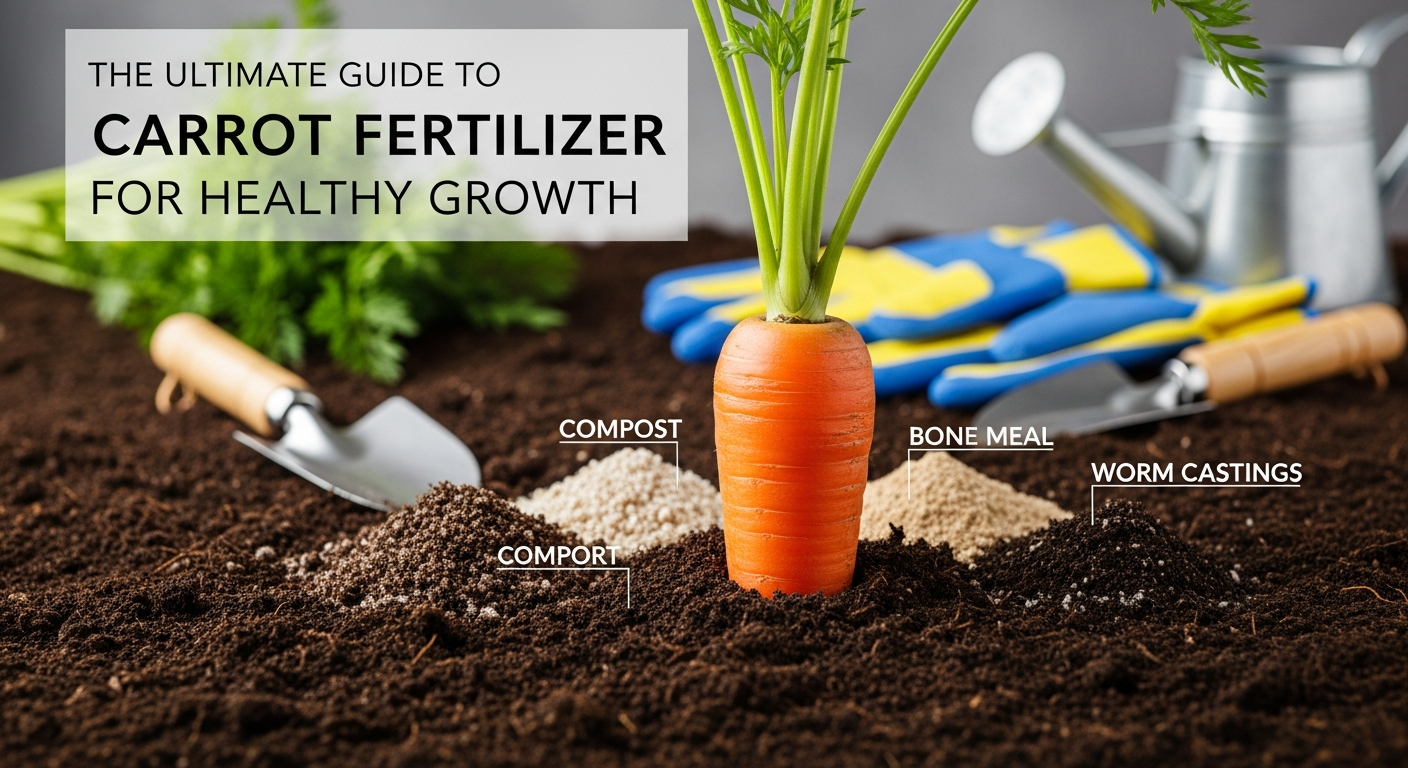
A Guide to Carrot Fertilizer: Carrot is one of the top root Vegetables that is cultivated in many agricultural fields and gardens as well as home gardens to produce High-Quality Straight Roots with lots of nutrients, In order to produce carrots that are Straight, Uniform and Nutrient-Rich, It is important to choose a Fertilizer that is Suitable for Carrots, as Carrots have Different Nutritional Requirements at Different Stages of development; Balanced Fertilizers Allow Carrot Plants to develop Properly and without being Deformed. A well thought out Fertilizer Program facilitates a robust Underground Root System, a Healthy Green Leafy Above-Ground Development, and an Enhanced Quality of the Carrot crop.
Carrots require Certain Nutrients at Specific Times for Good Growth. Essential Nutrients Provided by Carrot Fertilizers Include Phosphorus for Proper Root Development; Potassium to Enhance Root Size and Sweetness; Nitrogen, Which Should Be Added to Encourage Balanced Above-Ground Development of Carrot Plants. Carrots, when Given Nutrients in Proper Ratios will Develop Smooth Roots with a Better Color, Flavor and Storage Ability than Carrots Given Incorrectly Mixed Nutrients. Fertilizing the Right Way Also Helps Increase the Nutrient Utilization Efficiency of a Crop, Making Them More Resilient to Environmental and Economic Stress Conditions.
When choosing a Carrot Fertilizer, several factors must be taken into consideration. These include Soil Type, the Current Stage of Plant Development, and Method of Cultivating the Plants. Whether a Farmer Uses Organic Fertilizers, Such as Compost or Recommended NPK Formulations, the Consistent and Timely Application of Fertilizers Will Maximize The Yield and The Market Value of the Carrots Grown. By Utilizing the Appropriate Fertilizer Program, Farmers Will Produce Healthier Carrots The Following Season and Increase Their Overall Return On Investment from Carrot Production in Future Growing Seasons.
Why Proper Fertilization Is Essential for Growing Carrots
Carrots are underground-growing vegetables; as such, carrot quality is determined by how carrots develop below ground. Correct fertilization is a major factor affecting root shape (straightness), length, smoothness, and nutritional value (having sufficient nutrients). In conjunction with correct carrot fertilization, good nutrition assures uniform carrot development, enhances the ability of the carrot plant to absorb nutrients, and reduces many common carrot issues such as deformed (forked) carrots, unacceptable carrot sizes, and low levels of sugar in the carrot.
Carrots require controlled nutrition; over-nutrition (especially nitrogen) will cause deformation to the carrot's root shape, while nutrient deficiency will restrict the carrot plant's growth. Applying the best carrot fertilizer in the correct manner will promote optimal root growth, create carrots with better colour, offer a better taste, and ultimately provide higher market value to both farmers and home gardeners.
Importance of Carrot Fertilizer in Root Development
Carrot roots grow very deep in the soil; therefore, how much nutrients will determine how long and broad the carrot root will grow. A balanced carrot fertilizer with appropriate amounts of nutrients allows for constant cell division and root growth without overcrowding or stunting (causing the root to grow in an irregular manner).
The major benefits of using fertilizers on carrots for root growth are:
- Root Growth – Encourages deep and straight carrot roots
- Establishment – Promotes early carrot root establishment post-germination
- Prevents Stunting – Prevents carrot root stunting/splitting
- Nutrient Uptake – Enhances nutrient uptake from the soil.
Fertilizers containing phosphorus are extremely beneficial during the early growth stage of carrots; phosphorus aids in strengthening the root structure and providing greater stability to the whole carrot plant.
How Fertilizer Affects Carrot Yield and Quality
The availability of proper plant nutrition sources throughout the growing cycle directly affects both the carrot yield and quality. Fertilizers that provide the best quality carrot yields not only offer better yield amounts, they also help enhance many other aspects of the carrots such as texture, color, sweet taste and storage longevity.
Benefits of Proficient Fertilization:
- Consistent carrot size and shape
- More enhanced orange pigment as a result of better nutrient balance
- Greater sugar levels leading to better tasting carrots
- More developed roots producing carrots with stronger storage capabilities.

Nutrient Balance vs Excess Fertilization
Fertilizers are an important part of growing carrots, but if you give too much fertilizer it can hurt your crop. When growing carrots, the biggest mistake you can make is giving your plants too much nitrogen.
Problems associated with using too much fertilizer on carrot crops:
- Split or forked roots
- Too much green leaf development at the expense of root production
- Less sweetness and poor texture
- Higher susceptibility to insects and diseases
Signs that crops have a nutrient imbalance:
- Long leafy tops but thin or deformed carrots
- Roots cracking as a result of rapid growth
- Poor color development
The best way to ensure your carrot crop grows well without sacrificing the quality of the roots is to test the soil before planting and apply the correct amount of carrot fertilizer. When you control the amount of nutrients provided to your carrots during their growth, the quality of the roots will be ensured.
Understanding Nutrient Requirements for Carrots
Carrots are root vegetables and have precise nutrient requirements that are quite sensitive. The use of carrot fertilizer in the proper ratios will help produce straight roots (of the correct size), healthy colour (red-orange), and better tasting carrot.
Carrots typically respond to balanced nutrient input (the correct ratios of different nutrients) rather than an overabundance of nutrients, like the majority of leafy vegetables. When selecting your carrot fertiliser, you should understand the function of each macronutrient during the various life stages of a carrot.
Fertiliser for a carrot cropping program will promote and support the growth of the initial foliage and promote and encourage a good root initiation and later root bulking without the creation of root deformities or loss of root quality.
Role of Nitrogen in Carrot Growth
Carrots need nitrogen for their proper and healthy growth; however, when it comes to carrot growth, too much nitrogen may be harmful.
Below are the key functions nitrogen is mineralized into carrot fertilizer:
- Provides the necessary support for leafy growth during the early stages when photosynthesis is being developed
- Assists in the quick establishment of young carrot seedlings post-germination
- Provides added vigor to the carrot plant during the early growth stages
The over-application of nitrogen-containing fertilizers on carrots will cause:
- Forking and/or hairy roots to develop
- Excessive leaf growth and reduced root size
- An overall decline in sweetness and poor-quality at harvest time.
Phosphorus for Strong Root Formation
The primary role of phosphorus in the formation of carrot roots is to provide the energy necessary for forming new root cells as well as to support cell division and expansion.
The advantages of phosphorus through carrot fertilizers include:
- Encourages deep, straight and uniform carrot root development
- Strengthens carrot root systems from early establishment
- Increases nutritional uptake efficiency of carrots
Phosphorus is mostly applied as a basal fertilizer prior to seeding carrots. When there is insufficient phosphorus, carrots often produce short, thin or poorly developed roots, regardless of the availability of other nutrients.
Potassium for Flavor, Color, and Storage
The crop quality of carrots, including their final colour, flavour and how well they store, is influenced by the amount of potassium applied to this crop. By applying high potash carrot fertilisers, growers will improve both the colour and the shelf life of their carrots.
Benefits of using potassium in carrot fertilisers:
- Sweeteners and flavour
- Brighter colours (e.g. carrot orange)
- Firmer carrots with longer storage times
- Resistance to diseases and environmental stressors
The bulking stage of carrot production is when potassium is most critical and is why it is commonly included as a key ingredient when determining the best source of carrot fertilizer.

Organic vs Synthetic Carrot Fertilizer Options
Balanced and gentle fertilization is most effective in the developing carrot. It is therefore crucial to know how nutrients are different (organic and synthetic) and how they behave in the soil when planting carrots.
There are many factors that go into choosing the best type of fertilizer for carrots. Soil condition, crop growth stage, and whether the objective is to enhance long-term soil fertility or to provide immediate nutrient correction.
A proper carrot fertilization program typically consists of the use of both organic and synthetic fertilizers in order to provide optimal soil fertility and nutrients to the developing carrot.
Organic Carrot Fertilizer Sources
Organic Fertilizer: The use of organic fertilizer to feed carrot crops is beneficial since the organic matter in the fertilizer helps to improve soil properties such as water retention, aeration, drainage, and nutrient availability over time for the carrot crop.
Common Sources Of Organic Fertilizers For Carrots:
- Well composted animal manure from farms (Farmyard Manure).
- Compost & Vermicompost.
- Bone meal, high in phosphorus (Phosphorus is good for root growth).
- Ash from burnt wood (Potassium)
- Compost tea provides a mild supply of nutrients.
The benefits of using Organic Fertilizer on your carrot crop are:
- Improves the physical (texture) and biological (microbial) characteristics of the soil.
- Lower risk of root burns and/or deformed carrots.
- Provides an environment for consistent, uniform root growth.
Organic inputs are especially effective for carrot crops grown in sandy or light soils that tend to leach nutrients out of the soil.
Synthetic Fertilizer for Carrot Farming
By utilising synthetic fertilisers when you’re growing carrots commercially, it’s possible to make nutrients available very quickly and accurately to your crop.
Synthetic Fertiliser Advantages for Carrots:
- Specifically formulated for carrot production, with controlled NPK ratios
- Ability to remedy nutrient deficiencies much more quickly
- Provides uniform nutrient supply over large areas of ground used for carrot farming.
Recommended NPK Ratio for Carrots:
Lower N : medium P : higher K (for example, 5-10-10)
Warning: The use of a synthetic fertiliser with excessive nitrogen on carrot crops can cause forked roots, cracking, and decreased flavour.
Choosing the Best Carrot Fertilizer for Your Soil
Carrot fertilizer is not a one-size-fits-all because of the range of factors involved with the growth and development of carrots. Each soil type has an ideal carrot fertilizer that varies significantly from one another based on their soil types, fertility status, and cropping history.
When selecting fertilizer for carrot production, consider the following guidelines:
- For sandy soils: Use organic fertilizer and potassium supplements.
- For clay soils: Use light and balanced synthetic fertilizers.
- For soils that are deficient in nutrients: Apply the correct rate of nitrogen, phosphorus, and potassium based on the results from a soil test.
- For organic farming systems: Fertilize carrots with a combination of compost, bone meal, and biofertilizers.

When and How to Apply Fertilizer for Carrot Crops
Carrot plants need to receive proper fertilizer at the right time in order to grow good quality, straight, and smooth roots. By fertilizing carrots at the appropriate time, you will be supplying your carrot's nutrients when it needs that nutrient most.
In general, carrots grow better with moderate and balanced nutrition when compared to heavy-feeding crops; therefore, fertilizing at the right time is just as important as which fertilizer you use.
Pre-Planting Soil Preparation
Soil preparation, prior to planting the carrot seeds, is the most critical step in the fertilization of carrots, with the primary objective of supplying the maximum number of nutrients necessary to support the early establishment of roots.
Below is a list of best practices for fertilization, prior to planting the carrot seeds:
- Mixed in with the soil, should be well-rotted compost or aged animal waste/manure as a source of organic matter
- Fertilizer that is rich in Phosphorus and Potassium, shall be applied as the base application of the carrot fertilizer.
- Fresh manure should not be used, as it can promote the formation of deformed roots.
- The soil must be deep, loose, and well-drained.
Below is a list of benefits associated with the proper fertilization of the soil prior to planting the carrot seeds:
- Strong early root development
- Uniformity of germination, and vim
- Decreased need for subsequent heavy fertilization
Using the proper carrot fertilizer at the time of soil preparation provides the necessary nutrients for the proper establishment of healthy crops.
Side Dressing During Growth
Side dressing crops with extra nutrients while they are growing enables the farmer to avoid disturbing the roots during this time. Care must be taken not to cause any damage by overfeeding.
When should you side dress carrot crops?
If at approximately 25–30 days after seed was planted the growth has not been as strong as expected.
When the plant is in the early stages of bulking the root.
Recommended methods for applying side dressing:
- Use a low-nitrogen fertilizer when applying side dressing to carrot crops.
- Place the side dressing approximately 5–7 cm away from the rows of carrot plants.
- Irrigating after application of the side dressing will enhance the absorption of nutrients.
By using side dress, farmers can support the continuous growth of carrots and protect the quality of the roots.
Granular vs Liquid Fertilizer Application
Both granular and liquid forms of carrot fertilizer are effective when used correctly. The choice depends on soil condition and nutrient requirement.

Common Fertilization Mistakes That Damage Carrot Crops
Carrot crops require careful fertilization to ensure strong roots and maximum yields/quality. Many growers apply an incorrect type and/or rate of carrot fertilization based solely on what they think their crops need, which frequently does more harm than good. In order to choose the best carrot fertilizing option, it's equally as important to know what common fertilizing errors occur during the process of growing carrots.
Fertilizers that cannot support proper root development will directly affect traditional carrot root shape and will create defects that ultimately diminish quality and marketability of harvested carrots. The following list outlines some of the most predominant mistakes made by growers when it comes to applying fertilizer for carrot production and their associated impacts on carrot development.
Over-Fertilizing with Nitrogen
When there is an abundance of nitrogen in the environment, carrot root damage due to excessive nitrogen is the leading cause of carrot root damage. Nitrogen supports early growth of carrot leaves; however, the overuse of nitrogen causes the following problems to occur to the carrot roots:
The aforementioned issues include:
- Carrots have forked, split, or hairy roots.
- Overly bushy tops of carrots while having small-sized roots.
- Low sweet taste, no colour.
- High chance of being affected by diseases or insects.
Therefore the proper steps to take to minimise risk, include:
- Using a fertilizer that contains low levels of nitrogen for carrot crops.
- Applying nitrogen during the first stages of carrot growth only.
- Never use fresh manure or high nitrogen containing fertilisers.
The majority of fertilisers for carrots have controlled levels of nitrogen.
Ignoring Soil pH and Micronutrients
Even when the best carrot fertilizer is applied to the soil, nutrients cannot be absorbed correctly in instances of poor soil. Carrots do, however, prefer to be grown in soils with pH between (4.02) and (7.00) (slightly to neutral).
Some of the major deficiencies associated with micronutrients include:
- Deficiencies in Boron - Cracked or hollow root
- Deficiencies in Calcium - Weak root structure
- Deficiencies in Magnesium - Poor quality of foliage

Uneven Fertilizer Application
Non-uniform application of carrot fertilizer results in inconsistent carrot growth throughout an area, or bed.
Effects of Non-Uniform Application of Fertilizer:
- Mix of Different Sizes of Roots Per Crop.
- Variety of Colors and Maturity Rates Per Crop.
- Lower total yield per acre.
Best Practices to Prevent This Error:
- Distribute Fertilizer Evenly During the Initial Fertilizer Application.
- Distribute the Side Dressing at Equal Distance from the Rows.
- Make Sure to Properly Irrigate The Crops After All Fertilizer Applications.
Proper Nutrient Distribution is Required to Achieve Uniformity Across Crops Even if The Best Carrot Fertilizer Is Used.
Soil Testing and Fertilizer Planning for Carrots
The procedure mentioned as soil testing is an integral part of properly fertilising carrots. Carrots are particularly susceptible to an unequal distribution of nutrients. As a result, if carrot fertilizer is applied improperly (e.g. without knowing the actual conditions in the soil), carrot root quality may suffer.
Fertiliser applications that are based on soil tests allow carrot farmers to use the proper percentages of both macro and micro-nutrients, as well as the proper timing of applications to ensure that their crops will be as healthy and successful as possible.
Soil testing enables carrot growers to minimise waste, reduce over-fertility, and choose the most appropriate carrot fertilisers for their soils.
Benefits of Soil Testing Before Planting
The benefits of soil test results from the analysis of your soil before planting carrots include determining the amount and availability of nutrients in your soil and soil's health.
Key benefits of soil testing include:
- Identifying Nutrient Deficiencies
- Identifying Nutrient Excesses
- Identifying Soil PH Levels
- Minimizing Fertilizer Consumption
- Maximizing the Benefits of Carrot Fertilizer Usage
Adjusting Fertilizer Based on Soil Results
Once you have soil test results in hand to help you make the best possible use of those results, you will be able to adjust the amount and types of fertilizers you apply to your carrots.
Ways To Adjust Your Fertilizer Using Soil Test Data:
- If Phosphorus is Low, Apply A Phosphorus-Based Basal Fertilizer
- If Nitrogen is High, Reduce/Avoid Nitrogen Inputs
- If K Deficiency, Add Potassium During Root Bulking
- If Micronut Deficiency, Boron, Ca or Mg As Needed

Long-Term Soil Health Management
Soils that are maintained in good condition will produce an ongoing supply of healthy carrots for growers for years to come. Long-term reliance on synthetic fertilizers will result in the degradation of your growing soils.
So the key to maintaining healthy soils in order to produce an ongoing supply of quality carrots is to:
- Regularly Add Organic Material to the Soil
- Utilize Legume Crop Rotation
- Avoid Using Excessive Amounts of Chemical Fertilizers
- Maintain Soil Structure and Drainage in an Acceptable Condition
Benefits of Maintaining Good Soil Health:
- Results in Improved Nutrient Retention Capability
- Increases Soil Microbial Activity
- Results in Reduced Fertilizer Requirements Over Time
Maintaining Balanced Soil Management Will Result in Increased Effectiveness of Carrot Fertilizer and Support Sustainable Carrot Growing Practices.
Recommended Carrot Fertilizers and DIY Solutions
Proper fertilization is important to grow sweet, straight, and high-quality carrots, regardless of whether you are a commercial farmer or growing carrots in your backyard. If you want to provide nutrients to your carrot crops while maintaining healthy soils, you should use both commercial fertilizers that have proven successful in supporting carrot production and organic fertilizers to supplement.
There are also times throughout the growing cycle that you should use fertilization methods that provide uniform growth throughout your carrot crop, give improved colour and extend storage life.
Commercially Available Best Carrot Fertilizer Options
Commercial fertilizer products are the most frequently used type of fertilizer due to their uniformity in nutrient composition and ability to produce reliable results.
Some recommended properties of a good commercial carrot fertilizer include:
- a lower nitrogen content
- medium to high phosphorus and potassium content
- should be useful for root crop performance.
Some common types of commercially available fertilizer for carrots include:
- 5-10-10 or 6-12-12 NPK formulations are usually the most commonly used.
- Basal fertilizers that have an abundance of phosphorus.
- Potassium sulfate is used during the bulking phase of the carrot.
- Water-soluble fertilizers are used to correct nutrient deficiencies.

Homemade Organic Fertilizer for Carrot Farming
Homemade Organic Fertilizers (for Carrot Production)
Carrot production benefits from the application of Organic and Homemade Fertilizers because they are slow-release sources of nutrients and improve the physical structure of the soil.
The main types of homemade fertilizer for carrot production
- Composted material
- Vermicomposting
- Bone meal
- Wood ash
- Compost tea
Some benefits of using homemade carrot fertilizer
- Decreases possibility of over-fertilizing
- Reduces number of soil organisms
- Encourages sustainable production of crops
The organic approach to fertilizing carrot crops works particularly well for home gardening as well as conventional or Organic certifications.
Sustainable Fertilization Practices in Agriculture
A well-planned, sustainable approach to fertilization will give you improved productivity while minimizing harmful effects on soil health in order to maintain a fertile environment to produce carrots. The use of organic matter combined with limited usage of synthetic fertilizers will maximize efficiency of use when applying fertilizers to grow your carrots.
Sustainable practices include:
- Plan your fertilization program based on a soil test
- Integrate the use of organic Fertilizers with Synthetic Fertilizers
- Do not apply more than the needed amount of nitrogen fertilizer
- Utilize Crop Rotation to maintain soil fertility
Based on the above practices, sustainable fertilizers will provide numerous advantages to carrot production such as:
- Reduced overall cost of inputs over the long run
- Improved Soil Structure and Water Holding Capacity
- Consistent Quality and Yield of Carrots.
FAQs
Q1. What is the best carrot fertilizer for high yields?
A balanced, low-nitrogen fertilizer with higher phosphorus and potassium is considered the best carrot fertilizer for strong roots and higher yields.
Q2. How often should fertilizer for carrot crops be applied?
Apply fertilizer for carrot crops mainly before planting, with light side dressing only if nutrient deficiency is observed.
Q3. Can organic carrot fertilizer replace chemical fertilizers?
Yes, organic carrot fertilizer like compost and vermicompost can fully replace chemicals when soil fertility is well maintained.
Q4. Does excess fertilizer affect carrot shape?
Yes, excess fertilizer—especially nitrogen—can cause forked, split, or misshapen carrot roots.
Q5. Is liquid fertilizer suitable for carrots?
Liquid fertilizer is suitable for quick nutrient correction but should be used sparingly to avoid root damage.
Conclusion: Grow Healthier Carrots with the Right Fertilizer Strategy
The quality of carrot production is heavily reliant upon the balance of nutrient levels from fertilization in the soil. When you use the correct carrot fertilization schedule at the correct time, it results in better root development, consistent carrot shape and increased level of sweetness. Carrots perform best with a balanced supply of nutrients in that phosphorus promotes the development of roots, potassium provides color and quality for longer storage, and nitrogen is balanced and monitored so as not to produce malformed carrots.
With a well thought out carrot crop fertilization program, the fertilization program will be based upon soil testing, timing of application and evenness of application. By eliminating things such as over-fertilizing and neglecting to add micronutrients to your fertilization program, the carrot crop will grow fairly consistently and will produce high yield levels. In addition, by adding organic matter to the soil with the nutrients provided by a careful selection of nutrient inputs customers will improve the structure and availability of nutrients from their carrots.
The selected fertilizer for carrot production is not to apply more fertilizer; but rather, to apply the right amount of fertilizer in a better way. Using the proper fertilization program, carrot farmers and gardeners will have healthier carrot crops, greater dollar value in the market and better long-term productivity with their soils and will produce crops every growing season.