
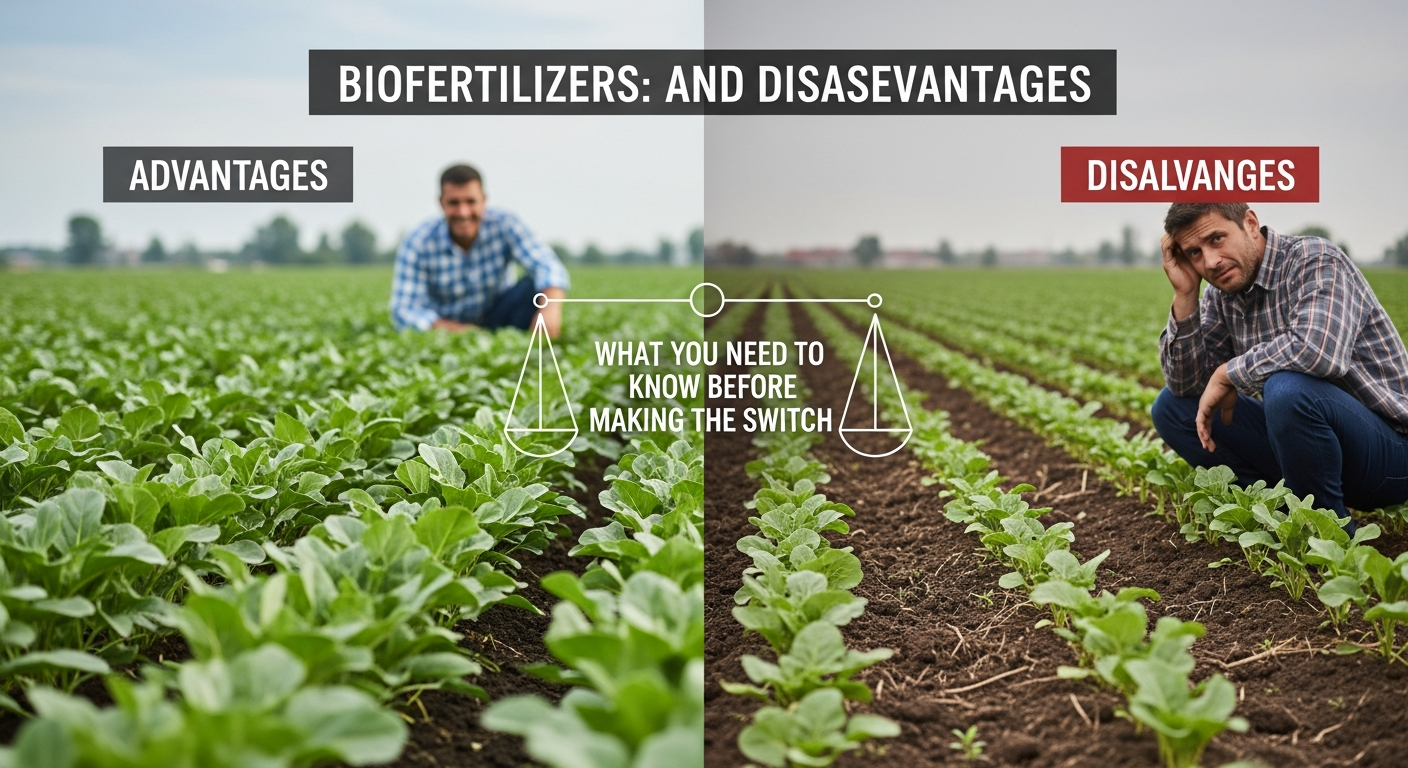
Farmers have traditionally used bio fertilizers as organic or natural agricultural inputs. These inputs are made from beneficial microorganisms, which help to improve the fertility of the soil and make it easier for plants to grow by making nutrients available to the crops. For a farmer to be able to transition to a more sustainable method of farming, it is necessary that he understand the advantages and disadvantages that are associated with bio fertilizers.
One of the primary benefits associated with the use of bio fertilizers is the enhancement of microbial activity in the soil, while improving the long-term soil structure, with little or no negative impact on the environment. The process of using bio fertilizers supports the natural processes of nitrogen fixation and phosphorus solubilization, equivalent to the strengthening of roots and improving nutrient uptake.
It is important to note that bio fertilizers work slowly and do not produce immediate results. In comparison, chemical fertilizers can produce results quickly and are often used by farmers who need to produce crops on high demand or fast-growing crops. Liquid bio fertilizer products, on the other hand, can provide rapid application and activation of microbes in the ground, allowing for the use of these types of products in the more recent farming practices.
Bio fertilizers can be affected by environmental conditions and most bio fertilizers are sensitive to storage conditions. The effectiveness of bio fertilizers will vary depending upon the proper application of the product. By evaluating the benefits and limitations of bio fertilizers, farmers can make better decisions about including bio fertilizers into their agricultural systems and move toward sustainable farming.
Understanding Biofertilizers: Definition and Types
Biofertilizers are organic farm inputs that consist of beneficial microbes and enhance plant growth while improving soil quality. As biofertilizers improve the availability of nutrients for the plants without causing environmental damage, they are commonly used in Sustainable Agriculture. Understanding how to work with biofertilizers will help farmers to assess the benefits and drawbacks of biofertilizers for their farm operation. This will allow farmers to make an informed decision when selecting the appropriate type of biofertilizer for their crops and their soils.
What Are Biofertilizers?
- Biofertilizer is an organic product made up of microbial organisms that will help plants by increasing the availability of essential nutrients.
- Microbial biofertilizer contains beneficial algae, bacteria, or fungi in the environment and the natural function of these organisms in our soil is what helps plants utilize nitrogen, phosphorus and other essential nutrients.
- Microbial biofertilizers allow for an improvement in soil health over a longer period of time compared to the rapid response of chemical fertilizers.
The Importance of Biofertilizers: Biofertilizers provide for long-term improvements to soil fertility, but they can be slower to provide the benefits than traditional chemical fertilizers, which emphasizes the tradeoffs involved with using biofertilizers versus traditional chemical fertilizers within the modern agricultural world.
Types of Biofertilizers Used in Agriculture
There are various forms of biofertilizers, just as there are various forms of nutrients for the various stages of growth.
1. Nitrogen Fixers: These types of biofertilizers will take nitrogen from the atmosphere, and convert it into a form that is usable for crops, such as pulses and cereals.
2. Phosphate Solubilisers : These biofertilizers make phosphorus that is bound up in the soil available for root and flower development.
3. Liquid Biofertiliser : This form of biofertiliser provides the ease of application (liquid) and permits rapid activation of the microorganisms, making it ideal for seed treatment, soil application, and foliar sprays.
4. Important Notice: The effectiveness of each type of biofertiliser depends on the temperature and soil conditions in which they are applied, as well as the exact application method used.
Why Biofertilizers Matter in Sustainable Farming
Biofertilizers are an important component of environmentally friendly, sustainable agricultural processes.
- By reducing the amount of chemical fertilizers used and lowering production costs for farmers, biofertilizers can significantly enhance production efficiency.
- Biofertilizers can enhance soil structure, the ability to retain moisture, and provide a greater variety of microbes within the soil.
- By using biofertilizers, farmers can implement safer agricultural practices that may reduce pollution.
Balanced Perspective:
While they can significantly increase sustainability, farmers will also need to consider the pros/cons of using biofertilizers and use them in combination with other nutrient sources.

The Key Advantages of Using Biofertilizers
Biofertilizers are a proven way to promote healthy plant growth and sustainable soil while providing a variety of benefits for the farmer. Biofertilizers interact with beneficial soil organisms in the soil to improve the availability of nutrients to crops, while at the same time providing less environmental harm than other forms of fertilization. Understanding the benefits of biofertilizers will help farmers find a balance between the advantages and disadvantages associated with the use of biofertilizers, and allow them to implement improved nutrient management practices.
Improving Soil Health and Structure
Biofertilizers are essential to maintaining and restoring soil health and therefore ensure productive farming practices.
- The beneficial microbial activity of the biological fertilisers increases the level of aggregation and air-filled pores within soils, thereby enhancing the overall soil structure.
- Biological fertilisers help to release nutrients from organic matter at a consistent rate over time as they encourage the breakdown of organic materials in a slow and steady manner.
- Biological fertilisers enable soils to hold more water, which in turn decreases plant drought stress.
Importance of Healthy Soil: Healthy soils will promote better root systems and also maintain and improve the balance of microbes in the soil and also create a sustainable source of fertility.
Boosting Crop Yield and Nutrient Uptake
The enhancement of nutrient acquisition provided by biofertilizers is among the most notable advantages of biofertilizers.
- Nitrogen-fixing microorganisms directly provide usable nitrogen to a plant's root system.
- Phosphate-solubilizing microorganisms have the ability to "unlock" the fixed phosphorus that exists in soil.
- A liquid biofertilizer has the benefit of quickly and effectively exposing its constituents to the roots and foliage of plants.
What it means: A greater acquisition of nutrients will result in more robust plants, increased flowering, and the continual enhancement of yield.
Cost-Effective and Environmentally Friendly
- Using biofertilizers decreases the need for expensive chemical fertilizers as well as protecting the environment.
- Lowering production costs for farmers each year allows them to continue producing high-quality products without the worry of outgrowing their productive capacity.
- The use of biofertilizers helps reduce the amount of earth and water pollution resulting from chemical runoff.
- Biofertilizers promote sustainable, environmentally friendly farming practices.
For farmers, by utilizing biofertilizers, they will have the opportunity to save money over the long term while continuing to produce and maintain natural resources available in the future

The Disadvantages and Limitations of Biofertilizers
Biofertilizers play a vital role in sustainable agriculture, but like other types of input, they have their own disadvantages and limitations. By understanding the biofertilizer's advantages and limitations, farmers can use these products properly and avoid developing unrealistic expectations regarding their effectiveness. Additionally, farmers can combine biofertilizers with other sources of nutrients to obtain a balanced crop yield.
Slow Nutrient Release and Delayed Results
Slower Action of Biofertilizers
Unlike chemical fertilizers, which work quickly to provide nutrients, BIOFERTILIZER works through a living organism — the microbe — that has to establish itself in the soil before it can begin to fix nitrogen or solubilize phosphorus.
- Thus, nutrient availability increases over time — not immediately.
- The crop response will take from 2–4 weeks.
- It is not recommended to use biofertilizers when there are sudden, severe nutrient deficiency situations.
The Effect on Crop Growth
- When biofertilizers are used, early plant growth could be seen to be rather slow.
- In addition, crops that grow rapidly, or are heavy-feeders, may also require the use of additional fertilizer.
- Generally, farmers would be disappointed when using biofertilizers expecting immediate results.
Agricultural Insight: Biofertilizers should be considered for maintaining long-term soil health rather than supplying emergency nutrient needs.
Storage Challenges and Short Shelf Life
1. The Microorganisms that Are Sensitive to Biofertilizers
Biofertilizer's content includes microorganisms that are alive and are sensitive to heat, sunlight, and incorrect storing conditions.
Exposure to heat will likely reduce the ability of the microorganisms to be viable.
2. Sunlight can kill beneficial bacteria.
When packaged in an improper way, there is an increased chance of being contaminated before using.
3. Shelf Life of Limitations
The shelf life for most biofertilizer products is between 6-12 months.
For liquid biofertilizers, if they are not properly stored, they tend to lose potency more quickly than their solid counterparts.
Biofertilizers that have expired will yield little to no crop response.
- Challenges Faced at the Famer Level
- Requires storage that is cool and shaded.
- Storage can be difficult in isolated or very hot areas.
Quality of the product varies according to how the product is transported.
Compatibility Issues with Chemicals
Chemicals Can Affect Beneficial Microorganisms in Bio-Fertilizers
Chemical-based pesticides, fungicides, and synthetic fertilizers can all destroy beneficial microorganisms such as those contained in bio-fertiliser.
- Mixing chemicals directly with bio-fertiliser will decrease its effectiveness.
- Chemical products applied to soil can damage the microbe populations.
- Mismatched combinations can create stress on growing crops.
When to Apply Bio-Fertilizers
Signals from chemical sprays must not be combined with the application of bio-fertiliser. A period of between 7 and 10 days should be recommended between chemical sprays and application of bio-fertiliser.
Farmers will need to take the time to create a nutrient application schedule.
- Integrated Farming Issues
- Farmers using a heavy reliance on chemical-based farming may consider bio-fertiliser of limited benefit.
- Bio-fertiliser usage is often misapplied because many farmers do not know the most effective way to use them.
Best Practices
Farmers should apply bio-fertiliser separately from chemical-based fertilisers and they should carefully incorporate bio-fertiliser into their overall nutrient management plans.

Comparing Biofertilizers with Chemical Fertilizers: Which Is Better?
There are two primary sources of nutrients available to farmers today: biofertilizer and chemical fertilizer. Each type of fertilizer plays a different role in contributing to crop nutrient value, soil health and overall productivity of the farm for many years into the future. By understanding the advantages and disadvantages of biofertilisers vs. chemical fertilisers, the farmer will be able to make an informed decision based on the needs of each crop, the condition of the soil on their farm, and the long-term sustainability goals they have established.
Nutrient Delivery and Speed of Action
Chemical fertilizers and biofertilizers are different when it comes to the speed at which they provide nutrients for crops.
How do Chemical Fertilizers Work?
1. Chemical Fertilizers provide immediate nutrient availability through a soluble form.
2. Chemical fertilizers can cause rapid visible plant development.
3. Chemical Fertilizers are great for instant correction of nutrient deficiency.
How do Bio-fertilizers Work?
1. Bio-fertilizers can gradually release nutrients through the process of microbial activity over time.
2. Bio-fertilizers will continue to increase nutrient availability over the long term.
3. Bio-Fertilizers support a stronger root system and promote soil biology.
Overarching Summary: Chemical Fertilizers offer quick results but are only effective temporarily whereas bio-fertilisers can develop long-term fertility.
Liquid Biofertilizers will work slightly faster than solid forms of Biofertilizers because in the case of liquid, due to increased rate at which the microbes begin to act when incorporating them into the soil.
Environmental and Soil Health Impact
The use of chemical and biofertilizers demonstrates a substantial difference in the long-term impact on soil and the environment.
Chemical Fertilizers Have:
- Created degradation in soil quality and fertility over time
- Created pollution in the groundwater and increased salinity
- Reduced the number of beneficial microbes in the soil
Biofertilizers Have:
Increased the structural integrity of the soil (improved soil structure), which means it holds more water and nutrients, and improved
- the variety and number of microbes in the soil (increased microbial diversity)
- Reduced the amount of chemical (fertilizer) residue in both the soil and the crop itself
- Promoted sustainable agricultural/environmentally friendly methods
Summary: Biofertilizers contribute to creating soil health and protecting the environment; therefore, they present a safer alternative to using chemical fertilizers for long-term agricultural practices.
Cost and Long-Term Sustainability
Cost-effectiveness of biofertilizers is about much more than price per bag, it’s also about future returns.
The following is a list of factors affecting the cost of Chemical Fertilizers:
- Relatively low initial price per application
- Requires multiple applications throughout the growing season
- Increased manufacturing costs and rising energy prices
The following is a list of factors affecting the cost of Biofertilizers:
- Somewhat more effort and handling than other types of fertilizer
- Offers lower costs for input materials in the long run
- Enhances the quality of soil, which reduces the need for chemical fertilizers in the future
Key Takeaway:
While it may seem that chemical fertilizers are less expensive than biofertilizers, the long-term benefit and the environmental impact of using biofertilizers is significantly greater.

How to Maximize the Benefits and Minimize the Drawbacks of Biofertilizers
Soil quality will improve over time with the use of bio-fertilizer as opposed to organic fertilizers if all of the: Correctly Using Bio-fertilizers, Combining them with Organic Fertilizers and Using Quality Products are used properly.
In the end, using bio-fertilizers along with these three important areas provides farmers an opportunity to maximise their bio-fertilizer utility and produce reliable, consistent crop yields throughout the entire season.
Using Proper Application Techniques
Applying biofertilizers correctly will determine the success level of any biofertilizer product. Biofertilizers contain live, active microorganisms, therefore it is essential that the proper handling of biofertilizers occurs for them to survive and become active in the soil.
- Biofertilizers should ideally be applied either early in the morning or late in the evening to reduce the impact of heat stress on the product.
- Use methods recommended for using biofertilizers, including seed treatments, dipping roots into the biofertilizer, applying the biofertilizer directly to soil, or foliar spraying the biofertilizer.
- Liquid biofertilizers must be diluted according to the manufacturer's instructions. When diluted properly, liquid biofertilizers are able to be applied more evenly throughout the soil.
By applying biofertilizers correctly, root colonization by the microorganisms within the biofertilizer will be maximised, resulting in higher levels of nutrients available to the plant, and a decreased risk of microbial loss.
Combining Biofertilizers with Organic Inputs
Biofertilizers have the greatest impact on soil health when used in conjunction with organic material (which provides food for soil microbes and improves soil structure). Organic inputs should be combined with the use of biofertilisers such as compost, farmyard manure, vermicompost and green manure.
- Organic inputs also provide a food source for the beneficial microbes that are increased in numbers by the application of biofertilisers, and as such, increase their effectiveness.
- Combining organic inputs with biofertilisers will also increase moisture retention, aeration, and the long-term fertility of the soil.
- By utilising both organic inputs and biofertilisers, farmers can create a more balanced approach to growing healthy crops.
Choosing High-Quality, Tested Products
One of the important factors that impact crop response and field performance is the quality of the bacteria in;
- Always use certified products that have a clear listing of the number of bacteria in them and when they expire.
- Avoid products that are of low quality (and untested), as they can contain inactive or harmfully caused microbes.
- Store products according to the manufacturer’s instructions, especially for liquid products to keep microbes alive.
The use of high-quality, BIOFERTILIZER products, assures a lower risk of inconsistencies and will give the farmer a more reliable result from their crops.

FAQ:
Q1. What are the main advantages of using biofertilizers?
Biofertilizers improve soil health, enhance nutrient availability, reduce chemical fertilizer use, and support sustainable crop growth.
Q2. What are the major disadvantages of biofertilizers?
They work slowly, depend on environmental conditions, have limited shelf life, and may not give immediate results like chemical fertilizers.
Q3. How does liquid biofertilizer help in agriculture?
Liquid biofertilizer delivers active microbes quickly, improving nutrient uptake and promoting faster root and plant growth.
Q4. Can biofertilizers fully replace chemical fertilizers?
No, they are best used as part of an integrated nutrient management system rather than a complete replacement.
Q5. Are biofertilizers suitable for all crops and soils?
Most crops benefit, but performance may be lower in highly acidic, saline, or degraded soils.
Conclusion: Are Biofertilizers the Right Choice for Your Agricultural Needs?
Using biofertilizers is an environmentally friendly and sustainable means of enhancing soil fertility and increasing productivity from crops. Biofertilizers improve soil nutrients available to crops, provide support to the root systems of crops, and improve the overall long-term health of the soil by improving the environment for beneficial microorganisms to thrive.
For farmers looking to decrease reliance on chemical fertilizers to maintain a high level of productivity, biofertilizers may play a major role in the agricultural evolution of their production practices. The differences in performance between various biofertilizers, crop types, soils, and locations is dependent upon several variables including but not limited to soil type/characteristics (pH, soil texture, organic matter content, and soil moisture), climatic conditions, and accurate application techniques. The immediate effects from chemical fertilization versus gradual and natural reactions from the use of biofertilizers produce a healthy, robust and productive growing environment. Biofertilizers as an I.N.M. will generally produce the best results when combined with traditional agricultural practices.
In conclusion, the decision of whether to use biofertilizers or not must be made based on the farmer's objectives, desired outcome and long-term sustainability goals for his/her operation. If the farmer's focus is on environmentally-friendly agriculture, time-efficient crop production and soil restoration through the use of biofertilizers, then investing in biofertilizers is worth the investment. By properly utilizing biofertilizers in conjunction with good agricultural practices, a farmer can achieve a high level of productivity without damaging the environment.