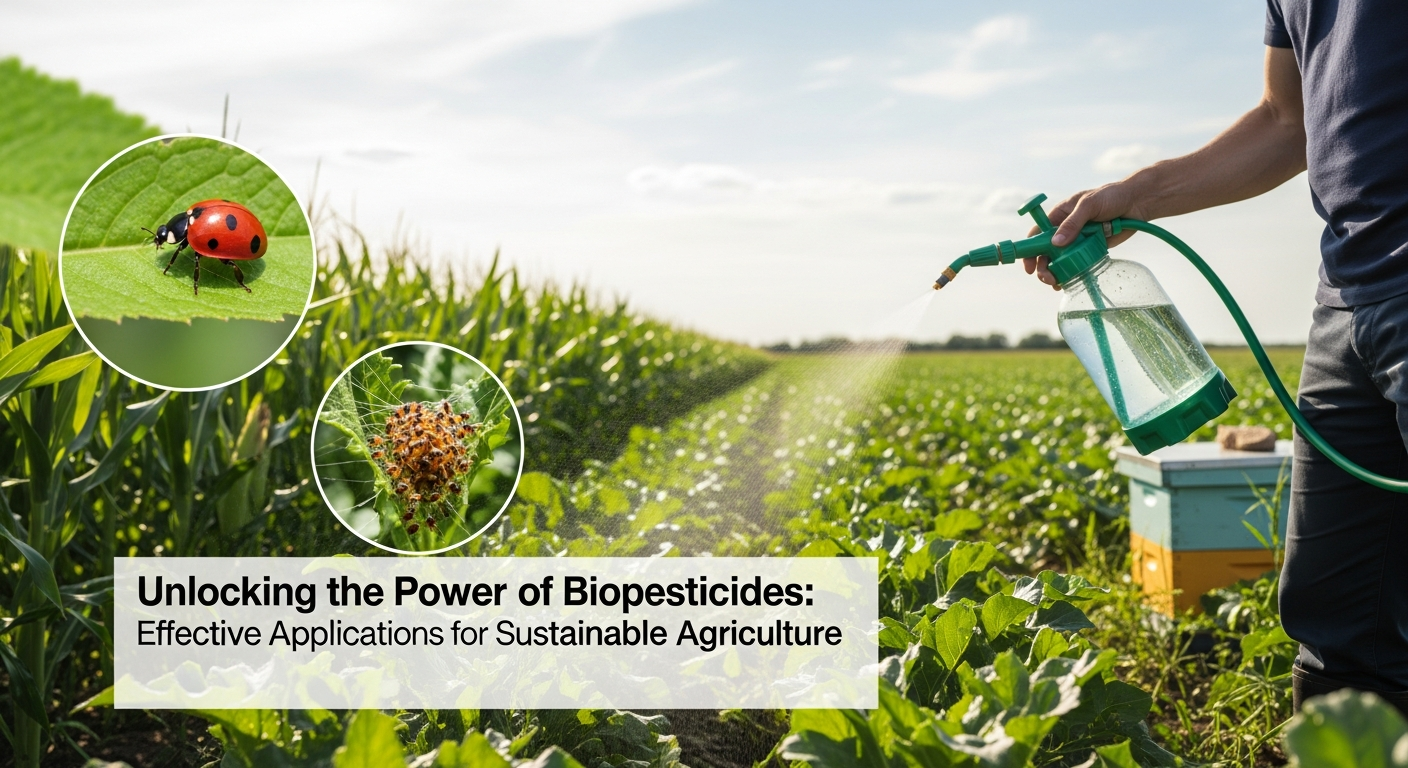
Today, biopesticides are rapidly emerging as a trusted method for pest management in farming because they are Natural alternatives to chemical pest control Methods, and they help farmers grow crops sustainably through Good Soil, GOOD PLANT GROWTH, and Good Water Management.
Biopesticides are derived from beneficial microorganisms, plants, and other organic substances that are effective in controlling pests through Eco-Friendly pest control. They are an effective, targeted way to control pests, maintain healthy soils, and promote the long-term viability of agriculture without negatively affecting the environment.
As biopesticides are almost completely broken down within a short period after application, biopesticides provide Sustainable Food Production Methods for producing clean and safe food products for consumers. Agricultural producers are using biopesticides such as the various forms of Microbial Sprays, Botanical Oils, and Seed Treatments that provide high levels of pest protection but operate within the bounds of nature.
Biopesticide use is gaining increase popularity for vegetable, fruit, grain, and legume crops. Each successful application of a biopesticide brings us closer to achieving a Sustainable and Healthy Future for Agriculture and Society.
Understanding Biopesticides: Definition and Types
Biopesticides are extremely beneficial as today's farmers look to use them to continue to be successful.
The different types of biopesticides fight against specific types of pests while being safe for the crops, environmentally friendly, and effective at pest management using natural means. Biopesticides can also be applied at different stages of development of a crop, are easy for farmers to use, and promote healthy plants and soil over time.
Like each serves a specific purpose during a baby's development (e.g., barley provides energy), so too do each type of biopesticide serve a different purpose in protecting crops from different types of pests.
What Are Biopesticides? Definition Explained
Biopesticides are pest control products that can be made naturally from living organisms, such as bacteria, fungi, plants and naturally occurring substances.
- They are non-toxic, environmentally friendly, and are perfect for sustainable agriculture.
- Biopesticides allow for reduced use of chemicals while maintaining healthy soil.
- They are ideal for farmers who want to have a more sustainable method for protecting their crops.
Biopesticides are soft-acting and, therefore, suitable for long-term maintenance of fields, with little or no residue.
Types of Biopesticides: Microbial, Botanical & Biochemical
Microbial Biopesticides consist of beneficial microorganisms, including bacteria, fungi, and viruses that provide pest protection.
- Microbial biopesticides are an example of natural pest control. Biodiversity is preserved while pests are damaged by releasing beneficial microorganisms that may be in competition for food or disease with the pests.
- Microbial Biopesticides include Trichoderma spp., Metarhizium spp., and Bacillus thuringiensis (Bt).
- Microbial Biopesticides are frequently used to protect crops of all types, including fruits, vegetables, and grain.
Microbial Biopesticides appeal to farmers who seek to use highly effective pest control methods without disturbing the natural balance of the ecosystem.
Benefits of Using Bio Pesticides in Modern Farming
Plant-derived biopesticides, made from plant extracts (such as neem and lemongrass) and essential oils include:
- neem
- lemongrass
- garlic
- -pyrethrum
Most plant-derived biopesticides act in one of two ways: They repel or kill pests via direct contact with the pest, or they produce toxic effects through ingestion.
Plant-derived biopesticides are:
- benign to man & animals including pets & beneficial insects (for example, pollinators);
- rapidly decomposed without leaving any toxic residue;
Best Use:
- vegetable & fruit crops, oilseed crops, organic farming.

Biopesticide use in Agricultural Development has completely altered how farmers Grow crops. Unlike traditional chemical-based styles that Attack every aspect of the Ecosystem in an Aggressive manner, Each Company provides a more gentle and specific environmentally Sustainable biopesticide options to kill insects; Microbial-Based pest control increases Soil's Ability to develop Natural defences; Plant-Based Pesticide Control or Botanical extracts Utilize the Plant's ability to Protect crops from pest Attacks; while Biochemical pesticides prevent Insect Reproduction through chemical means.
When used together, biopesticides provide Farmers a Safe, Sustainable and Productive Method of Growing Food; and provide a Foundation for Resiliency for Future Generations of Farmers
The Science Behind the Application of Biopesticides
the use of biopesticides offers a variety of plant protection types. Various bioproducts can be found, and each bioproduct has its own mode of action, selectivity, and role; therefore, applying biopesticides to agriculture supports sustainability.
The following are basic scientific principles explaining each one clearly and concisely.
How Bio Pesticides Work: Mode of Action
The different classes of biopesticides have different modes of action, much like the differences in how our bodies respond to different types of millet.
Some examples of the main biopesticide modes of action include:
1.Microbial Action -
The biopesticides of beneficial fungi and bacteria kill and control insects and disease through direct attack on them.
2.Toxins -
The beneficial fungi and bacteria excrete natural chemicals to prevent the growth of insects and disease-causing organisms.
3.Inhibition -
Biopesticides will disrupt the life cycle of an insect by preventing the egg or larval stages from developing.
4.Competition & Colonization -
The beneficial fungi and bacteria will first colonize the plant surface (the leaves and stem), which prevents disease-causing organisms from establishing themselves.
5.Enzymes -
The beneficial fungi and bacteria produce enzymes that can digest through the protective outer covering of an insect as a normal means of controlling and killing the insect.
Targeted Pest Control & Selectivity
Similar to how millets can help soothe a baby’s stomach, provide energy and build iron, biopesticides provide:
- Targeted activity.
- Minimal interference with positive insects.
- Human and animal safety.
- Lower chance of harming crops.
Role of Biopesticides in Integrated Pest Management (IPM)
The integration of integrated pest management (IPM) programs gives farms an opportunity to create healthier systems using natural products. When strategically used within the context of an IPM program, Farmers are incorporating biopesticides into their pest control program.
Biopesticides are important components of integrated pest management (IPM) programs.
Determining what types of biopesticides are used will depend upon your individual needs and preferences, but all biopesticides have similar advantages.
Examples include:
- keep the use of chemical pesticides as low as possible
- help reduce the development of pest resistance
- serve as additional tools when used with other pest management tools (EX: traps, cultural practices, monitoring tools).
create long-lasting benefits to the health of your soils and plants.
Biopesticide applications to crops in an integrated pest management (IPM) program can be considered comparable to incorporating healthy food into an infant's diet, consistently providing the crop with protection while being virtually non-toxic. Because of the natural and comparatively low toxicity of biopesticides, they can be applied far more often than many chemical pesticides during preventative applications rather than relying upon the use of strong chemical pesticide applications in the event of an immediate crop threat.

Methods and Techniques for Applying Biopesticides in the Field
Similar to the growing stages in a baby's development where certain varieties, the use of biopesticides on crops changes depending on the needs of the plant, the type of soil the plants grow in, and the amount of pests that are present. Each application of a pesticide has its own advantages—whether it be for protecting new growth (tender seedlings), help with root development, or preventing damage to the foliage caused by insect or disease.
Below are some successful methods that farmers have employed in using biopesticides in order to maintain healthy, productive crops.
Foliar Sprays: Most Common Application Method
“Foliar Applications” are commonly used in agriculture. By applying biopesticide directly to the leaves, you stop insects and pests from eating or depositing eggs onto the crop.
- The effectiveness of the foliar spray is very rapid for insects that feed by chewing, and for insects that suck juices from the plant.
- Botanical and Microbial biopesticides, such as Bacillus and Neem Oil, and Fungus Based Spray, are ideally suited to foliar applications.
- Foliar sprays are also a way for plants to access the nutrients and beneficial compounds found in the biopesticides through the leaf surface.
Why Foliar Applications Work
The foliar application forms a barrier against insects, much like how a Baby's First Smooth Baby Food is a protective barrier against the outside world. The foliar application is often the first defense that the crop encounters against insects and pests.
Soil Treatments and Root Zone Applications
- The main focus of soil application is to deliver the right (bio)pesticide(s) to the area around developing plant roots.
- It is particularly effective at preventing and controlling pest problems that occur below the soil surface.
Examples include root grubs, nematodes,
- soil fungi and other harmful bacteria.
- Soil application enhances nutrient availability, improves soil quality, and increases populations of beneficial microorganisms.
- The advantages to your root systems are similar to how Bajra promotes digestion in infants.
Applications can occur:
- Through Mixing in Drip Irrigation Lines
- Drenching Roots in Liquid
- Broadcasting in Soil by Topdressing with Compost
- Treating the Root Zone Deep within the Soil – Similar to how Foxtail Millet provides infants with a sustained source of ene
Seed Coating and Seedling Protection Techniques
Baby millet protects crops from their most vulnerable and newly germinated phase, as well as providing babies who are sensitive to tummy knots with stability during digestion.
The addition of bio pesticide coatings to seeds helps prevent many different species of fungi and diseases from soil.
The uniform emergence of seedlings and the enhancement of seedling growth.
The methods of application can be applied to grains and pulses and to vegetable and oilseed crops.
Benefits of using this product:
- Prevention of soil-borne damping-off illnesses.
- Lower mortality rates occurring during the growing stage for seedlings.
- Providing a firm foundation for a robust sprout.
- The way this product works is similar to the Barnyard millet.
The product offers lightness, gentleness, and comfort for sensitive beginnings.

Biopesticides are becoming more widely used in Sustainable Agriculture for many reasons, as they are gentle yet powerful. Each of these methods will play an important role, just as each type of millet provides a different benefit for the growth of a baby. Biosprays provide immediate protection for the leaves of plants from threats like disease or insect damage. Soil application fosters the natural development of the soil ecosystem, as well as the proper development of the plant's roots. Coating seeds creates an environment that is safe for young plants to germinate and develop, while preventing disease attacks during the early growing stages.
Advantages of Using Biopesticides Over Chemical Pesticides
Biopesticides are beneficial for crop production, and they are similar to the way different types the growth of babies at different stages of development. Biopesticides are gentle on the ground , they are safe for the environment and farmers, and they are effective in protecting crops from harm. Unlike conventional pesticides that have allowed pests to develop resistance to conventional pesticides much more quickly, biopesticides use multiple natural modes of action so that pests cannot develop resistance as easily as they do to conventional pesticides. Therefore, when farmers use biopesticides, they will benefit from more prolonged protections against crops being harmed and an increase in crop yields as well. In addition to the benefits of biopesticides, the agricultural industry can maintain more balanced ecosystems through the application of biopesticides, improve the physical structure of the soil on the farm, and promote healthier plants as time goes by. Below are the main benefits of using biopesticides written simply and clearly
Reduced Chemical Residues & Safer Food
Agrochemical free biopesticide production is a key consideration when considering crop productivity, crop safety, and crop quality.
- Bio pesticides are naturally occurring and biodegradable. Therefore, there should be minimal toxic residue remaining on biopesticides after their use on crops.
- For example, the majority of all products containing biopesticides will not accumulate in the crop, unlike chemical pesticides.
Agricultural use of bio-based pesticides allows for a clean and sustainable food supply from farm to table. Bio-based pesticide applications allow growers to create and distribute cleaner fruit and vegetable products to their family, children, and communities. In addition, as demand for chemical-free food continues to grow, bio-based solutions represent an alternative pathway to creating a healthier food supply.
Eco-Friendly Pest Control for Sustainable Agriculture
Biopesticides are an effective method of protecting our crops while protecting the health of soil microbes, pollinators and the water bodies that surround them.
- They do not introduce any pollutants into our rivers or lakes.
- They will continue to promote healthy ecosystems that support biodiversity.
- Biopesticides are made from natural sources, which makes them the best option for long-term sustainability.
- Biopesticides are eco-friendly solutions that promote sustainable farming practices
Biopesticides act in concert with the environment. Biopesticides will help protect beneficial insects and pollinators such as bees and butterflies, will provide nutrients to soil microbes and will introduce no contaminants into water sources. Biopesticides can enhance farmers' crop production, while maintaining the integrity of the environment, to support long-term productivity and sustainability of the farm and the surrounding area.
Lower Risk of Pest Resistance & Long-Term Benefits
Pesticides made with chemicals usually cause some animals and insects to develop resistance, whereas Biopesticides do not.
- Biopesticides work by using natural means that cannot be easily adapted by most pests.
- They provide continuous support and productivity to fields for many growing seasons.
- Using Biopesticides as an alternative for chemical pesticides is a very beneficial and sustainable option.
Incorporating biopesticides in agriculture promotes a balance within nature; improves soil conditions; and fosters the production of healthy plants throughout their growing years.

Challenges and Limitations in the Application of Biopesticides
Bio-pesticides provide sustainable forms for organic growers and farmers alike; however, baby's growth, development and the situation in which they grow, so too the effectiveness of biopesticides is dependent upon many variables including environmental conditions, proper application method and farmer knowledge and skills. Although biopesticides are receiving increased acceptance among the agricultural community, many obstacles are preventing farmers from fully using biopesticides and maximizing their potential benefits.
The limitations that many farmers encounter when using biopesticides are found below, along with a simple explanation and relativity to a mother's selection of various types of millets based on their baby's growth stage.
Field Efficacy Issues Under Varying Conditions
Bio-pesticides require the same method of storage with regard to moisture content, temperature, and exposure to sunlight; therefore, mis-storing or mishandling them will shorten their effectiveness.
Limitations:
- Reduced shelf life compared to chemicals.
- They are sensitive to heat, and they should not be exposed to sunlight.
- They may become contaminated by micro-organisms.
- They should be stored in a cool, dry area.
- They lose potency if handled improperly.
Determining to keep biopesticides fresh and effective over an extended period of time can be challenging. There are three main reasons that bio-pesticides are usually problematic for farmers to store and use. Farmers living in rural areas typically have very limited access to refrigerated storage space, thereby making it extremely difficult to store their biopesticide products properly. If farmers do not store and handle their biopesticide products properly after purchase, the application of these products will produce poor control of target pests.
Storage, Handling & Shelf-Life Limitations
Millet varieties are the exact same way. Both millets and biopesticides have variables that will affect their performance based on environmental
conditions such as:
Environmental factors that affect the performance of biopesticides can vary from temperature changes, high sun, heavy rainfall following application, humidity, and soil nutrient availability, etc.
Additional Information:
- Biopesticides are living organisms (microbes)
- In order for them to be successful, they require an appropriate environment in order to survive and work.
- High temperatures can kill beneficial microbes; Heavy rainfall would wash away biopesticide treatments along with their active agents;
- Low humidity levels will significantly reduce their efficacy.
Because of the above variables, it is vitally important to apply biopesticides at specific times of the day (early morning, late evening, or during stable weather conditions). Farmers need guidance to help them pick the most appropriate biopesticide for their crop type and time frame.
Farmer Awareness and Adoption Barriers
Farmers have largely relied upon their previous experiences with chemical pesticide use as a result of the barriers to adoption of bio pesticides (biological) that are present today. These barriers include:
1. Lack of knowledge about biopesticides provides an opportunity for many farmers to become more aware of the application and benefits of biopesticides;
2. Limited availability of training programs that provide training on proper mixing, dosage application and understanding the requirements needed for successful environmental application of bio pesticides;
3. Chemicals produce faster results than bio pesticides which is often viewed as a negative factor;
4. Limited understanding by farmers of how microbes behave in agriculture;
5. Limited availability in many cases within rural markets.
It is critical that agricultural professionals utilize strong educational campaigns along with substantial training programs in order to properly advocate and educate farmers on the use and application of bio pesticides.

Success Stories: Case Studies Demonstrating Effective Application of Biopesticides
they grow through different life stages; likewise, biopesticides serve different crops according to the particular requirement of each crop. Each type of produce (fruits, vegetables and grains) receives its benefits differently through the use of biopesticides. The following examples demonstrate how farmers have successfully implemented the use of biopesticides with environmentally friendly and natural agricultural methods to produce superior results.
Biopesticide Success in Fruit Crops (e.g., Grapes, Mango)
Fruit crops are delicate and highly sensitive to chemical residues. That’s why the application of biopesticides in agriculture has become a game-changer for fruit farmers.
Grapes
Grape farmers have seen excellent results using Trichoderma, Bacillus subtilis, and neem-based bio pesticides.
- Controls fungal diseases like powdery mildew
- Keeps fruit skin clean and residue-free
- Improves plant vitality throughout the season
Mango orchards treated with pheromone traps and microbial sprays report:
- Reduced fruit fly infestation
- Better flowering and fruit retention
- Zero chemical residue on the fruit
Effective Use in Vegetable Farming (Tomato, Cabbage, Chilly)
Because vegetable crops are quick-growing, they also face many insect attacks. Farmers are currently using biopesticides to provide constant, safe, and sustainable protection against these pests.
Tomatoes:
Biopesticides, such as Beauveria bassiana and Neem Oil, have assisted farmers in managing Tomato Fruit Borer and Whiteflies effectively.
Tomatoes that are sprayed with biopesticides grow healthier, produce better fruit, and reduce crop losses.
Cabbages:
- Bt (Bacillus thuringiensis) has been shown to protect Cabbage from caterpillars.
- Bt provides natural protection for the leaves of the plant, so there are no harmful residues.
- It allows for production of fresher, greener crops.
Chilly Peppers:
Chilly Pepper growers have found success using botanical extracts and Verticillium lecanii (bio pesticide)
obtain the following benefits:
- Better control of Thrips and Mites.
- Improved Vigor of the Plants.
- Higher Quality of the Yields.
- Short Sample Style Paragraph
Vegetable Crop Production is at an all-time high due to the use of biopesticides. Biopesticides can be applied as quickly as they will provide protection without harming soil microbes. Similar to Mils (Milling Crop) being gentle and yet effective; biopesticides are just as effective but with no adverse effects.
Grains & Field Crops: Scaling Biopesticides in Large Acreage
Biopesticides are revolutionizing the agricultural industry and continue to produce fantastic results for fruit vendors.
Fruit crops are sensitive, as are many pesticides, leaving the end consumer wondering what harmful chemicals they are ingesting. By using biopesticides such as Trichoderma, Bacillus subtilis and neem-based biopesticides, fruit vendors are experiencing phenomenal results when growing grapes.
Examples of the phenomenal results:
- Protect against fungal disease such as powdery mildew
- Ensure fruit remains free from any pesticide residue or contaminants
- Provide support, increasing the vitality of plants throughout their entire season.
Mangos :
- Pheromone traps and microbial sprays are producing phenomenal results on mango orchards. Some of the results include:
- Decreased infestation of fruit flies
- Superior flower and fruit retention
- No chemical residues on crop
Fruit crops are best protected with biopesticides. The result is healthier fruits with superior taste; biopesticides provide clean produce and no toxic chemical by-products. Think of biopesticides protecting fruit the same way as gentle millets protected a newborn’s digestive system.

In both horticulture and field grain production, biopesticide applications have proven successful for farmers who desire to create clean harvests while preserving their soil health without relying heavily on synthetic chemistry. Each biopesticide offers specific advantages; such as for example, the benefits of microbial sprays and botanical available oils, and the advantage of using the latter for the growing conditions for individual cereals provides totally different comparisons or advantages. Similarly, as biopesticides continue to find a home in agricultural practices, farmers have begun to see an increase in their crops' quality; a corresponding increase in profitability; increasing crop yields over time and improving sustainability of their businesses. The future of sustainable agriculture lies with biopesticides as the next step toward smart and environmentally friendly business practices.
The Future Outlook: Innovations Driving Better Application Methods
Similar to their role as a food source through millet varieties, modern agriculture is rapidly increasing the use of technological advances such as biopesticides to help enhance the application of pest management. The innovations presented here will create improved experiences for growers by increasing crop protection efficacy, extending the effective life of these materials, and allowing for increased ease of use — all of which will result in healthier food products and more sustainable growing conditions moving forward.
We have identified three major innovations reshaping the application of biopesticide products in agriculture:
Advanced Formulations for Longer Stability
Recent advancements in the formulation of bio-pesticides are extending shelf life, field performance and usability, similarly to the long term energy provision of various types of millets (e.g. Ragi) for infants. By increasing the shelf life and field performance of bio-pesticides, bio-pesticide application has been made much more effective.
Advantages of advanced formulation include:
- Microencapsulation Technology
- Microencapsulation protects microbial cells and/or botanical extracts within small capsules, which allows for slow, steady release onto the crops.
Oil-based suspensions
- Oil based suspensions enhance the sticking and spreading of the application on the plant leaves, and reduce the number of times needed to apply.
- Formulations that protect against UV light damage
UV protective formulations shield the sensitive biopesticide ingredients from sunlight that damages the ingredients.
Precision Agriculture Tools for Better Application of Biopesticides
The introduction of precision agriculture will help to provide biopesticides through using precision application techniques. Each spray application will be accurately delivered to where it will do the most good, like the different types of millets fed to infants at different times in their development.
There are Three Major Technologies that Provide Farmers with Assistance:
1.Drones used for aerial application of biopesticides provide:
-Uniform coverage
-Reduced loss of biopesticides
2.Artificial Intelligence/Sensor-Based Monitoring Systems Provide Farmers with:
-Early detection of pest activity hotspots
-Assistance in deciding when to apply biopesticides.
3.GPS Guided Systems Provide Farmers with:
-Accurate applications (accurate dosages).
-Elimination of overlapping and chemical runoff.
4.Smartphone Apps Provide Farmers with:
-Identification of different types of pests.
-Correct biopesticide, timing, and application technique based on pest identification.
Just like Foxtail Millet boosts brain function in developing infants, farmers who use precision tools can make smarter decisions. Precision technologies enable farmers to closely monitor their crops and to apply biopesticides to those crops in the right location and at the right time; resulting in less wasted money, more effective treatment and reduced threat to the environment
Trends Shaping Sustainable Pest Management
The rapid evolution of sustainable pest management is creating more farmer's use of diversity of growing methods benefiting to following conditions of soil, crops and environment. There are also millets grown for different needs of the digestive systems of infants.
Most Current Trends
- Low Input Integrated (LIPM) systems;
- Methods of biological control using insects, birds, fungi
Reducing our reliance on chemicals;
- Increasing use of microbial and botanical based products
- Less Toxic to pollinators;
Food Safety (No pesticide residues on fruits/vegetables)
- Creation of Strains of BiomoDisease Resistant Bio Products;
- Still are useful even when grown in extreme heat or unpredictable weather
Development of Soil Health-oriented Management Strategies;
- Increased natural crop resistance to disease;
- Less frequent occurrence of pest outbreaks;

The modern usage of Biopesticides in agriculture is greatly influenced by technology developments which increase the cooperative interaction of the developed products each variety of crops provides to the child’s development stage. By utilizing more advanced product formulations, farmers have a longer-term stability; through the use of precision farming methods, farmers can use less product and produce healthier and more disease-resistant crops while still maintaining lower environmental impacts; with the trend towards sustainable forms of farming, farmers can depend less on the use of synthetic pesticides and more on natural sources to grow food and have confidence that future generations will be able to depend on farming systems that are safe for them to use.
FAQs
Q1. What are biopesticides and how do they work?
Biopesticides are natural pest-control products that work by targeting specific pests using microbes, plant extracts, or natural compounds.
Q2. Why is the application of biopesticides in agriculture growing?
Because they reduce chemical residues, protect the environment, and support healthier, more sustainable farming.
Q3. Are bio pesticides more effective than chemical pesticides?
They can be very effective for targeted pest control and long-term soil health, especially when used correctly.
Q4. What is the best method for the application of biopesticides?
Foliar spraying is most common, but soil treatment and seed coating work well depending on the crop and pest.
Q5. Do biopesticides work in all weather conditions?
They perform best in moderate conditions; extreme heat, rain, or strong sunlight can reduce their effectiveness.
Q6. Are biopesticides safe for humans and beneficial insects?
Yes, they are eco-friendly, low-toxicity, and safe for farmers, consumers, pollinators, and natural predators.
Q7. Can biopesticides fully replace chemical pesticides?
In many cases they can, but the best results often come from integrating them with IPM and minimal chemical use.
Conclusion: Embracing the Application of Biopesticides for a Greener Tomorrow—Take Action Now!
biopesticides reduce the risk of developing resistance to pesticides, and enhance biodiversity. The combined benefits of creating better ecosystems on farms, include a better chance to clean up water, improve soil quality, and create safer food for consumers; thus creating a benefit for society at large and the entire environment.
For farmers, biopesticides represent more than just an alternative, but they are also investments in their future. In today's world, with the modern format of biopesticides, precision based technology, and increasing government support, there has never been a better time for farmers to incorporate biopesticides into their standard pest management program; whether biopesticides are used alone, or in conjunction with traditional pesticides.