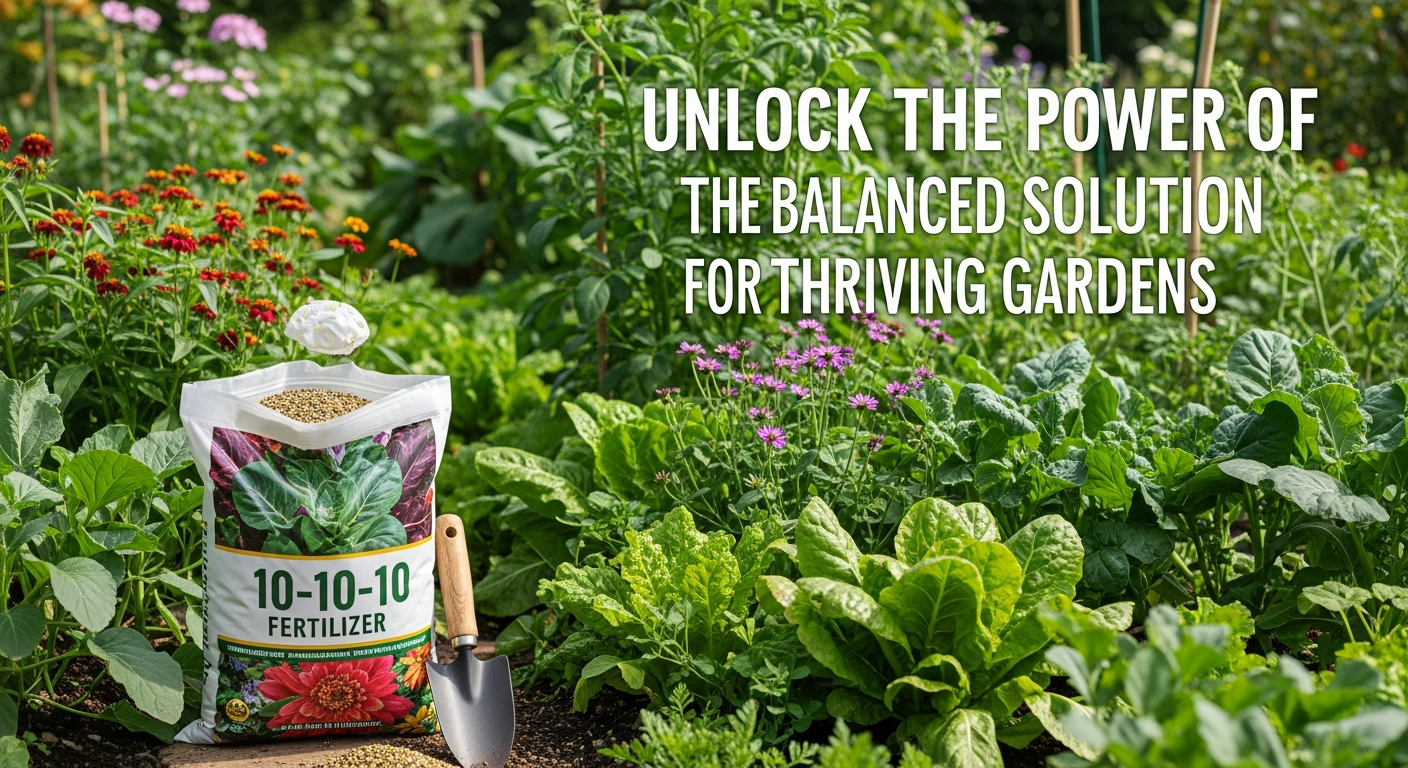
To have the best possible garden, one must obtain the appropriate fertilizer, which promotes robust root development, abundant foliage, and increased blooming potential. 10.10.10 fertilizer has been a multi-purpose source of nutrients for gardeners for many years, and just like modern grain has provided sustenance for families for centuries, its balanced component mix of the three most critical elements, nitrogen, phosphorus, and potassium, allows the growth and productivity of plants at an optimum level.
10 10 10 Fertilizer is a balanced composition of three nutrients: nitrogen, phosphorus, and potassium provide sufficient nutrients for the plant to grow healthier and develop more abundant blooms. Nitrogen is responsible for the foliage growth (green colour) of plants. Phosphorous is critical to root establishment and supports flowering, and potassium aids the overall plant's strength and durability. Together these nutrients establish the proper balance within your soil, making it easy for your plants to absorb and create an excellent foundation.
Because of their gentleness and versatility across all plant types, 10 10 10 fertilizer have been a successful combination for many types of gardens, lawns, vegetables, and flowers. Whether you are planting new seeds, revitalizing old poor soils, or getting your yard ready for seasonal growth, 10 10 10 Fertilizer can assist you in providing your plants with a consistent and reliable food source.
Each application of the 10 10 10 Fertilizer contains a complete, balanced supply of nutrients needed for each type of plant in your garden, from vegetable rows to flowering rows, to turf grass and container plants. 10 10 10 Fertilizer makes it effortless for gardeners to have all of the things they need to be successful in their gardens.
What is 10-10-10 Fertilizer? Understanding the Numbers and Composition
Balanced and all-purpose,10-10-10 Fertilizer is a 3-way Fertilizer with 10% of each of the three primary nutrients necessary for plant development : Nitrogen (N), Phosphorus (P) and Potassium (K). The three "10's" represent the three nutrients :N, P and K and create a "Nitrogen", "Phosphorus" and "Potassium" ratio of 10 - 10 - 10. Fertilizer 10 -10 -10 works for all types of plants including lawns, vegetables, flowers, shrubs and for general vegetable gardening because it supports the entire plant system.
This balance in nutrient content allows for consistent feeding throughout a plant's growth period, which results in a more robust root system, denser foliage and a plant that is better prepared to withstand disease. If you are establishing new plants or trying to revitalize existing ones, Fertilizer 10 10 10 is an easy to use and efficient means of supplying nutrients to your plants for various types of soil and growing conditions.
What Does the 10-10-10 NPK Ratio Mean?
The NPK ratio indicates how many of three essential plant nutrients are in a fertilizing product as a percentage. For example, a 10-10-10 fertilizer has each nutrient represented as a 10% weight content.
The NPK Components Defined:
Nitrogen (N)
10% of the product weight - promotes green, leafy growth, produces chlorophyll, is particularly needed by lawns, leafy vegetables, ornamental foliage.
Phosphorus (P)
10% of the product weight - strengthens root structure, encourages flowering and fruiting, aids in development shortly after seeds germinate.
Potassium (K)
10% of the product weight - promotes disease resistance and strengthening of overall plant structure, assists with drought resistance.
Key Ingredients in Fertilizer 10-10-10
The 10 10 10 fertilizer consists of all three primary nutrients in equal amounts. The manufacturer typically uses slightly different formulations; however, the main ingredients are very similar.
- Nitrogen Sources: Urea, Ammonium Nitrate, Ammonium Sulfate
- Phosphorus Sources: Ammonium Phosphate, Superphosphate
- Potassium Sources: Potassium Chloride, Potassium Sulfate
Some Secondary Nutrients and Additives That May Be Included Are
- Calcium
- Magnesium
- Sulfur
Trace Elements (e.g., Iron, Zinc, Copper, Boron)
- How the Primary Ingredients Impact the Plant
- To increase soil fertility
- Enhance metabolic activities within the plant
- Strengthen the cells of the plant

Why 10-10-10 Fertilizer Is Considered Balanced
Balanced fertilizers contain nutrients in equal measure and thus, a fertilizer with an N-P-K ratio of 10-10-10 can be used to promote the growth of most plants from any stage of development. Balanced fertilizers provide nutrition for plants in a more complete way than do those fertilizers that contain more of one type of nutrient (N, P, or K), which focus on achieving specific outcomes through the application of high concentrations of a particular nutrient.
A balanced fertilizer provides the following benefits:
- It enables a plant to receive nutrition from its roots to its leaves during all stages of its life cycle;
- It helps lower the chances of developing a plant that has a deficiency of one or more nutrients;
- All types of plants may be fed with a balanced fertilizer; from turf grass to vegetables;
- It promotes healthy plant growth by ensuring balanced growth in all aspects of the plant's life cycle.
Some of the best uses for a balanced fertilizer include:
- Garden preparation (planting) - fertilizing before planting vegetables and flowers;
- Feeding your plants at early stages of their life cycles;
- Providing regular maintenance to established plants to help keep them healthy;
- Providing plants that require uniform greening (healthy appearing turf) with the nutrients necessary to achieve that goal;
- Improving the health of shrubs, flower gardens and fruiting crops.
The Benefits of Using 10-10-10 Fertilizer for Your Lawn and Garden
Equal Parts of Gro-10 Fertilizer is a Powerful Plant Food That Provides Your Plants with a Balanced Supply of Nitrogen, Phosphorus, and Potassium, Which Are Three of the Most Needed Nutrients for Plant Growth. Fertilizer 10-10-10 Can Be Used as an All-Purpose Fertilization Product for Lawns, Landscaping Plants, Vegetable Crops, and Home Gardens. The 10-10-10 Fertilizer Provides a Consistent Supply of Nutrients for All Types of Soil and Will Continue to Support Your Plants Year after Year.
Here Are Some of the Primary Reasons That Gardeners and Farmers Have Come to Trust the Use of 10-10-10 Fertilizer.
Promotes Strong, Healthy Plant Growth
The fertilizer known as 10-10-10 nourishes plants with nitrogen, which results in increased vibrant colors on the leaves and stems to create greater support than before. Plants will have an abundance of foliage (leaves) (golden flowers), allowing them to become fuller, thicker, and stronger. There are several advantages to using 10-10-10 fertilizing agents:
- Promotes the production of lush green foliage
- Increased strength of stems so they can support themselves better
- Increases energy and vitality of plants.
Best use for beginning stages of gardens and during the early growing periods of plant development.
With this balance of nutrients, plants receive equal amounts of nutrients, thereby avoiding weak or slow growth periods similar to that of a child receiving good food and continuous supply of nourishment; so too will plants thrive with effective use of 10-10-10 fertilizer.
Supports Flowering, Fruiting & Root Development
Phosphorus is an essential nutrient that helps to develop healthy root systems and encourages the production of flowers and fruits by providing additional support during flowering or for newly planted or transplanted plants.
Phosphorus promotes increased flower production and larger size
- It enhances the size, quality and yields of fruit
- It promotes the development of strong roots for long-term growth
- It provides a stable root structure which helps to secure a plant in place
When a plant has a more developed root system, it is able to take in nutrients and water much more efficiently, which provides the plant with more vibrant blooms and healthier fruit, as well as greater overall performance.
Improves Soil Nutrition Over Time
The potassium in 10-10-10 fertilizer is beneficial for the soil and contributes to plant health and immunity. The potassium found in plants assist in fortifying a plant’s inherent defense mechanisms as well as aiding in enriching the productivity of the soil when additional plantings occur.
The key benefits of using this type of fertilizer include:
- Balancing soil nutrient levels.
- Improving Soil Structure, Moisture Retention
- Helping plants resist the adverse effects of heat, drought, and pests.
- Providing a continual environment for garden health.
- Improving the overall quality of soil over a period of time enhancing a plant’s ability to grow successfully.
With continuous feeding of 10-10-10 Fertilizer to your plants, you will keep nutrient-rich soil productive from season to season and improve the productivity of your growing environment.

How to Apply 10-10-10 Fertilizer: Best Practices for Maximum Results
The correct application of 10-10-10 fertilizer ensures that plants receive complete nutrition without the danger of over-fertilisation. Correct application technique helps nutrients be delivered safely and efficiently to plant roots whether plants are flowering, growing vegetables, or maintaining lawns. This type of fertiliser is best used when the soil is moderately moist and during active plant growth. The correct method will increase the rate of nutrient absorption, enhance plant growth, and eliminate the chance of fertiliser burn.
Correct Application Rates for Lawns, Flowers & Vegetables
Correct dosage ensures balanced feeding without harming plants. The amount of fertilizer 10-10-10 required varies depending on what you are growing.

1. Lawns Will Have Uniform Growth With Color
Turf Will Be Thick And Green When Applied Evenly And Consistently.
Use a lawn spreader.
Do Not Overlap Passes.
- Not Overlapping Your Passes Will Minimize The Amount Of Nutrients You Put Down In Your Yard In Any One Area, Preventing Patchy (Nutrient-Limited) Areas And Promoting A More Even, Uniform Color Across Your Entire Lawn.
2. Flowers Will Have Strong Blooms And Healthy Stems
Correct Balanced Nutrient Feeding Will Be Required For Both The Foliage And Flowers Of Flowering Plants.
Sprinkle 3-4 inches Around The Base Of The Plant To Prevent Burning The Roots Of The Plant.
3. Vegetables Will Need A Steady Supply Of Nutrients To Maintain Their Heavy Feeding Requirements.
To Promote Early Root Growth And Later Production, 10-10-10 Fertilizer Is Required For Vegetable Plants.
4. Mix Ingredients Lightly Into The Soil.
Reapply Mid-Season To Ensure Continuous Supply Of Nutrients For Leafy And Fruiting Vegetables.
When to Apply Fertilizer 10-10-10 Throughout the Year
The application of fertilizer 10-10-10 in time with plant growth will give you the most out of your investment in fertilizer 10-10-10. Fertilizing plants when active growth occurs, will allow maximum utilization of nutrient availability by the plant.
Spring Early: Start Growth
- With the increase of temperature, plants start waking up and begin new growth.
- Apply fertilizer to plants as soon as new leaf growth appears
- This will help to build new root systems and increase green growth.
Mid Summer: Support Full Bloom/Production
- Most of the nutrients that plants utilize, is during the blooming/fructification stage.
- Reapplication of fertilizers, will allow for continued growth.
- Fertilizer will keep plant color and health strong.
Early Fall: Build Plant Strength for Early Winter
- Feeding in fall months, will allow plants to store energy for winter months.
- Using fertilizer in moderation during fall months, will suffice for plant growth.
'Lawn Fertilization During Late Fall, Creates an Increased Risk of Lawn Death During Winter Months.'
Granular vs Liquid Application Methods
1. Granular Fertilizer Application
Granular Fertilizer is best used long term. Granular Fertilizer should be spread evenly over the surface of the ground, and lightly watered to activate the fertilizer. A granular fertilizer can be used for large areas such as lawns, because it is able to slowly release nutrients to the soil, and improves the soil over a period of time.
2. Liquid Fertilizer Application
Liquid Fertilizer works immediately and is absorbed very fast by the roots of the plant. Liquid Fertilizers should be mixed with water according to the direction on the label, and may be sprayed directly onto the soil or foliage. Liquid Fertilizers provide a rapid supply of nutrients, which can help flowering plants, vegetable plants and container gardens, especially at peak growth times
Both granular and liquid versions of 10 10 10 fertilizer offer excellent results, but each works differently. Choosing the right method depends on plant needs, soil type, and how fast you want results.

Ideal Plants and Situations for 10-10-10 Fertilizer Use
10 10 10 fertilizer is one of the most versatile plant foods available, making it suitable for a wide range of gardens and growing conditions. Because it provides an equal balance of nitrogen, phosphorus, and potassium, it supports roots, leaves, and blooms with the same strength. This makes it ideal for home gardeners looking for an all-purpose feeding solution.
Best Vegetables That Thrive on Balanced Nutrients
Fertilizer 10-10-10 is a unique type of fertilizer that has multiple uses and can therefore be used by almost all size yard or garden owners. Fertilizer 10-10-10 supplies an equal amount of N-P-K to plant roots, leaves, and flowers, meaning your plants receive a balanced fertilizer solution from this single source.
10-10-10 fertilizer is also a great option when your soil is low in overall nutrition or if you wish to support/encourage the health of the entire plant rather than target specific areas for improvement. It is most effective when used during your initial soil prep to grow new-season crops, during mid-season growth enhancement and during the recovery phase after plants have experienced stress.

Using 10 10 10 Fertilizer for Lawns & Turfgrass
The vegetable garden has an equal NPK ratio of fertilizer to allow for the development of strong roots, thick foliage, and continuous nutrient support throughout the plant's entire lifecycle. 10 10 10 fertilizer offers just that; a well-distributed supply of all necessary elements.
Leafy Vegetables That Grow Best with 10-10-10 Fertilizers
- Spinach
- Lettuce
- Cabbage
These crops require nitrogen in order to produce healthy leaves, thus making balanced 10-10-10 fertilizer the best fertilizer for these crops.
Balanced Fertilizers Used on Root Vegetables
- Carrots
- Beetroot
- Radishes
Both phosphorus and potassium will help to produce a uniform root growth and increase the size, quality, and quantity of these root vegetables.
Fruiting Vegetables Supported By 10 Fertilizer
- Tomatoes
- Peppers
- Brinjals
These crops need total nutrients for proper formation of their fruits to prevent blossom-end rot and weakening of the plants
Flower Beds & Decorative Plants That Benefit
A balanced nutrition is key for flowering plants to produce bright petals, strong stems, and continue flowering throughout the growing season. fertilizer 10-10-10 is a balanced fertilizer that supplies nutrients equally and does not overstimulate any one aspect of flowering plant growth.
Annual Flowers That Do Well When Fertilized with Balanced Nutrition
- Marigolds
- Petunias
- Zinnias
All three of these flowers are very rapid-growers and will need constant nutrition throughout the entire season to continue producing beautiful flowers.
Perennial Flowering Plants That Will Benefit From a Balanced Nutritional Fertilizer:
Hibiscus
Jasmine
Roses (for regular maintenance application)
Balanced nutrition improves the structure and the overall blooming cycles of perennial flowering plants.
Ornamental Foliage Plants That Can Be Fertilized with Fertilizer 10-10-10:
- Crotons
- Areca Palms
- Philodendrons
All three of these ornamental foliage plants will require nitrogen for green foliage color and potassium for strength in the stems and roots.

Cautions and Considerations: Safe Use of 10-10-10 Fertilizers
Using 10-10-10 fertilizer can dramatically enhance plant health if applied correctly. However, using the wrong amount can cause damage to the soil, damage the roots of the plants, or even have a negative impact on the surrounding area. This 10-10-10 fertilizer is a very strong fertilizer, but when used appropriately, it can provide benefits for a long period. However, excessive amounts of 10-10-10 fertilizer will cause "burn" to the plant due to an excess of nutrients in the soil and will create an imbalance in the soil, resulting in nutrient run-off. Read through the following precautions that every gardener should follow to ensure the correct and safe use of fertilizer.
Recognizing Over-Fertilization & Nutrient Burn
One of the most frequent errors that gardeners make is applying too much fertilizer. Excess fertilizer can "burn" plant roots and create nutrient toxicity in plants.
Signs of Nutrient Burn:
- Leaves turning yellow and brown (particularly at the tips)
- Leaves develop crispy/friable edges of the leaf
- Plants wilt unexpectedly even when adequately watered
- Salt build-up occurs on the soil surface in the form of white crust
- Plant's growth is not only slow but also stunted and distorted.
Why Nutrient Burn Occurs:
Fertilizer (10-10-10) contains a large amount of all three macronutrients; therefore, if a gardener applies too much of it, the plant's system becomes overloaded with an abundance of extra minerals.
How to Correct Nutrient Burn:
- Thoroughly rinse the soil with water using the flushing method.
- Cut off any damaged leaves.
- Stop fertilizing the plant until it has started to produce healthy new growth.
Finally, add compost to assist with the rebalancing of the colonies
Safety Tips for Handling, Storing & Applying Fertilizer
Like any concentrated organic fertilizer, 10-10-10 fertilizer requires safe handling for the user's safety and to protect the product.
To help ensure safe handling:
- Always wear gloves while using because it can cause skin irritation.
- Do not inhale the dust created by granular fertilizers.
- Do not use the product around your eyes or mouth.
- Always wash your hands thoroughly after handling fertilizer.
When storing the product:
- Use an airtight container so moisture cannot get into the container.
- Store in a cool, dry location away from direct sunlight.
- Store above children's and pets' reach.
When applying the product:
- Only apply the product on damp soil to reduce the risk of burning the roots of plants.
- Use 10-10-10 fertiliser according to the manufacturer's instructions.
- Do not apply a product during the hottest part of the day.
- Do not mix this fertiliser with any other fertilisers unless directed to by the manufacturer.
Environmental Impact: Runoff & Soil Sensitivity
Using fertilizer 10-10-10 is beneficial, but misusing it can negatively impact the environment. Educating themselves on how it impacts water and soil systems allows gardeners to make better decisions when using fertilizers.
Possible Runoff Effects:
- When too much fertilizer runs out during rain, it can run off into nearby waterways, ponds, or soil.
- It causes harmful algal blooms.
- It will have a negative impact on fish and other aquatic organisms.
How to Mitigate the Runoff Effect:
- Apply fertilizer on days before forecasted heavy rainfall.
- Use slow-release ('controlled-release') fertilizers in any sensitive areas.
- Always incorporate or mix with the soil instead of leaving it on the surface.
- Use smaller applications more often rather than a single larger application.

Comparing Fertilizer 10-10-10 with Other Common Fertilizers
Each type of fertilizer has its own nutrient composition to help plants grow, flower and form strong roots. The type of fertilizer known as 10-10-10 has equal parts nitrogen, phosphorus and potassium; therefore, it is well suited to most gardening. To show how 10-10-10 compares to other fertilizers, let's see how different ratios of Nitrogen, Phosphorus and Potassium (NPK) affect the health and performance of various plants.
Some fertilizers, such as 20-20-20, are higher in concentration (more NPK) and therefore used by more advanced gardeners or in special cases to fulfill the specific needs of some plants. Other fertilizers, such as 5-10-5, are designed to mainly support flower/fruiting and root strength instead of supporting foliage growth. A clear and defined comparison of these types of fertilizers will help you determine when to use Fertilizer 10-10-10 and when to use a specific type of fertiliser.
NPK Comparison Chart (10-10-10 vs 20-20-20 vs 5-10-5)
Each fertilizer contains three key nutrients—nitrogen, phosphorus, and potassium—each serving a different purpose. The chart below will help you understand which fertilizer works best for your garden’s needs.

What This Comparison Tells You
- 10 10 10 fertilizer is the safest, most versatile option for general use.
- 20-20-20 is powerful and fast-acting but should be used carefully.
- 5-10-5 is ideal when flowering and root formation are the priority.
Balanced Fertilizers vs Specialty Plant Food
Balanced fertilizers (example Fertilizer 10-10-10) have equal amounts of nutrients available to plants and promote uniform growth of plant stems, leaves, and blooms. Balanced fertilizers are best suited for most home gardens when you do not know the condition of your soil.
Specialized fertilizers provide nutrients to specific plant types, e.g.
- Nitrogen fertilizers promote healthy green turf grass lawns,
- Phosphorus fertilizers promote flower, fruit, and root crop growth,
- Potassium fertilizers promote resiliency to stress for many plant types.

How to Choose the Right Fertilizer for Your Garden Needs
To choose the correct fertilizer, first evaluate the conditions of your soil and plants and the growth stage of your crop. By identifying what nutrients are needed, you can select between types of fertilizer based on your plant's nutrient needs.
1) Identify Your Plant Type and the Growth Stage of Your Plants
Young plants need nitrogen-based fertilizers, while flowering plants benefit from phosphorus-based fertilizers. Stress-sensitive plants benefit from higher amounts of potassium.
2) Check Soil Nutrient Levels
If the soil is in neutral condition, then a 10-10-10 fertilizer would work well in that case. If the soil has deficiencies, you should select a fertilizer specifically for that need.
3) Consider Plant Sensitivity to Fertilization
- Some plants have an aversion to excessive fertilization, whereas others thrive with large quantities.
- Mild feeding plants include: flowers and herbs
- Heavy feeding plants include: tomatoes, lawns, and fruiting vegetables
4) Make a Choice Between Liquid and Granular Fertilizers
Liquid fertilizers are good for quick feeds, whereas granular fertilizers last for a longer time period for a longer time before they need to be replenished with nutrients.
5) Match the Fertilizer with Your Gardening Goal
- If you want your crops to grow uniformly; use a 10-10-10
- If you want to grow healthy leaves as quickly as possible; use a fertilizer with high nitrogen
- If you want to increase your flowers and create fruit from blooms; use a phosphorus-rich fertilizer
- If you want to develop stronger immunity against insects and disease; use potassium-rich fertilizers.
Troubleshooting Common Issues When Using 10-10-10 Fertilizer
Applying 10 10 10 fertilizer correctly is safe and straightforward; however, improper application may result in common gardening problems associated with the plant's growth. If you detect an issue with a plant as soon as possible, then you should be able to aid in the restoration of the plant's health quickly. Please refer to the list below for common problems that gardeners encounter and how to handle them properly.
Why Leaves Turn Brown After Fertilizing
The appearance of brown leaves following the application of fertilizer 10-10-10 typically indicates a nutrient absorption deficiency or a quick nutrient influx that is too much for the plant to handle.
The Causes
- Adding fertilizer without prior wetting of the soil
- Using too much fertilizer in one application
- Very hot climatic temperatures creating leaf burn.
- Watering shallows after applying fertilizer
What You Will See
- Crisp brown edges of foliage
- Tragic brown regions arise from the growing end and continue inward
- Leaves falling off prematurely.
Solution
- Soak the soil thoroughly to remove the extra concentration of fertiliser.
- Cut off dead leaves to assist in the development of new leaves.
- Do not use fertiliser in a very hot or dry conditions.
Fixing Nutrient Burn & Salt Buildup
Plant nutrient burn happens when it receives excessive amounts of nutrients than can be taken up by its system (salt accumulation), as well as not having proper access to moisture due to the presence of salts preventing the plant root system from drawing in moisture from the soil.
Nutrient burn symptoms include:
- Yellowish brownish tips on leaves
- Leaf curling or wilting
- Slow growth
White patchy area on the top of the soil (due to salt accumulation)
How to correct nutrient burn:
- Thoroughly rinse out the excess salts from the soil, restoring the balance.
- Stop fertilizing for a minimum of 2 to 3 weeks.
- Use an organic mulch layer to provide a moist environment in the soil.

What to Do If Plants Stop Responding to Fertilizer
The lack of growth improvement on a plant's part after fertilizing with a balanced fertilizer (like 10-10-10) typically means that another issue is affecting it in addition to the lack of fertility.
What Other Issues Could The Plant Have?
- Soil pH is out of balance - it is too high or too low, preventing the plant from absorbing nutrients.
- Soil is compacted - roots cannot grow properly, resulting in no access to water/nutrients.
- Too much or too little water is given to the plant.
- Pests or diseases are preventing the roots from taking up nutrients.
Correcting Plant Growth Response
1) Determine whether or not the pH of the soil is correct.
- The ideal range is between 6.0 and 7.0.
- If it is too low, change it with the addition of lime. To increase the acidity of the soil, add sulfur.
2) Improve the structure of the soil (to provide better access for plant roots).
- Compost and cocopeat can be mixed into the compacted soil and will help to loosen the soil.
3) Monitor the watering regime to ensure that the soil remains consistently moist (not soggy, and not allowed to dry out).
4) Inspect for pest infestations and/or signs of disease/infection on both the stem and/or root systems of the plant.

Top-Rated 10-10-10 Fertilizers on the Market Today
Many formulations of
10-10-10 Fertilizers are available to provide additional advantages based on the type of plant, soil, and garden conditions. Each formulation is designed to provide balanced nutrition and help encourage increased development or flowering while providing healthier soil overall. A few excellent products in this category include:
Best Granular 10-10-10 Fertilizers for Home Gardeners
Granular products are durable, easy to use and can be used on both large-scale agricultural acres or on a small backyard vegetable garden.
Similar to many different types of millets and their use in addressing different dietary requirements, granular fertilizers tend to be designed to meet many of the different dimensions of a plant’s nutrient needs.
1. Slow-Release Coating
- Used heavily in lawns and shrubs where plants require constant food delivery.
- Beginner-friendly, low maintenance
- Long-lasting results from 2-3 months of nutrient release; significantly lowers the risk of nutrient burn
A great choice for novices wanting to grow plants who prefer not to use fertilizer every few weeks.
2. Homogeneous Pelleted Fertilizer 10-10-10
All pellets/homogeneous
- Each pellet contains the same ratio of NPK.
- Even distribution of nutrients.
- Creates a plant with better overall strength and foliage color.
- Great for growing vegetable beds and flowering plants.
The optimal choice for achieving equal growth in all parts of the garden.
3. Agricultural Grade Heavy Duty 10-10-10 Fertilizer
- Stronger fertilizer specifically designed for larger-scale gardens and farms.
- High nutrient density per cubic inch of soil and fast action when preparing soil for planting crops
- Excellent fertilizer for high yield crops.
Most suitable for experienced gardeners who prepare the soil for the seasonal planting.

Recommended Liquid 10-10-10 Brands for Fast Results
Liquid fertilizers are fast acting products that you would typically expect from a quick digest food. They are easily absorbed, highly effective and provide instant nutrition to your plants. Liquid fertilizers such as 10-10-10 are highly beneficial for new growing conditions (Growth Spurt), as well as blooming cycles.
1. 10-10-10 Liquid Concentrate Fertilizer
The 10-10-10 liquid concentrate fertilizer is a great product when you require an instant, liquid fertilizer that delivers instant, effective and powerful nutrients directly to plants.
- Enhances foliage color
- Boosts Flowering/Fruiting
- Easy to mix and apply while watering as part of your regular watering practices.
A great option for home gardeners who are looking for quick, visible results!
2. Ready-to-Use Spray Fertilizer
Spray Fertilizers are a great, easy-to-use option for beginner gardeners and provide instant nutrition to plants with no mess!
- No measuring or mixing required
- Great for indoors & balconies/small outdoor decorative flowers.
- Great for indoor gardeners with limited space!
- Provides easy and accurate nutrient distribution without the risk of overfeeding.
3. Organic Liquid Fertilizer Extract 10-10-10
The Organic Liquid Fertilizer Extract 10-10-10 is made from natural ingredients, such as kelp, fish hydrolysate, and plant extracts, so you know theses are safe and environmentally friendly.
- Root Strengthener of all plants.
- Supports Plant Immunity.
- Provides improvements to Soil Biology.

Organic vs Synthetic Product Comparisons
both organic and synthetic versions of 10-10-10 fertilizers provide many plant health benefits, and understanding how they differ will help you decide which product is appropriate for your specific soil type and what type of plants you have.
Organic 10-10-10 Fertilizers :
- Natural sources of nutrients, as well as soil-enhancers.
- Made from either plant or animal material
- Improve soil structure and support growth of beneficial microbes
- Nutrients are released slowly over time.
Long-term benefit to your garden; sustainable use in your garden.
Synthetic 10-10-10 Fertilizers :
- Fast and effective; act quickly and efficiently.
- Provide readily available NPK nutrients.
- Useful for the correction of nutrient deficiencies.
- Widely available and low-cost.
Best option for immediate results or when your plant is in distress.

FAQs
Q1. What is 10-10-10 fertilizer used for?
It’s an all-purpose balanced fertilizer used to promote overall plant growth, root strength, and healthy foliage.
Q2. How often should I apply fertilizer 10-10-10?
Apply every 4–6 weeks during the active growing season, depending on plant needs.
Q3. Can I use 10 10 10 fertilizer on all plants?
Yes, most plants can use it, but avoid applying to nutrient-sensitive plants unless recommended.
Q4. Does 10-10-10 work for lawns?
Yes, it is widely used to boost lawn greening, growth, and turf health.
Q5. Can 10-10-10 fertilizer burn plants?
Yes—overapplication or applying on dry soil can cause nutrient burn.
Q6. Is fertilizer 10-10-10 organic or synthetic?
Most versions are synthetic, though some organic-based blends exist.
Q7. Should I apply 10-10-10 before or after watering?
Apply on moist soil and water lightly afterward to help nutrients absorb properly.
Conclusion: Give Your Plants a Balanced Boost—Switch to 10-10-10 Fertilizer Today!
Plants thrive better when they are well nourished, and this can be accomplished with the use of fertilizer 10-10-10, that provides the equal amounts of nitrogen, phosphorus, and potassium to grow healthy roots, leaves and abundant blooming plants. It is a universal fertilizer that provides a consistent source of nutrition to each of your plants from the time they seed until harvest.
The versatility of fertilizer 10-10-10 gives gardeners many options for fertilizing their gardens. In addition to container gardens and landscaping, 10-10-10 can be used for lawns and vegetable garden areas. For new gardeners or experienced gardeners, 10-10-10 is an excellent fertilizer to incorporate into their gardening practices, as well as soil preparation, seasonal feeding and recovery from plant stress.
As you add this fertilizer to your garden, you will notice changes in your plants. There will be healthier, greener leaves; increased stem strength; healthier root systems; and greater yields. By utilizing a balanced fertilizer, you aren't just feeding your plants but are also contributing to healthy soil and continued productivity from your garden.
Now is a great opportunity to switch to using fertilizer 10-10-10, to give your plants a full spectrum of nutrition they need. With a proper feeding schedule and proper application, your plants will thrive in your garden.